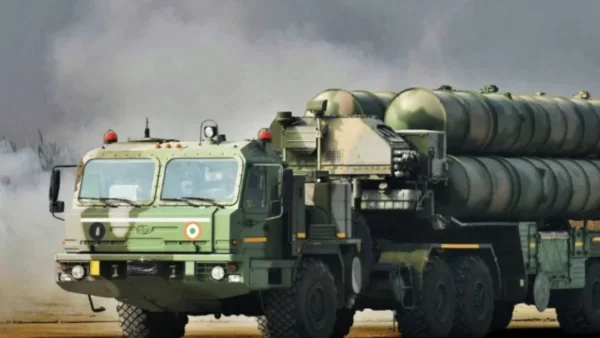
We have the fourth S-400 Sudarshan in the country now, a welcome pick-me-up for long-range defences as we see deliveries picking up again. A ship brought the unit in a few days back, and if you ask the people in the know at the defence ministry, it will be in the field before you know it.
Why the fourth S-400 is in the news
You could say the timing is right. With eyes on multiple fronts and a need to be able to counter any aerial provocation, this new squadron is a plus. The S-400 does what it is supposed to: it can find, follow and put away fighters, surveillance gear, and all manner of missiles. It gives us the reach for deterrence and a quick reaction.
Three are already in the hands of the armed forces and doing their job. Officials are of the view that this one will be inducted in short order to cover the ground where we need it most.
The state of the deal and what comes with it
Back in 2018, we put pen to paper on a $5.43 billion deal for five of these regimental systems. We got the first three and had them running about two years ago, but the Russia-Ukraine situation put a crimp in the rest. Now that this one is here, we are down to the last of the original lot.
A full S-400 squadron is 16 vehicles: your command and control, the radars, the launchers. You have two batteries in each, six launchers to a side, and 128 missiles in all.
All told, the order has been for 60 launchers and 6,000 missiles. Ranges run the gamut from 120 to 380 km, which is how the armed forces like to do things – in layers.
How it has been performing and what is in store
There is talk of the S-400 making its mark in Operation Sindoor. Some sources will tell you it was responsible for a surface-to-air takedown of a Pakistani surveillance plane at well over 300 km – a record, by some accounts. In any case, the system has been made part of the furniture in our layered set-up.
Bringing in the fourth will only add to that. We are looking to put them where they can best back up what we have, be it against a drone, an aircraft or a ballistic threat.
Looking past the original order
Things are on schedule again. The fifth and last under the current terms should be with us in the next few months. But the plan is to go further than the initial purchase.
The Defence Acquisition Council has given the nod for five more S-400s. It is a clear signal we want to put more teeth into our long-range defences, and word is the talks to make that happen are in motion.
Here is what officials are pointing to as the way forward:
– The fourth squadron to be inducted in the near term
– The fifth one on the way in coming months
– Five more units with DAC approval
– Some work being done to mesh with home-grown systems
Project Kusha and a home-grown alternative
While we are importing, we are also moving ahead with Project Kusha. The idea is to build something of our own that can stand up to the S-400, with the ability to intercept at range and a networked C2 to boot.
Firms like Solar Industries are on board with the development. The whole point of the Sudarshan Chakra is to have a unified system, tying in the likes of the Barak-8 into one national air defence picture.
In plain terms, what it means for the air shield
This latest delivery mends a gap left open by the supply issues of the last while and puts a bit of steel in our posture. With another one due and our own projects in the works, you can expect a marked up-tick in the scale and sturdiness of our defences.
For now, it is about getting it out there and making sure it is of use from the get-go.