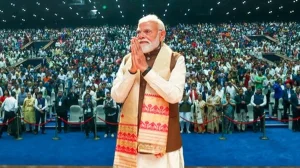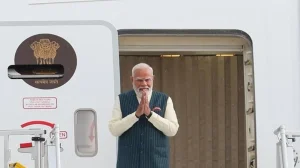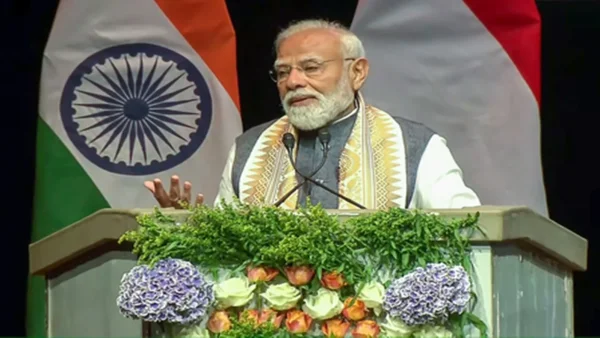
You could say Modi is crossing a line on the 10th. He will be the first to serve as democratically elected prime minister for this length of time without a break. And he does so in a much bigger, noisier and more hard-fought democracy than the one Nehru was at the helm of.
It’s not just a matter of arithmetic. It is a question of staying power in a system that has only grown. These days you have to deal with an electorate that makes the 1950s look small, policy moves that are put under a microscope right away, and the kind of coalition dynamics you see in the states.
Why it is of note today
India’s democracy is on a different scale now. The first general election had some 17 crore people at the polls. In 2014 we were looking at over 83 crore, and for the 2024 Lok Sabha, the pool of eligible voters was close to a billion.
The field has opened up in a big way. There were 53 parties in 1951-52; 464 in 2014; 744 in 2024. To hold your ground in such an environment is something of a different proposition than in the early years of the Republic.
Then there is the media. Nehru didn’t have to contend with private TV or the 24/7 news cycle. Under Modi, everything is out in the open – on broadcast, on social, on digital – and it puts a strain on both the message and the administration to keep up.
Nehru then, Modi now
Nehru ran a Parliament where Congress was king, taking 364 of 489 seats in ’52. Modi has had to work in a room that is more divided, with regional forces and opposition making their presence felt in every state.
The numbers tell the story. India was home to 34 crore when Nehru was in charge. By 2014, when Modi came in, we were past 131 crore. Now we are over 146, which makes the job of running things a good deal more complicated.
What the figures show
Modi was sworn in on May 26, 2014. This coming June 10, his run will hit 4,399 days. That is one day more than Nehru’s 4,398, a tally from 1952 to 1964 that has been the standard for over 60 years.
He has already put one behind him. Back in July 2025, he passed Indira Gandhi’s 4,077-day stretch (1966-77). This week cements his place as the top name for uninterrupted service among those who have been elected to the post.
A few dates to put it in perspective:
– May 26, 2014: First term for Modi
– July 25, 2025: Indira Gandhi’s 4,077 days in the rear-view mirror
– June 10th: 4,399 days and done with the Nehru record
Holding on in a tough climate
Competition has been fierce, yet here is the first non-Congress PM to put in two back-to-back full terms. He is also the first since Nehru to be the incumbent and still win three Lok Sabhas in a row.
There is another stat to file away from 2026. If you add up his time as Gujarat’s chief minister and as PM, he has been in office for 8,930 days, making him by far the most senior head of government in the country.
Building the machinery
Those on his side will point to the institutions put in place. From 2014 to 2026, IITs went from 16 to 23, IIMs from 13 to 21, and AIIMS from 7 to 23. A lot of new capacity in education and health.
Opponents will say you can’t just count buildings; you need the staff, the money and the results. It is the sort of argument you have with any long-running administration: can you make continuity mean something on the ground?
Two sides of the same coin
When you put Nehru and Modi side by side, it is as much about the times they were in as the calendar. One was building a young state; the other is shepherding a connected, teeming nation that is quick to judge.
On June 10, once the 4,399 is in the books, the formal record will be his. But the talk won’t stop at the number. It is a marker of how the political game in India has been remade.