The MP has ratcheted up his rhetoric against the Congress and the dynasty, contending that the way they handled the 1947 Partition and subsequent water-sharing has done India no favours. On the heels of the June 3, 1947 plan’s anniversary, he made the case that these were the kind of decisions that have left farmers and border states in the lurch while sowing the seeds of the Kashmir problem. Dubey, referring to the ‘Mountbatten-Nehru-Jinnah agreement’, was quick to point out that Congress was moving without Mahatma Gandhi’s say-so. For him, it is a stain on the party’s record and one where the Nehru-Gandhis can be called 'traitor, deceiver, and national betrayer‘.
Political flashpoint tied to June 3 anniversary
He sees the day as a turning point. ‘On June 3, 1947’ Mountbatten made an announcement in Delhi to split the country into two, something Dubey described as ‘one of the most shameful events in world history’ with a legacy that still haunts us. You can trace the roots of it back to some meetings in Shimla from May 10 to 12, 1947, he says. And when it comes to how Kashmir was treated, he believes the deal put the region on a different track, which is where you have your dispute today.
Allegations on Kashmir and Congress leadership
In Dubey’s telling, Mountbatten ‘kept Kashmir separate’ in the fine print, and we have been dealing with the fallout ever since. He also has it that Gandhi was ‘virtually under house arrest’ and the whole thing went through without his ‘consent or knowledge’. It is all part of his broader take on the old guard. ‘In the true sense, it is the Nehru-Gandhi family that deserves the titles of traitor, deceiver, and national betrayer,’ he put it, making no bones about who he holds responsible for the issues we face.
Water-sharing charge revived
Then there is the matter of our water diplomacy with Bangladesh. In a post on 30 May, Dubey zeroed in on the time of Indira and Rajiv Gandhi, saying a Memorandum of Understanding was signed over Indian interests. His line is that we gave up water from some of our main rivers to Bangladesh ‘at the cost of India’s own needs’. He has bundled this in with his Partition talk as another example of a ‘dark chapter’ in the Congress ledger. Here is the gist of what Dubey has been putting out: – The June 3, 1947 declaration is what made India and Pakistan – The groundwork for it was in Shimla between May 10 and 12, 1947 – An arrangement was made to leave Kashmir out of it – Gandhi was not in on the consent – We let Bangladesh have water from key rivers
What his social media post added
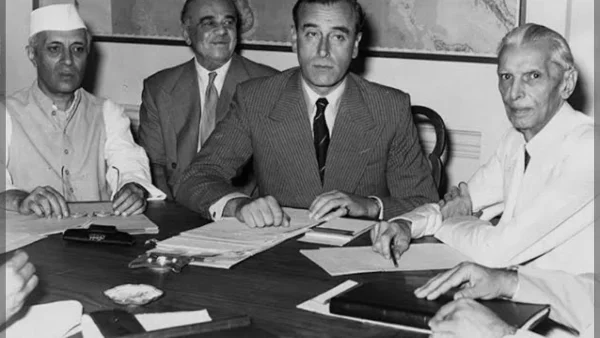
Writing in Hindi, Dubey called it ‘dark chapter 79’ and made a connection between the Delhi news of June 3 and those Shimla talks, hinting that Nehru’s closeness to Lady Mountbatten had a hand in it. He even put up an old photo from Shimla to show where he thinks the writing was on the wall for the Partition.
If you follow his posts, the story is a straight line from 1947 to the fault lines we see now. He will have it that the policy on Kashmir and the haggling over resources are a direct result of what the Congress of the day did.
Why it matters now
With these comments, historical score-settling is back in the mix. Dubey is trying to put a frame on the current debate by pointing to the kind of calls past Congress governments made on Kashmir and water. We have not put a word in Congress’s mouth here; these are Dubey’s allegations. But by being so specific with dates like June 3 and May 10 to 12, and bringing up the Bangladesh accords, he has given the other side plenty to work with in the coming days.