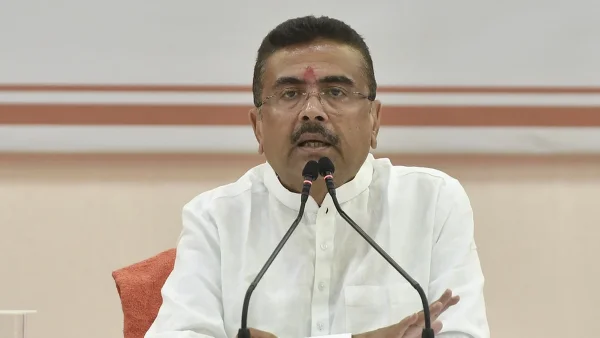
Adhikari’s words have put the state’s school system under a microscope. The BJP man is for making the recital compulsory; the All India Muslim Personal Law Board is having none of it, citing the Constitution. It’s a test case for schools trying to find some middle ground.
What set this off
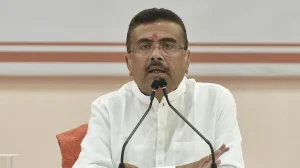
The government in West Bengal has put out an order: Vande Mataram is to be part of the morning routine in every state-run or aided school. And if you believe the reports, that even applies to madrassas, effective right away. No surprise, some groups are not happy about it. Adhikari has no trouble standing his ground. “It’s our culture, it’s Sanatana Dharma,” he says. His line is: if you’re going to be here, you say Vande Mataram. You say Jana Gana Mana. You mark January 26 and August 15. That’s what living in this country means. There’s a clip of him doing the rounds where he makes it plain: it’s mandatory in every school. He also had to put in a word for Hindustan – “this is our name, and no one is going to take it from us.” He did let on that there’s some room to manoeuvre. If the weather is bad, for instance, hold it in the morning. But the mandate is the mandate.
AIMPLB’s side of it
For the AIMPLB, this isn’t just a matter of policy; they see it as at odds with the Constitution and the way we’ve done things in a democracy. They have a problem with being made to recite every verse in a government school or a recognised madrassa in Bengal. They have put their cards on the table for the state to look at: – Pull back the notification or let Muslim students be – Look at Articles 19, 25 and 28(3) for protection – Remember the Bijoe Emmanuel case in Kerala – Some of the stanzas don’t sit well with monotheism
SQR Ilyas of the AIMPLB was blunt. To force a student to sing something that goes against their beliefs is a violation of Fundamental Rights. “Some of these stanzas are not in keeping with Islam,” he said, and called the whole thing an encroachment on who you are. Their advice to the community in West Bengal – parents, teachers, students – is to know your rights and act on them if you’re being put to it. A secular state, they argue, doesn’t get to hand down one group’s ways to another.
Where the politics come in
Union Minister Kiren Rijiju has put in a word to keep the politics out of it. “Vande Mataram is for the whole nation,” he says. “It doesn’t belong to me or you, or any one state or religion. There should be no room for making a political point of it.” But for those running the schools, it’s a bit of a head-scratcher. The order is there, but with the kind of objections you’re seeing, and a Supreme Court case to boot, you can see some hard questions coming down the line. It’s a fine line for teachers and parents. Do you all fall in line? Or do you have a conscience to follow? One wrong move and this could end up before a judge rather than in the schoolyard.
And then?
It will be up to the state to see if they want to make any leeway, and whether anyone wants to take it to court. With the AIMPLB telling people to go after legal redress if they have to, you can bet there will be some formal action.
For now, the order is in place and schools have to make of it what they will. Adhikari has been clear enough. The other side has the Constitution to back them up. How it plays out will be in the details of how it’s put into practice and what the courts have to say about it.