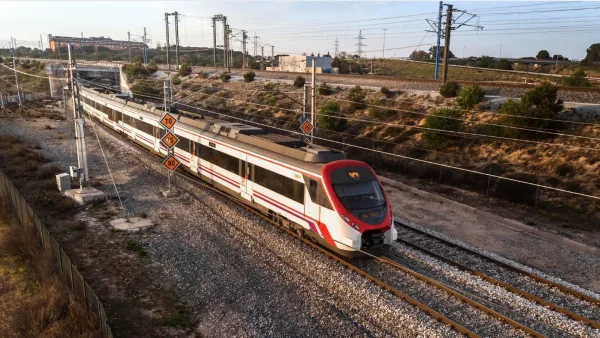
The goal of this change is to make sure the railways have enough money to run, as costs are going up. They are trying to find a middle ground: to make fares reasonable for passengers and cover the rising costs of running the railway.
How much more will you pay
Specifically, normal class trips of 215 kilometers or less will not be more expensive. But for a normal class journey longer than 215 kilometers, you’ll pay a little extra. For instance, a 300 kilometer trip in normal class might cost around 3 rupees more because of the 1 paise per kilometer increase. While each ticket won’t be much more expensive, all these small increases will add up.
Mail and Express trains will be affected similarly. A 500 kilometer trip in non-AC will be about 10 rupees more, and 750 kilometers will add around 15 rupees to the price. The increase is 2 paise per kilometer for all AC classes on these trains as well.
What changes from December 26
You’ll be able to see the new prices on all websites and at stations from December 26. If you’re travelling around the end of the year, you should check the final price when you book.
Why the fare revision was needed
Indian Railways says costs have gone up a lot, mainly because of the increased costs of employees (around 1.15 lakh crore rupees) and pensions (around 60,000 crore rupees), and because they’re continuing to invest in making the railway safer and expanding the network. The total cost of running the railway in 2024-25 was approximately 2.63 lakh crore rupees.
To deal with this, the railways are trying to move more freight (goods), and are making small changes to passenger fares. They hope to get approximately 600 crore rupees in extra income which will go towards safety, making things more reliable, and improving the service, without making it too expensive for those who travel short distances.
Over the last ten years, the railway has grown, getting around 2 lakh wagons and over 10,000 locomotives to move freight and improve travel in general. These changes are all part of a larger plan to make the railway more efficient and keep it financially stable.
Recent fare history and context
This isn’t the first time prices have been adjusted recently. In July, Mail and Express fares went up by 1 paise per kilometer for non-AC and 2 paise per kilometer for AC. Before that, on January 1, 2020, second class and normal/Mail Express fares went up 1 and 2 paise per kilometer, sleeper class went up 2 paise per kilometer, and all AC classes went up 4 paise per kilometer.
What it means for passengers
The railways are trying to carefully balance keeping fares affordable for passengers and making enough money to cover their expenses.
Who is not affected
For most people, the changes to the price of a ticket won’t be very much, particularly if you only buy one ticket at a time. But people who travel long distances often will probably notice the difference over time. People who use suburban trains or monthly passes won’t be affected, and will continue to pay the same for their normal journeys.
If you’re planning a long trip, you should include a small increase in your travel budget, especially during and after the holidays. Booking in advance, looking at different routes, and choosing different classes of train can help you to keep costs down without sacrificing comfort.
Key takeaways
Here’s a quick summary:
– Starting December 26, 2025
– Suburban trains and Monthly Season Tickets: no change
– Normal class up to 215 km: no change
– Normal class over 215 km: +1 paise per km
– Mail and Express (both AC and non-AC): +2 paise per km
For example, a 500 km non-AC Mail or Express trip will cost around 10 rupees more.
They expect to get around 600 crore rupees more in income.
The reason for the change is that the costs of employees, pensions, safety and expanding the railway are all increasing.
These measured and predictable fare changes are intended to keep the railway running and still make it possible for millions of people to use it for short journeys.