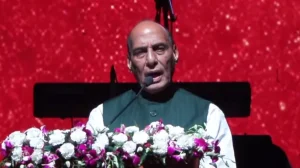
“The defence set-up in this country needs to be put right for a kind of battlefield where size doesn’t give you the upper hand any more,” was the warning from Singh in Hyderabad. He told the young officers to steel themselves for conflicts of a different order. In his words, new-fangled tech has redefined what warfare is and moved the goalposts in ways you can’t always see coming.
Tech tilt shifts battlefield power
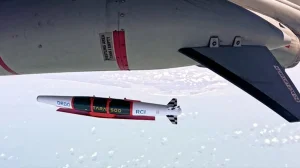
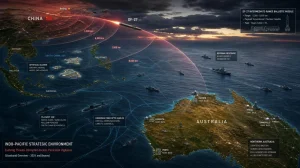
Some of the old rules of engagement are out the window, Singh said. You used to think a big power had all the answers, but today even a smaller one can make you pay for it with the right mix of unorthodox tactics and a few well-placed, if small, weapons. The difference in today’s battlespace is the part you don’t see. We are talking about radars, satellites, drones, and the like. There are situations where an opponent could have a handle on your traffic or your CCTV. It’s not so much about who you can see as it is about networks, data and the ability to disrupt from a distance.
Training for a different kind of fight
To the fresh batch of officers, he put it simply: you need to change how you think. Get to grips with modern strategy and be ready to make of it what you will. It’s not just a matter of having the gear; you have to be up for any kind of war. Hard work is fine, but you have to be smart about it. The nations that are making their mark in the tech world are the ones being clever, and we have to be in that company. That means our doctrine and the way we learn and innovate are what will count down the line. If you boil down what he had to say to the new inductees, it comes to this: – Be in the right headspace for non-traditional warfare – Make use of the tools and tactics at your disposal – Put in the effort to learn, then adapt on the fly – Don’t just work hard, work with some smarts
IAF’s inclusive gains and global missions
There is a change in the air, both in terms of how we operate and as a society, and on the parade ground Singh made a point of it. He was lauding the female pilots the IAF has brought on board. “You are what makes us strong, balanced and resilient,” he told them, in a nod to the power of an open force. But it is not only about fighting. He pointed to the IAF’s role in high-stakes rescues and in looking after foreign nationals when things go wrong. Humanitarian work, he said, is part of our ethos. True capability is shown by how we deter and how we show compassion.
Why this message matters now
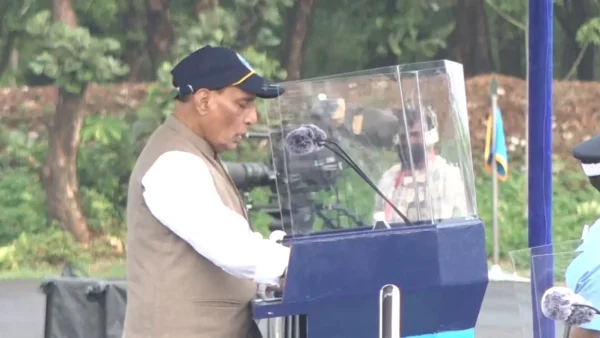
All of this came out on Saturday at the Air Force Academy in Dundigal, near Hyderabad, during the Combined Graduation Parade. It was a fitting place for it: these are the men and women who will be in charge in an age of sensors and information you can’t trust.
The IAF is something of an icon for hundreds of millions of Indians, he noted. With a mention of Shubhanshu Shukla, he told them to live up to that. When you put it that way, the drive for new tech and the hopes of the nation are one and the same, with the IAF leading the way.
What comes next
Singh didn’t come out with any new plans, but he did lay out the job in front of them. The new officers were to take on board the fact that the field of battle is run by robotics and data, and to be of a mind to face whatever comes. He made a case for putting inclusion and operational know-how on a par with the good name we have for humanitarianism. As we open up more for women and get better at responding in a hurry, those are the values and the agility we need to put to work. In the end, it is a matter of attitude: you train for the unknown, you put in the smart work and you let technology be where you make your stand. For the ones just starting out, it is as much a guide as it is a caution.