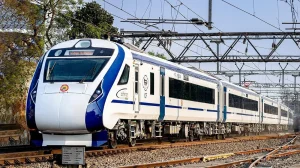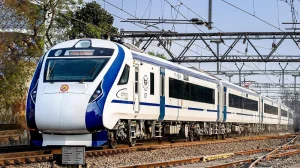
Intercity travel is being redefined in India. The objective is to put more time back into the day, offer a premium product and make the most of high-traffic routes. Of the 160 km/h headliners, one Vande Bharat has the edge in average speed. (For those keeping score: it is the one between New Delhi and Varanasi.)
Why speed leadership matters
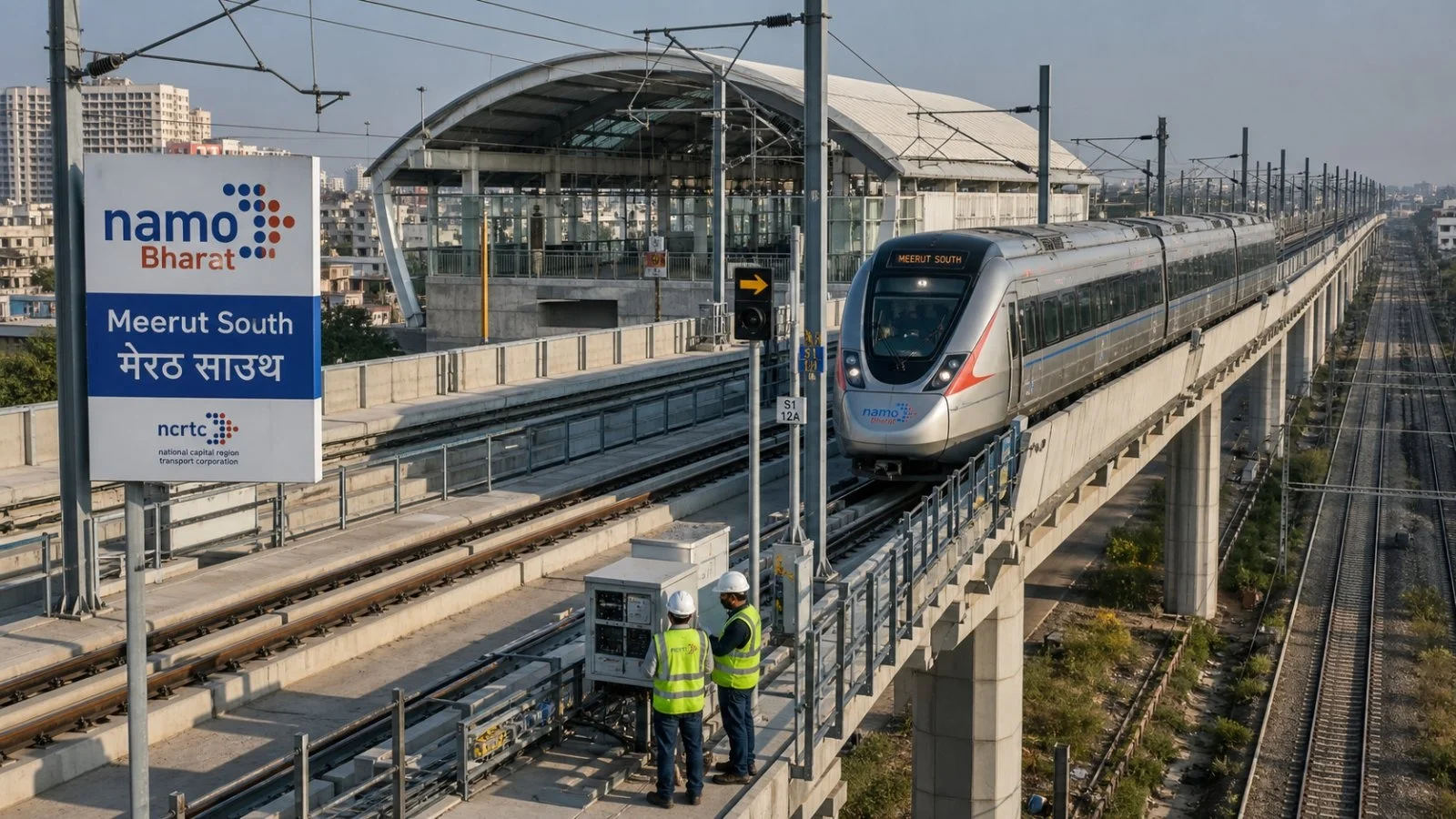
Semi-high-speed is where the action is. In the National Capital Region, the Namo Bharat RRTS is making inroads with dedicated rapid transit on the Delhi-Meerut line. It is a project of the NCRTC, a joint effort by the Centre and the state governments of Delhi, Haryana, Rajasthan and Uttar Pradesh.
There is no jostling with ordinary traffic here; these are exclusive rights-of-way. With an operating speed of 160 km/h from a 180 km/h design, it is a reminder that how you build the track is as much a factor in your timetable as the train itself.
Vande Bharat’s technology edge and the sleeper pivot
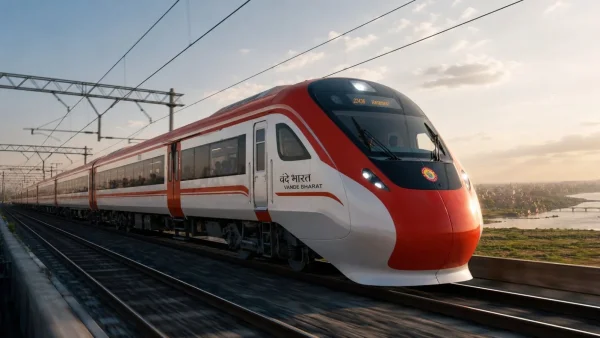
You can trace India’s semi-high-speed ambitions to the Vande Bharat, which made its debut in 2019. A self-propelled EMU made in Chennai under the Make in India banner, it has no separate engine and will do 0-100 in 52 seconds or so. KAVACH is also part of the package.
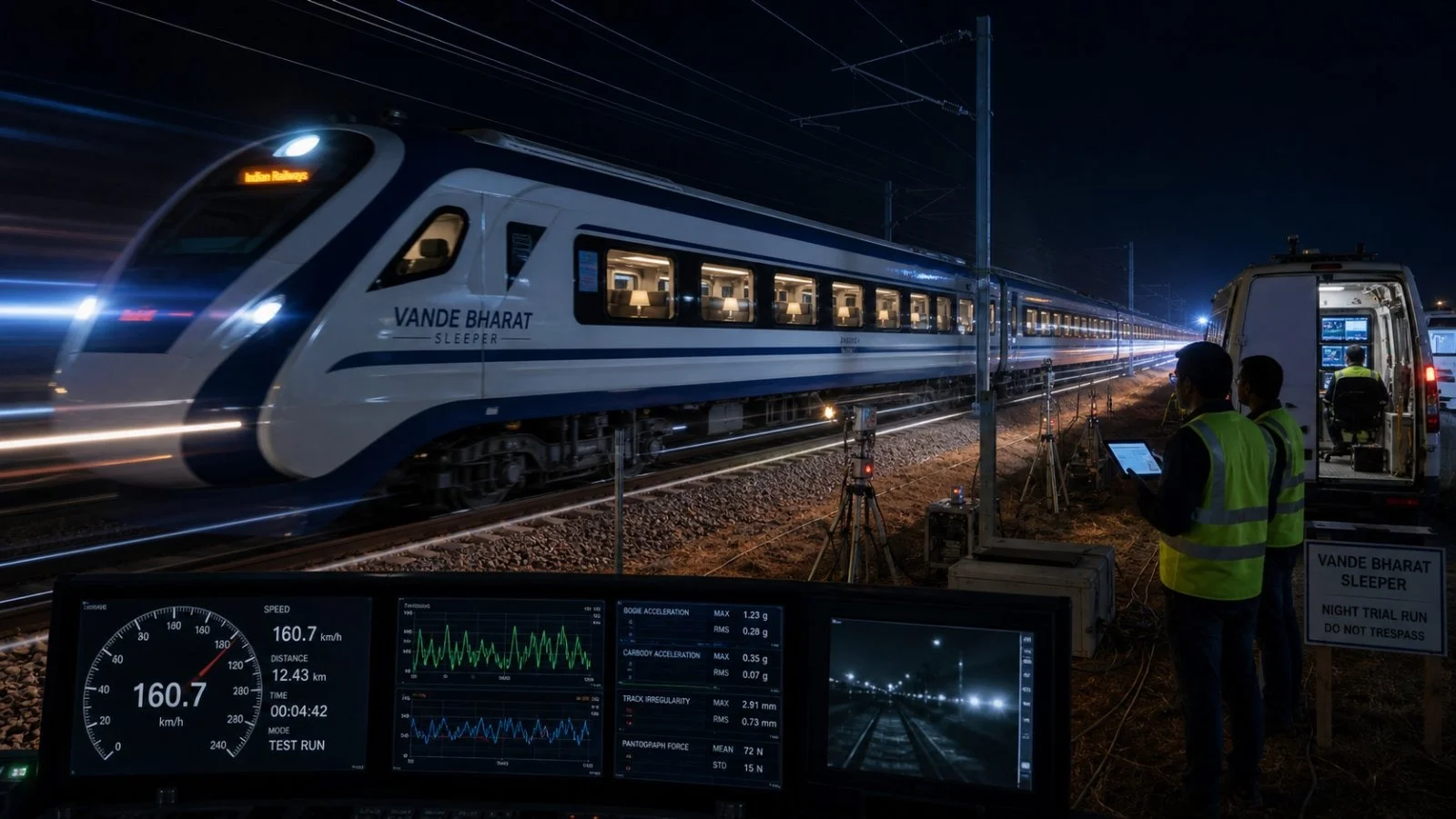
Then there is the matter of the Vande Bharat Sleeper, due in 2026 to take the service into the night. We have seen it hit 180 km/h in trials on the Kota-Nagda line, and the RDSO has put it through its paces on the Mumbai-Ahmedabad route. But in commercial use, the speeds are more modest.
The contenders reshaping corridors
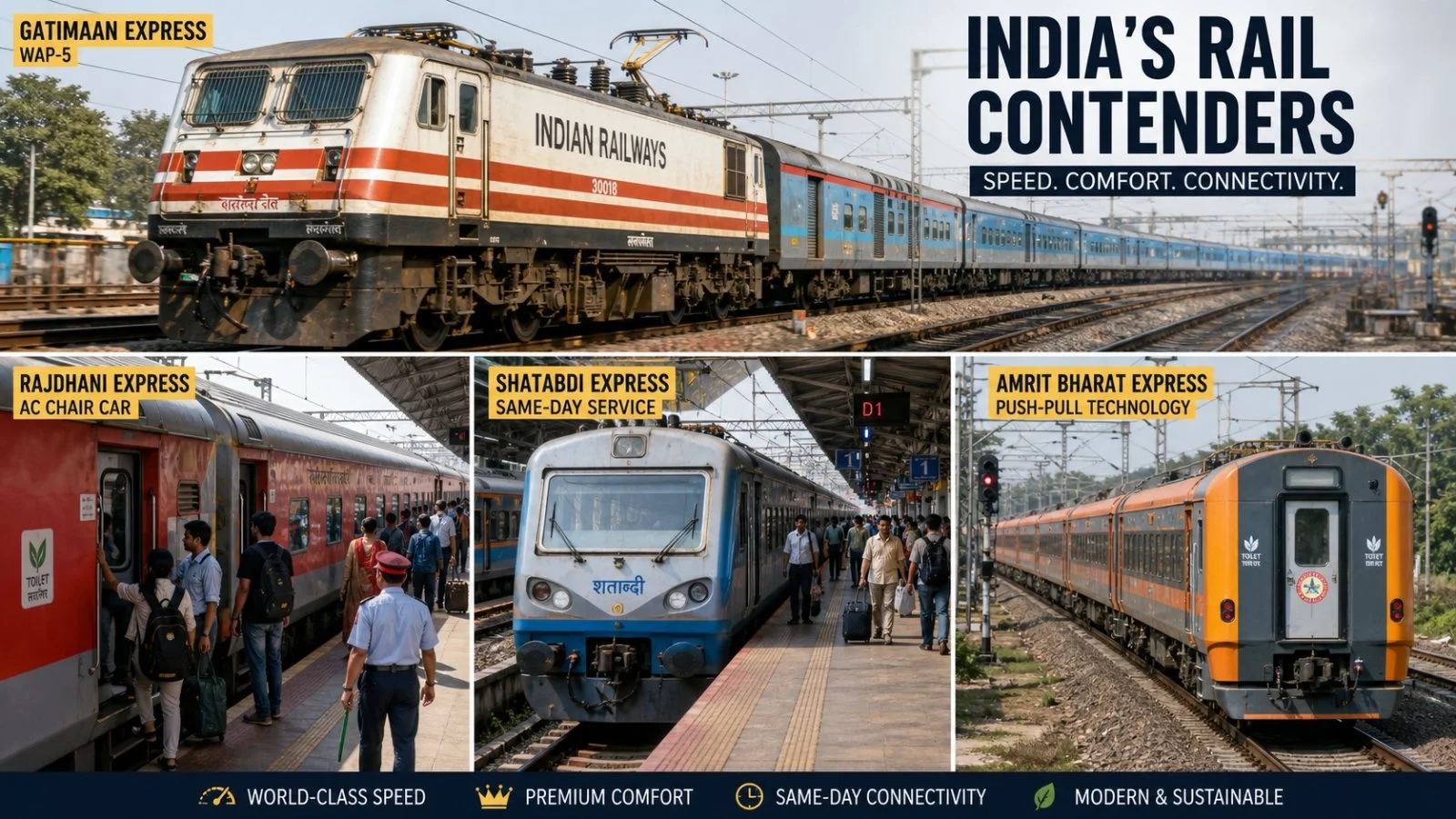
It was the Gatimaan Express that set the standard before Vande Bharat came along. Since April 2016, it has been making the 160 km/h run from Hazrat Nizamuddin to Agra Cantonment with a 5,500 HP WAP-5 in tow. The rake is made up of two Executive and eight AC Chair Car coaches, all with bio-toilets.
Some old-timers still hold the line. The Rajdhani, for instance, has been the fully air-conditioned link between New Delhi and the big capitals since 1969, capping out at 130 km/h. The Shatabdi, from 1988, does the same for its same-day AC and Executive seating.
On the other side of the ledger is the 2023 Amrit Bharat Express. ICF in Chennai has put together a non-AC, general-class option with a push-pull formation to be nimbler. It is meant to be an affordable way to cover long distances at 130 km/h.
So which Vande Bharat is fastest?
By the numbers, the New Delhi-Varanasi Vande Bharat is the one to beat in terms of average speed. An eight-hour trip with 160 km/h in the mix, depending on what the track and signals allow.
The reason for the title is a combination of a well-prepared route and a few comforts for the passenger. There are aircraft-type seats, auto doors, GPS info and in-house catering. The hardware is built for 180 km/h, but it has to work within the confines of the existing setup.
Speed benchmarks at a glance
A look at the figures shows how the various models stack up:
– Vande Bharat Express: up to 160 km/h
– Vande Bharat Sleeper trial: 180 km/h
– Gatimaan Express: up to 160 km/h
– Namo Bharat RRTS: up to 160 km/h
– Rajdhani, Shatabdi, Amrit Bharat: up to 130 km/h
What comes next for India’s fast rail
The order of merit will be decided by two things: more of the right kind of track to handle the pace, and putting more of the proven units in service. The Vande Bharat is rolling out in more places, even if the running speeds are kept in check.
It is a straightforward choice for the passenger. To ride the fastest Vande Bharat in operation now, one would book the New Delhi-Varanasi ticket. For a sense of what is to come, the Vande Bharat Sleeper and the Namo Bharat RRTS are worth a watch.