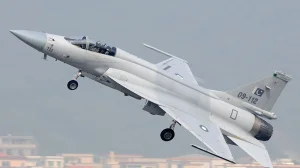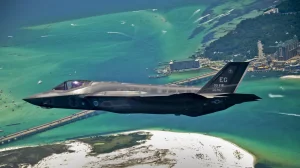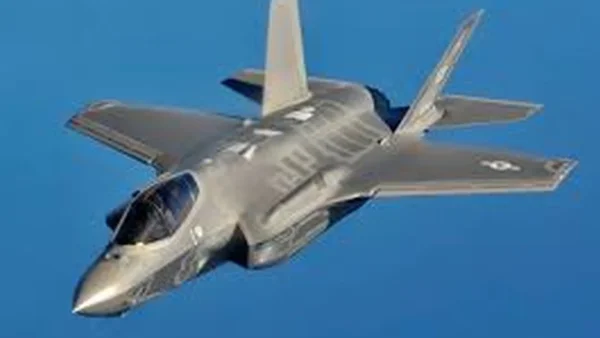
Military experts and those who make defense plans have been surprised by Iran’s claim. US authorities admit an F-35 was damaged, probably by something being fired at it, and had to make an emergency landing at a US base in the Middle East; the pilot is okay. If the story is correct, it could make us rethink how much we’ve relied on stealth planes being almost impossible to find.
What We Know So Far
The Islamic Revolutionary Guard Corps in Tehran says their air defenses found and hit the US F-35 while it was on a mission. They’ve shown a video which is supposed to show the plane with smoke coming from it. But people who study these things independently haven’t confirmed the video is real, and the US government hasn’t said publicly what caused the damage.
US military people have said the plane was flying in or near Iranian airspace when it was hit and managed to land safely. They haven’t shown pictures or said what kind of weapons were involved. However, the US saying the plane was hit by something has brought a lot of attention to the situation.
If Iran really did find and damage a stealth plane in the air, that’s not something that happens often and would have important results. Since the F-35 began being used in actual battles, there haven’t been any confirmed cases of enemy fire hitting one.
Why the F-35 Matters in Modern Air Warfare
The F-35 Lightning II is the main plane for the US and its allies. It combines a shape that makes it hard for radar to see it, the ability to put together information from many sensors, and safe ways to share data. It’s made to “see” the enemy first, fire first, and stay alive in areas where the enemy is active. It’s also a flying sensor, sending information about where to aim to other planes and ground troops.
The F-35’s ability to avoid being seen is its biggest strength. The body of the plane and the coating on it are designed to make it appear as a very small shape on radar, and to control its heat. When you add in electronic warfare and how the plane is flown, it’s very hard to find, lock onto, and destroy. But if someone can manage to hit it, how much risk is acceptable changes.
Stealth Is Not Invisibility
Being hard to detect and track doesn’t mean being completely safe. At certain radar frequencies and from certain angles, planes that are designed to be hard to see can be detected, especially if the enemy uses many sensors, radars that are connected to each other, and systems that look for heat. Mistakes by the pilot, the weather, or the plane not being in its usual shape can also make it easier to detect.
How Iran Might Have Detected a Stealth Jet
Iran says it has a complicated air defense system with both long-range and medium-range surface-to-air missiles, early-warning radar, equipment to detect things passively (without sending out signals), and systems that track things with light and heat. Some of these are said to use lower radar frequencies, which then tell more powerful radar systems where to look.
A likely way for Iran to shoot something down would go like this: long-wave radar or passive receivers would notice something unusual, then heat sensors would get a more accurate track, and finally a missile battery that’s connected to the others would fire when they’ve worked out where the plane is and which direction it’s going. Either side using electronic warfare could make this process more difficult or easier.
How things are going in the battle also play a role. Opening the doors for weapons, making very sharp turns, or how the engines are set can all make the F-35 easier to find for a short time. If the F-35 is flying near areas where the enemy is known to have defenses or going back to attack the same target, the enemy has more chances to time their attack.
Verification and the Evidence Trail
To be sure about what happened, we’d need a lot of different kinds of proof. Photos of the damage to the plane, radar records, and pieces of the missile that hit it could all show which system was used. Looking at the plane’s maintenance records and doing tests on the metal could show where it was hit and what kind of missile it was. Also, someone finding the location of the video and information from the plane’s systems would strengthen the claim.
Until we have this kind of proof, our assessments will be tentative. People who follow events online will look for satellite pictures of damaged planes on the ground, wreckage, or unusual flight patterns related to emergency landings.
Potential Game-Changing Implications
If Iran did hit an F-35, it would show that modern, combined defense systems can sometimes deal with planes designed to be hard to see, especially when they’re at their most vulnerable. This would have effects on military strategy, what equipment is bought, and how people are trained.
In a battle, air forces might try to destroy the enemy’s air defenses more thoroughly before sending stealth planes in. We can expect more long-range weapons to be used, electronic warfare, decoys, and cheap drones that can be sacrificed to overwhelm the enemy’s sensors and weapons. Those planning missions might change the routes, heights, and times of flights to reduce how long the plane is exposed to danger.
On a larger scale, this event could cause the US’s rivals to invest more in radar that can see stealth planes, in passive detection, and in putting information together. The US and its allies might speed up improvements to their electronic warfare equipment, countermeasures to heat-seeking missiles, and ways to reduce how visible a plane is. It could also change how often planes are flown and how they are maintained to reduce the risk of losing them.
Countries that buy the F-35 will need to be reassured. The F-35 is still a good purchase, but what people think is important for stopping an enemy. A single successful hit, if confirmed, can change the way people feel and make enemies more confident.
Sorting Claims From the Fog of War
There are reports of the US losing other planes, friendly fire (one of our own forces hitting our forces), and the number of people hurt or killed, but these are hard to confirm. Some of these claims go against what officials have said or don’t have support from independent sources. In a fast-moving war, both sides will try to control what information gets out to influence how people see things.
We should now look at high-quality pictures of the damaged plane, official reports after the battle, and independent analysis of the IRGC video. We should also see if the US changes how it operates, like using more long-range attacks or increasing missions to destroy enemy air defenses, as this could show they are rethinking the risks.
Whether this is a one-time event or a sign that air defenses are becoming more effective, the lesson is clear: stealth is a big advantage, but it’s part of a much larger, more complex system. If Iran really hit a US F-35, the next stage of this competition has just become more difficult.