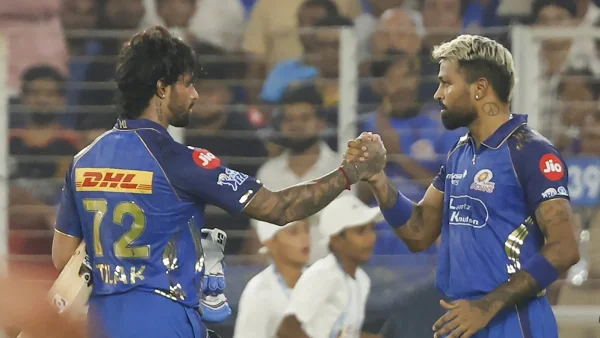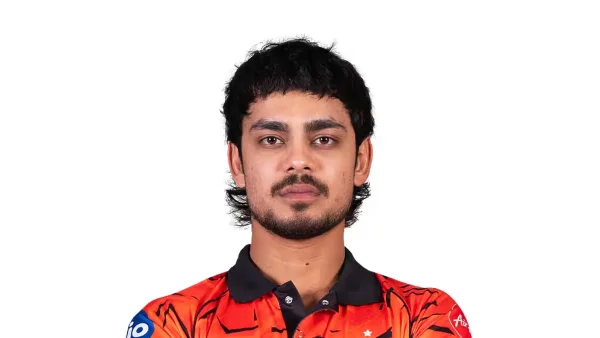
Kishan was very pleased with his pace bowlers, who did a great job of holding Chennai Super Kings to 184 runs for t eight wickets, when Chennai were chasing 195. The bowlers did exactly what they’d planned, and Kishan said having young players who think for themselves made his job as captain much easier.
Young Pacers Rise to the Occasion
Eshan Malinga took 3 wickets for 29 runs in his four overs, and he was supported by Nitish Reddy (2 wickets for 31 runs), and Sakib Hussain (1 wicket for 32 runs – and he didn’t give away many!). Spinner Shivang Kumar also got a wicket, for only 18 runs in three overs. All together, they kept the run rate under control.
These results weren’t just a coincidence. The bowling was accurate, they did a good job in the opening overs (powerplay), and were calm when bowling at the end of the innings (death overs). They got wickets early and bowled tightly in the middle overs, stopping Chennai from getting the partnerships they needed.
Captain’s Trust and On-Field Leadership
Kishan talked about how important trusting his bowlers was. Since Pat Cummins wasn’t available for the first part of the season, Kishan was pleased to give the ball to the young bowlers and let them play. You could see that trust in how they bowled.
He also said that when players come up with their own plans, the captain can concentrate on where the fielders should be, rather than telling them exactly how to bowl every single ball. Giving them that independence led to better communication and more confidence when they were actually in the game.
Bowling Plans and Execution
Kishan said the bowlers “executed plans to the ‘T'” and it was obvious why. Each bowler had a specific task: slow down the scoring in the powerplay, put the opposition under pressure in the middle overs, and be very accurate at the end of the innings. And they followed that plan.
What they did in practice showed in the match. Kishan had seen them get better with each training session. Their eagerness to succeed and their accurate bowling meant they could handle the pressure and be a danger throughout the entire innings.
Where the Batting Fell Short
Even though the bowlers played brilliantly, Kishan said the batting wasn’t as good as it could be. He thinks they were at least 20 runs short of a score that would have been easy to defend on that pitch, but the bowlers managed to make up for that.
This honesty shows he has a sensible view of the win. A good bowling performance can hide problems with the batting, but Kishan was clear that the batters will need to get more runs on a similar pitch if Sunrisers Hyderabad want to keep winning.
CSK Response and Match Context
Ruturaj Gaikwad, captain of Chennai Super Kings, said they were hurt by not getting many runs in the ten overs after the first ten. After the 10 over point, they only scored a few runs at a very important time and lost their rhythm when they needed to get players to stay at the crease together.
Gaikwad also said the bowlers did a good job of keeping Sunrisers Hyderabad under 200 after a strong start with the batting. He said they’d expected the final score to be between 220 and 230, and he was glad they managed to reduce it to under 200.
What This Means Going Forward
For Sunrisers, the game showed how valuable it is to have a group of young bowlers who can start and play without being told what to do. Kishan’s style of leadership, giving trust and clear instructions, could be something to continue with if these players continue to get better. The team will want the batters to get as many runs as the bowlers are preventing the other team from getting.
For Chennai, the game showed how quickly things can change when good bowling stops the other team from scoring quickly. Both captains said there are things to work on, and the young Sunrisers Hyderabad bowling attack got a lot of praise for how maturely and accurately they bowled.