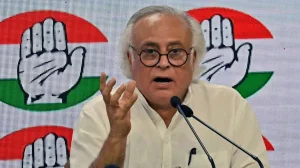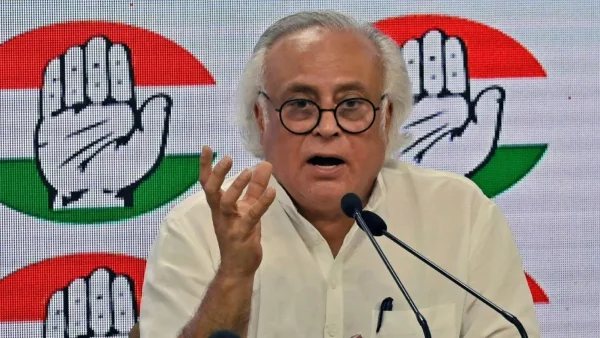
Gandhi is saying the Smart Cities Mission is a plan that was started but not fully developed, and he believes it promised to completely change things but only made small improvements. Now that the program is nearly over, the arguments about what has been built, how it was measured, and if people’s day to day lives are better are becoming much more heated.
Rahul Gandhi’s Charge Against the Smart Cities Mission
The leader of the opposition in the Lok Sabha (parliament) says the Mission is a good example of looking good but lacking real results. He feels that important and impressive-sounding announcements, and lots of publicity, hid the fact that no one is being held responsible, and basic living standards haven’ or been improved.
Gandhi is emphatic that a city isn’t “smart” unless it has clean water, clean air, and safety for residents. He asks whether these essential things have actually gotten better, despite the government saying the projects are done.
In Parliament, he said he asked for specific details: what exactly makes a city smart, how do we decide if it has succeeded, how many cities have been transformed, and what actual changes have people seen? He says he didn’t get any clear answers.
Gandhi points out that the government says approximately 48,000 crore rupees have been spent and 97% of the projects are finished. However, he asks why the situation on the ground is still showing contaminated water, open drains, bridges falling down, and roads collapsing. He wants citizens to look at their own cities and decide for themselves if the Smart Cities Mission made any difference.
The Government’s Data-Backed Defense
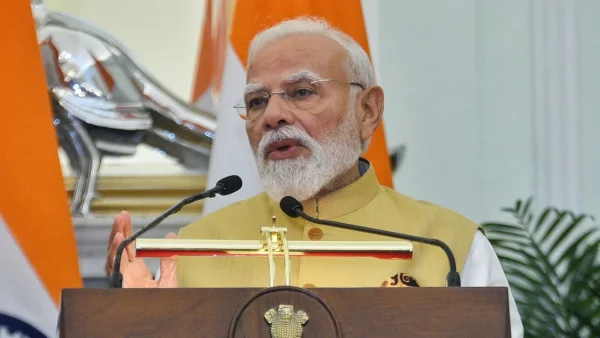
The Ministry of Housing and Urban Affairs responded with statistics and explained what the program was meant to do. Tokhan Sahu, the Minister of State, said that of the 48,000 crore rupees the central government provided, cities have requested 47,458 crore rupees, which is 99% of the central amount.
By March 1, 2026, states and territories said they had used 46,326 crore rupees, or 98% of the money they were given. From the start of the mission, 8,064 projects totaling 1,64,811 crore rupees were begun, and 7,784 of those have been finished. That’s 97% of the projects done, totaling 1,56,159 crore rupees in cost.
The minister says that 280 projects worth 8,652 crore rupees are still being worked on. The government says these numbers prove they are making progress and are spending the money.
Importantly, the Ministry repeated that the Smart Cities Mission wasn’t to fix up the whole city. Instead, it used an approach of working on specific areas: improving old parts of the city (retrofitting), rebuilding areas (redevelopment), developing new areas (greenfield sites), and adding “smart” solutions throughout the city. These “smart” solutions were designed to be copied in other cities across India.
The government also mentioned an evaluation from NITI Aayog in September 2025, which said the Mission was very relevant to India’s urban problems and matched the country’s goals and the Sustainable Development Goals.
What Counts as a Smart City: The Metrics Debate
The biggest disagreement is about how things are measured. Gandhi wants to know how much money each city was approved for, received, and actually used, the national standards used to determine if the projects worked, and how many cities actually meet the requirements to be called “smart”. He also wondered if the government compares cities to each other and if anyone not connected with the government has looked at how the Smart Cities Mission changed things like roads, the environment, and people’s lives. These are really important for the government to be open and responsible to the public.
If we can’t clearly see what’s being achieved, just saying a lot of projects are finished doesn’t mean people are getting better services. What people want is a water supply they can count on, clean air, safe streets, easy ways to get around, and neighborhoods that won’t flood. We can measure these improvements, and they are more important than just counting the number of projects.
A good way to show how well things are going requires having a starting point for comparison and regular checks. Improvements in things like how much water is lost from pipes, how long it takes to travel, how much pollution is in the air, how quickly emergency services respond, and how often sewers overflow can show real progress. Otherwise, ‘smart’ becomes just a nice-sounding slogan.
The claim that nearly all projects were completed doesn’t match what people are experiencing in many places. Gandhi’s criticism shows a more general unhappiness from citizens: new buildings and infrastructure don’t mean much if they aren’t maintained, work well with existing systems, and reach everyone.
What the Numbers Do Not Show: On-the-Ground Concerns
Improvements from focusing on certain areas of a city can leave most neighborhoods as they are. And if the test programs only work in specific areas, like main roads, shopping areas, or the center of the city, the benefits don’t seem fair or widespread.
City-wide solutions, such as networks of sensors and control centers, don’t automatically mean cleaner water or safer streets. Technology can only make things better if the organizations in charge are able to do their jobs, utility companies have enough money to operate, and different government departments share information and are responsible for the same things.
When bridges collapse or roads fall apart, the public asks if enough attention was given to how long things would last, safety checks, and keeping things in good repair throughout their lifespan. Just having a certificate saying a project is finished doesn’t mean the government’s job is done, in fact, it’s when many of the responsibilities actually start.
The Smart Cities Mission had ambitious plans, though it was limited in how it was designed. It understood that improving already existing cities is hard and aimed to create approaches that could be copied. The problem now is to turn the test programs into improvements for the entire city that people can actually notice.
Policy Lessons and the Road Ahead
First, ‘smart’ should be defined by the results it achieves. The country should set standards linked to health, safety, transportation, the ability to recover from problems, and affordability. The starting points for each city and yearly progress should be published on a public website.
Second, have independent people evaluate the mission. These third parties should assess not only if construction is on schedule, but also if services are continuing, if things are costing an appropriate amount, and if everyone in all parts of the city (including poorer areas) has equal access.
Third, fix the problem with running and maintaining things. Provide consistent money for operation and maintenance, require contracts based on performance, and have plans for managing property to protect what the public has invested in, long after the opening ceremonies.
Fourth, improve how things work together. The Mission’s projects should be connected with other city projects relating to water, sewage, housing, and dealing with a changing climate. When projects are separate, money and time are wasted.
Fifth, get more people involved. Local knowledge is helpful for city planning, budgeting, and dealing with complaints. Simple things like making data available to the public and holding meetings at the neighborhood level can bring problems to light before they turn into failures.
Finally, make it clear how easily things can be copied. If the Mission was trying to create ways of doing things, they should explain which approaches worked well when expanded, which did not, and why. They should share guides on how to buy things, how to design, and how to maintain them, so cities can adapt ideas instead of starting from scratch.
The argument over the Smart Cities Mission will go on, with statistics on one side and what people think on the other. But people are more interested in what happens than in names. A city that provides clean water, clean air, safety and reliable services will never have to justify whether it is ‘smart’.