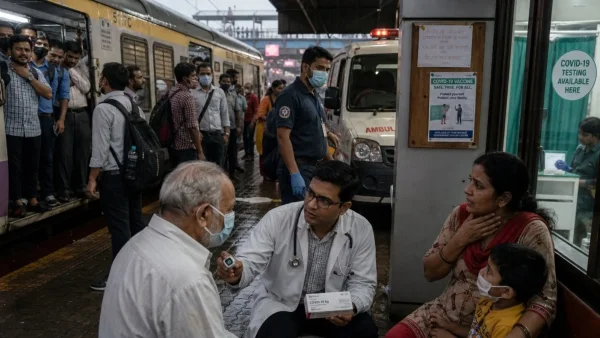
What you will hear from Mumbai doctors is a no-nonsense take on the numbers: yes, there is a spike in Flu A and new COVID-19 and H1N1 cases, but there is no need for alarm. Even as Andhra Pradesh has put in a report of two fatalities and eight open COVID-19 files, the advice from clinicians is to be responsible and test when it makes sense.
One surgeon in the city put it like this: we are looking at a near-epidemic of Influenza A, and he would have everyone in a mask. It is what the staff in the ER and urban clinics are coming across as the weather turns and more people head inside.
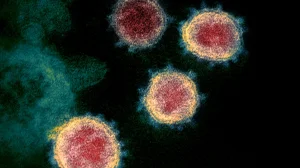
It is a scenario that has been seen before, only the combination is different. You have an overlap of Influenza A, H1N1 and COVID-19 with their telltale symptoms, all making their way through the monsoon’s crowded trains, workspaces and schools.
What is on the doctos’ radar
Clinicians will tell you this is not one virus making a return; it is a mix. “We have Influenza A, H1N1 and COVID-19 in the air at once,” says Dr Pradeep Bajad, a pulmonology consultant at Amrita Hospital in Faridabad. “You can’t go by the symptoms alone.”
In the outpatient wing, it is the usual suspects: fever, a raw throat, a cough that won’t let up, aches, fatigue, and in some instances, diarrhoea. When the illness is anything but minor, or if the patient is in a high-risk category, Dr Bajad says a lab test is the way to go.
The monsoon factor
The weather has a way of herding us into rooms with little airflow. Whether it is a mall, a classroom or a bus, these become easy channels for droplets and aerosols to make their way through a dense crowd.
How it is affecting life and who should be careful
For the most part, the cases are not serious. If you have had your shots or the virus in the past, the current strains of COVID-19 are not as hard on you. The same goes for Flu A; a bit of rest and fluids will see most of them over the hump.
Risk, however, is not distributed equally. Dr Bajad is concerned about the over-60s, diabetics and anyone with a history of heart, lung, kidney or liver issues. Then there are cancer patients, those who have had transplants or are on steroids – they are more likely to run into complications.
Andhra Pradesh has seen its share of COVID-19 related deaths of late, in patients with a lot of underlying conditions. For a fit person the virus may not be as much of a threat, but it is still a hazard for someone with a few comorbidities or a compromised system.
When to do something about it
A running fever or a bad sore throat is not to be written off as just another seasonal bug. Dr Anita Mathew of Fortis in Mulund, for one, is for a watchful eye if you are dealing with any of the typical ails and they do not let up after a couple of days.
Then there is the matter of medicine. “Antibiotics are of no use here and only contribute to resistance,” is the line. Should the fever hold on for three days or you start to have trouble with your oxygen, Dr Bajad is clear: see a doctor without delay.
Dr Bharesh Dedhia, an ICU specialist at P. D. Hinduja in Khar, offers a 48-hour rule of thumb. Let the fever, the cough or the exhaustion go on for longer than that and it is time for a professional opinion. A good way to rule out the need for a particular test or course of treatment, and to sidestep any avoidable trouble, is to get an early read on the situation.
Take Influenza A, for instance. “It can come on in a flash with a high fever, aches, a sore throat, a headache, a dry cough and you are left completely run down,” says Dr Samir Garde, who heads up Pulmonology and Lung Transplant at Gleneagles Hospital in Parel. For the vast majority, a few days of rest and fluids will have them back on their feet in 5-7 days.
But because there is so much in common with COVID-19, it is not wise to put a label on it yourself. If things do not turn around, or if one is in a more vulnerable category, a doctor will be able to put forward the right kind of testing. It is a call for a clinician to make, not something to be decided by hunches in the living room.
For this season, the medical view on how to handle the first signs is as follows:
– Put in some time to rest, drink up and see what happens with the fever over 48 hours
– Do not go for antibiotics without a prescription
– Make an earlier appointment if you are high risk
– Get tested if it lingers or gets worse
– Give others some space while you are under the weather
Simple steps that still work
There are little things one can do to put a damper on the spread. Dr Garde is in the habit of pointing to the value of washing hands often, covering a cough, putting on a mask in a crowded room if one is not feeling well, and making sure a room is well-ventilated.
Vaccinations are worth looking at as well, especially for those with more to lose. “We have seen a clear uptick in Influenza A in the last few weeks, which is par for the course,” says Dr Manas Mengar, Senior Consultant at KIMS Hospitals in Thane. “I would say be sensible about it, but don’t be alarmed.”
The reasons are the same as ever: people are on the move, we are in close quarters indoors, the weather is unpredictable and for some, immunity has let up. None of it means you are bound to get sick, but they do stack the deck in favour of a virus.
When the numbers are up, here is how to keep the day-to-day risk down:
– A good mask in a packed indoor area
– Soap and water for your hands
– Open a window if you can
– If you are unwell, stay in
– Be current with your jabs
Who should see a doctor in a hurry
Most will be fine at home, but there are times when you cannot dally. Dr Dedhia is quick to recommend a visit for any shortness of breath, chest pain that won’t quit, confusion, or if the pulse oximeter is reading low and the lips are turning blue.
“Those at higher risk should not put it off,” Dr Garde adds. He is thinking of the elderly, the very young, expectant mothers, and anyone with diabetes, heart issues or a compromised system. An evaluation is better than trying to fix it on your own.
Getting in front of it with a test and some treatment can stave off pneumonia or a relapse of an old problem. This is doubly so for the over-60s, cancer patients, transplant recipients and those on steroids or similar drugs.
In the end
You can count on the monsoon to bring its share of respiratory bugs; this year that means a combination of Flu A, H1N1 and COVID-19. It is a lot to take in, but with the right precautions and some care for the more at-risk, it is well within control.
Dr Bajad’s take is that while there is no cause for a panic, there is a duty to be responsible. The right moves now will help communities get through the season and leave the hospitals open for the ones who have to be there.