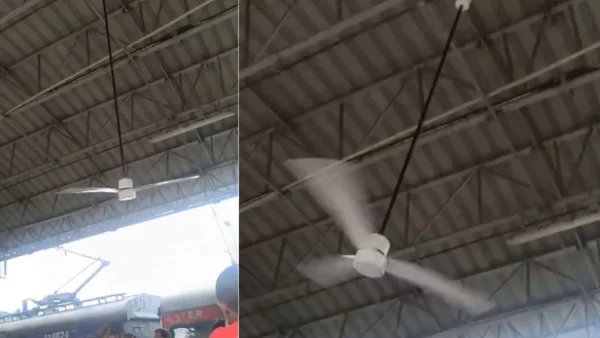
A railway fan is supposed to keep passengers cool.
It is not supposed to become a projectile.
Yet when reports emerge of broken fans falling inside railway station or poorly maintained railway equipment causing injuries, the question isn’t just about one faulty fan. It is about a much larger issue—India’s culture of reactive maintenance.
Somewhere between routine inspections and official paperwork, public safety seems to have gone missing.
And unfortunately, this is not just a railway problem.
The Real Culprit Isn’t the Fan
A fan doesn’t suddenly decide to fall.
A bridge doesn’t wake up one morning and collapse.
Tracks don’t crack overnight.
Signals don’t fail because of bad luck.
Most accidents begin weeks or months earlier—with a missed inspection, a delayed repair, ignored complaints, poor supervision, or plain negligence.
By the time something breaks, the failure has already travelled through multiple desks, signatures, and inspections.
The fan is only the last thing to fall.
The system had already slipped.
Negligence Is Becoming Normal
India has some of the world’s largest public infrastructure networks.
But maintenance often struggles to receive the same attention as new projects.
A loose fan.
A broken seat.
Faulty wiring.
Leaking roofs.
Broken windows.
These may appear to be “small issues.”
Until one of them injures or kills someone.
Negligence rarely makes headlines.
Its consequences do.
The Same Story, Every Time
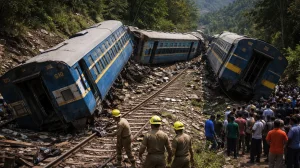
Every major accident seems to follow a familiar script.
Step 1: An accident happens.
Step 2: Officials express regret.
Step 3: Compensation is announced.
Step 4: An inquiry committee is formed.
Step 5: Strict action is promised.
Step 6: Everyone waits for the next accident.
Citizens have started predicting the press release before authorities even issue it.
That’s not a sign of efficiency.
It’s a sign that the response has become predictable.
One Loose Bolt Can Become National News
People often think safety failures involve only large disasters.
Not true.
Many catastrophic accidents begin with something surprisingly ordinary.
One loose bolt.
One ignored maintenance report.
One inspection skipped.
One employee who thought, “I’ll fix it tomorrow.”
Public safety isn’t lost in one dramatic moment.
It is lost in hundreds of small acts of carelessness.
What Should the Government Do?
Instead of responding after every accident, authorities need to make prevention the priority.
Some practical steps could include:
Mandatory digital maintenance records for every railway coach.
QR codes inside coaches allowing passengers to instantly report defects.
Independent third-party safety audits instead of only internal inspections.
Surprise inspections by senior railway officials.
CCTV monitoring of maintenance depots.
Strict disciplinary action where negligence is established.
Public disclosure of maintenance performance so passengers know how seriously safety is being managed.
Accountability should travel faster than compensation.
Negligence Must Have Consequences
Not every accident is avoidable.
But negligence should never become routine.
If investigations establish that safety checks were ignored, action should be visible and proportionate.
That may include:
Suspension of responsible officials during inquiry.
Departmental proceedings where procedures were not followed.
Retraining of maintenance staff.
Stronger supervision at depots with repeated safety lapses.
When accountability is consistent, safety culture improves.
The Internet’s Verdict
As expected, social media responded with a mix of frustration and humour.
“The fan had a confirmed ticket to the lower berth.”
“Indian Railways now offers AC, Sleeper… and Surprise Fan Drop.”
“The maintenance report was probably travelling in another train.”
“The fan believed in direct passenger interaction.”
“The only thing faster than the train is the compensation announcement.”
A Little Sarcasm
“Preventive maintenance is apparently waiting for platform clearance.”
“The fan completed its own emergency evacuation.”
“Inspection done? Yes. Properly? That’s a different question.”
“Some equipment retires before railway employees do.”
“Passengers book confirmed seats, not surprise engineering tests.”
The Bigger Question
India has invested heavily in modern trains, new stations, dedicated freight corridors, and high-speed rail projects.
These are achievements worth celebrating.
But the success of a railway system is measured not only by the trains it launches—it is also measured by the safety of the coaches already in service.
Passengers don’t judge governance by the number of press conferences after an accident.
They judge it by whether accidents could have been prevented in the first place.
A broken fan may seem like a minor maintenance issue.
Until it falls on someone’s head.
That’s the difference between maintenance and negligence.
One prevents accidents.
The other waits for them.
And in a country where millions travel by train every day, luck should never become part of the safety policy.