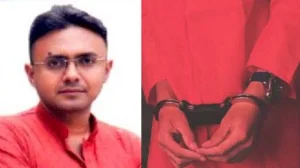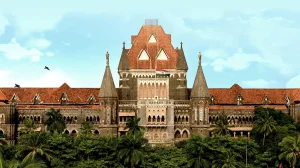
A Delhi court has convicted former AAP councillor Tahir Hussain and four others for the murder of Intelligence Bureau officer Ankit Sharma during the 2020 Delhi riots, a ruling that sharpens the focus on accountability in mass violence cases. Six co-accused were acquitted for lack of evidence, and the conspiracy charge against Hussain was dropped.
What the court held
Additional Sessions Judge Praveen Singh at the Karkardooma Court found suspended AAP councillor Tahir Hussain guilty under IPC provisions linked to murder, promoting enmity between different religious groups, rioting and assault or criminal force used to dishonour a person. The court, however, acquitted him of criminal conspiracy.
Nazim, Kazim, Javed and Anas were also convicted under provisions related to rioting. Of the 11 accused, six were acquitted after the court said evidence was insufficient. Hussain broke down in court after the verdict, according to accounts from the courtroom.
How the case unfolded
Ankit Sharma, a 26-year-old IB officer, was killed amid the communal violence that swept northeast Delhi in February 2020. His body was later found in a drain in Northeast Delhi’s Vhand Bagh area, spurring nationwide outrage.
The case began with a complaint by Sharma’s father and was registered at Dayalpur Police Station. Delhi Police filed a chargesheet against Hussain and 10 others under IPC Sections 109, 114, 147, 148, 149, 153A, 302, 365, 436, 505, 201, 120B and 34. The court described its ruling as among the most significant arising from the 2020 riots.
Why this verdict matters
The judgment blends severe convictions with multiple acquittals, underscoring the high bar courts set on proof in riot trials. It is also a milestone for victims’ families seeking closure in cases tied to one of Delhi’s deadliest episodes in recent years, in which at least 53 people were killed.
Key stakes emerging from the ruling are clear:
– Accountability for violence during the 2020 Delhi riots
– Evidentiary standards in complex mob cases
– Scrutiny of local leadership during unrest
Positions and past statements
Sharma’s family had blamed Hussain for leading a mob that killed the young officer. The drain from which Sharma’s body was recovered is close to Hussain’s house.
Hussain, a councillor from Ward number 59 under the Mustafabad assembly constituency who won the 2017 municipal election, had earlier posted on Facebook that he and his family were whisked away by police when protests began on February 24. He said police controlled his building, and after a brief return on February 25, he left again on police advice.
He added in that post that he had not returned to the house since and did not know who did what in that building. He had declared assets worth Rs 16 crore in his election affidavit.
What comes next
Sentencing is expected to follow in accordance with legal procedure. With four co-accused convicted for rioting and six others cleared, the court will now turn to determining punishment based on the offences proved.
For communities in northeast Delhi, the decision may signal a path forward in a series of riot cases still moving through the courts. For the political class, it renews questions about leadership during crises and the consequences when order collapses.