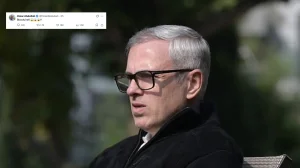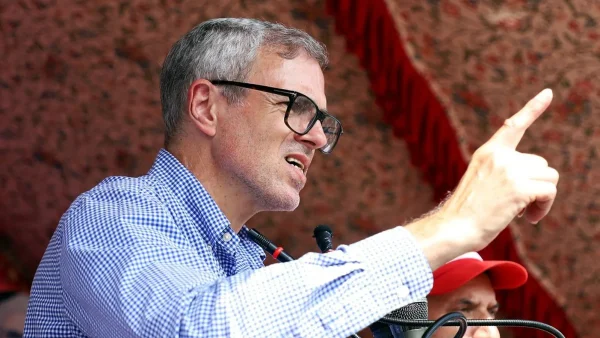
Omar Abdullah didn’t cut the saffron, white and green ribbon when opening the handicrafts and handloom exhibition at Kashmir Haat. He untied it and gave it back to the organizers, asking them to carefully look after it. The opening then proceeded after the ribbon was removed.
The moment at Kashmir Haat
When Abdullah was opening the ‘Know Your Artisans’ exhibition at Kashmir Haat, he stopped when he saw the stripes of the flag on the ribbon. The video shows him stepping towards it, noticing the colours, and then stepping back to untie it instead of cut it. He then told the organizers to put it somewhere safe.
Surinder Choudhary, the Deputy Chief Minister and Nasir Aslam Wani, an advisor to the Chief Minister, were with Abdullah at the event. Everyone there, including officials and visitors, saw Abdullah give the ribbon back. After it was taken away, he formally opened the exhibition and spoke to the craftspeople present, keeping to the original schedule.
Legal and symbolic dimensions
People think Abdullah’s actions were due to both the meaning of what he did and the law. The Prevention of Insults to National Honour Act of 1971 says that damaging the flag is disrespectful. Cutting or ripping the flag can lead to legal problems and make the public think badly of you.
However, courts have made it clear that there are limits. The High Court in Madras has said that things that just have the colours of the flag on them, like cakes or decorations, aren’t necessarily against the law. This slight difference in the law means people should be careful when using national symbols.
Abdullah’s decision seems to be an attempt to respect the flag while also dealing with the tricky legal side of showing it. He showed he thinks the flag is valuable and important by returning the ribbon and asking for it to be kept safely.
Abdullah’s prior remarks on the national flag
The chief minister has often spoken about how important the national flag is. In August 2025, he was in a ‘Tiranga Yatra’ (a flag procession) on Dal Lake in Srinagar and encouraged people to value the flag as something that represents togetherness, peace, and all the different cultures in the country. He emphasized being fair to all religions and being friendly to each other.
He also mentioned the recent changes to the law and society that now allow people to display the flag at home. Abdullah said that being allowed to fly the flag showed how proud people were of their country and that people can make changes to the way things are done by using legal processes and the courts.
Public response and political implications
A video of what happened with the ribbon quickly went around social media, and people, activists and political analysts all had their say. People who supported Abdullah said his gesture was respectful. Others wondered if it was necessary or just for show. When things like this become very popular on the internet, people often start discussing bigger issues instead of the event itself.
For politicians, even little things to do with the national flag can be very important. In areas that have had complicated political pasts, the way a leader behaves at official events can affect how people feel and what the media says. Abdullah’s action will almost certainly be understood in the context of these wider discussions.
The exhibition itself was about the work of local craftspeople and their traditional skills, providing a practical way to help the economy and culture of the area. By continuing the opening after getting rid of the ribbon, Abdullah made sure people focused on the exhibition and what it was trying to achieve, and avoided a row over the flag.
In general, this incident shows how national symbols continue to influence how people act, how the law is understood and how politicians communicate. It also shows how careful leaders are to respect national identity alongside what the public thinks and the law.