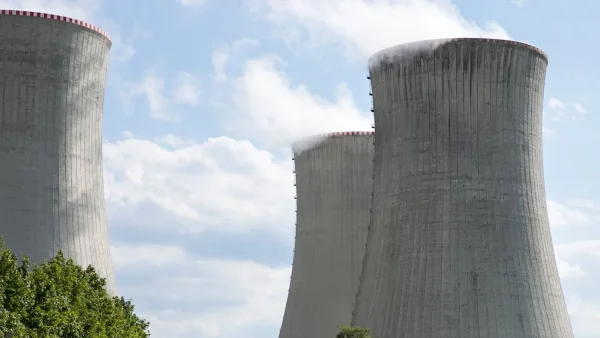
The ambassador said India and Pakistan have had a long-standing agreement to not attack each other’s nuclear plants. He said these promises are particularly important now that there’s more tension in Western Asia, and he pointed to a recent attack on a nuclear site in the region as a warning to all countries.
Both India and Pakistan have a history of understanding that nuclear sites should be off limits during a conflict. Both countries have also spent money on protection and plans that will reliably keep these sites safe from being attacked or sabotaged.
These agreements are part of a larger system for lowering risk on the Indian subcontinent. They help calm the often unstable relationship between India and Pakistan and make it less likely that a regular war will turn into a disastrous attack on nuclear power plants, whether civilian or military.
Regional implications after the Bushehr incident
The diplomat brought up the recent attack on the Bushehr nuclear plant and warned that there would be serious consequences if nuclear facilities are targeted. He believes that if these sites are damaged, it could cause problems for the environment, for people’s lives, and for the economy, and those problems would spread far beyond the country where the damage occurred.
He said that the pollution from such an incident could affect the Persian Gulf and neighboring countries, Pakistan included, and insisted that nuclear plants should be completely safe from attack. He said the Bushehr attack should be a lesson to everyone: attacking nuclear facilities is both unacceptable and dangerous for peace in the area.
Diplomacy, de-escalation, and third-party influence
When talking about the recent issues between India and Pakistan, the ambassador said Pakistan wants to have talks to calm things down. He said that pressure from other countries to use diplomacy helped to ease a really bad situation in May 2025 and that high-level communication encouraged both sides to be more careful.
Indian officials have said that the lines of communication between the armies, including talks between the heads of military operations, were the biggest reason the fighting stopped. The ambassador added that direct talks between the military in each country can work with international mediation and reduce the chance of mistakes.
He said both India and Pakistan should continue talking to each other, rebuild trust, and work out a plan for managing the risks. He argues that continuing to have a conversation is the best way to keep the promises about nuclear safety real and working in the long run.
Russia’s potential role and prospects for cooperation
The ambassador said Pakistan would like to work with Russia on nuclear safety and on building trust. He pointed to Russia’s long relationship with India and said Russia could be an unbiased mediator to help improve relations and make practical cooperation on nuclear security happen.
Pakistan being part of regional organizations and its interest in wider economic partnerships are reasons why Russia’s help could be useful. The ambassador said there are already areas where all three countries have contact and work together, and these could be used to set up agreements with three or more countries focused on preventing attacks, protecting facilities and being more open about what’s happening.
In conclusion, the ambassador is basically saying that a sensible approach to security involves the fact that both sides having promises to each other and using diplomacy will reduce the chance that a military conflict will lead to a nuclear disaster. Because of the conflicts in Western Asia showing how easily nuclear safety can be broken, Islamabad says working together, being open, and getting help from other countries are all essential to protecting people and important structures.