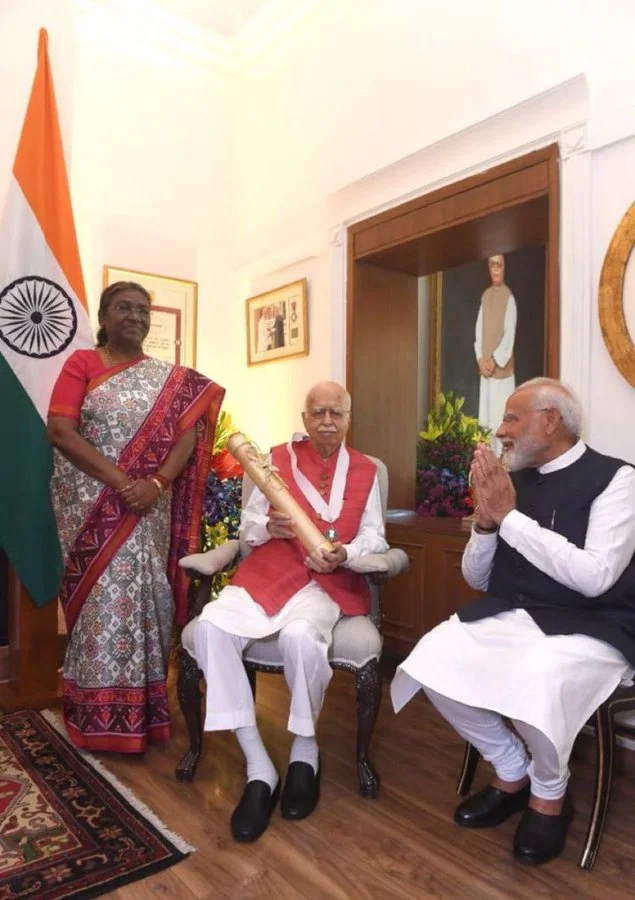
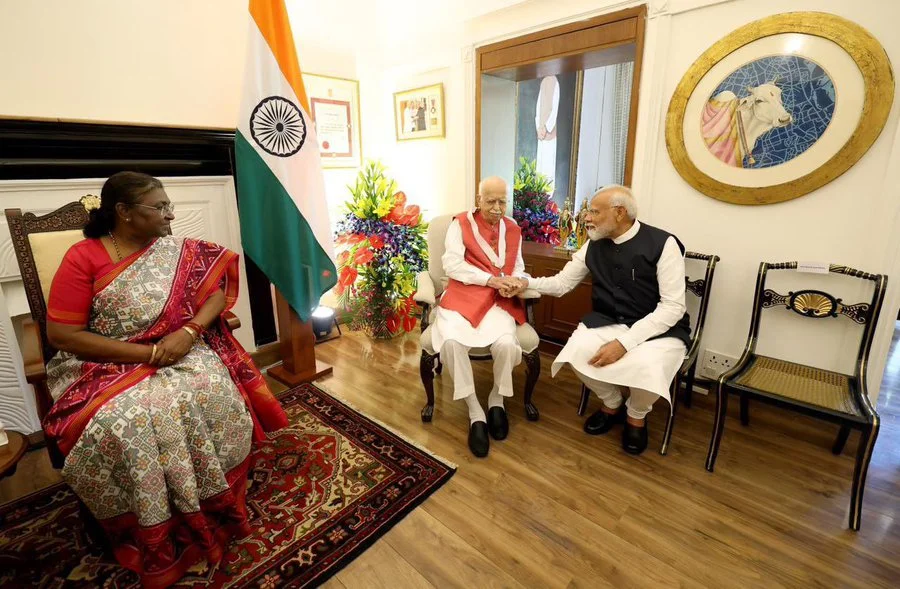
A new cycle of political argument started after Banerjee used the 2024 photo to respond to Modi’s criticism, about what he said was a lack of respect for President Droupadi Murmu. The photo – from the Bharat Ratna award for L.K. Advani – shows the President standing and the Prime Minister sitting; this added fuel to the already-hot row over correct behaviour.
How the President’s visit led to a political fight
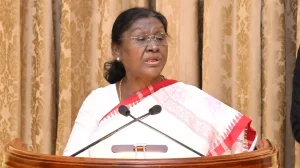
The trouble began when President Droupadi Murmu went to north Bengal on Saturday for the ninth International Santal Conference, close to Siliguri. In her speech, the President said that neither the chief minister, nor a minister in the cabinet, had been at Bagdogra airport to greet her.
Generally, she said, a chief minister welcomes the President when she arrives. She also asked about a change of venue for the event at the last minute, and said the new location made it harder for people in the Santhal community to be there. Her words got to people, about both correct behaviour and making sure everyone was included.
Even while she was showing she was let down, President Murmu tried to make her words softer. She called Mamata Banerjee her ‘younger sister,’ and said she was a ‘daughter of Bengal.’ But mixing criticism with trying to be friendly did not stop the trouble.
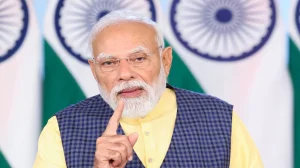
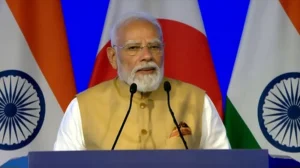
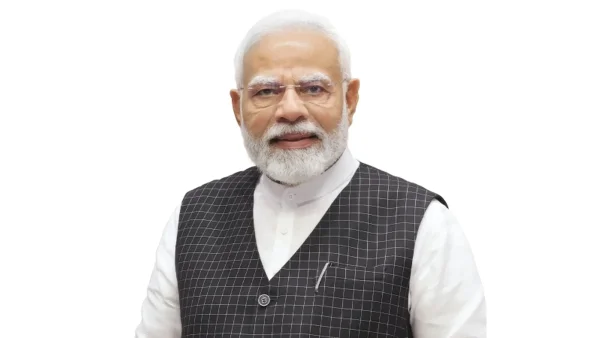
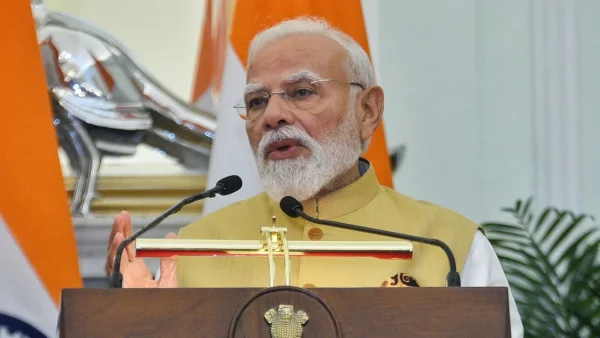
Within a few hours, the whole thing became a bigger political issue. PM Modi called what had happened 'shameful and never-before-seen‘ and said the West Bengal government had not shown respect to the President – and, by that, to a tribal woman in the highest office in the country.
TMC’s reply, with the 2024 photo
The Trinamool Congress answered by showing images of their own. On Sunday, the party passed around a photograph from March 31, 2024, when President Murmu visited L.K. Advani’s house to give him the Bharat Ratna. In that photo, Murmu is standing, and Modi is sitting next to Advani.
The TMC, on X, accused the Prime Minister of being two-faced, by sharing the image. The party said that the photo went against claims that the Prime Minister always respected the President’s office. They made the point in speeches and posts, and used the image as the most important part of their reply.
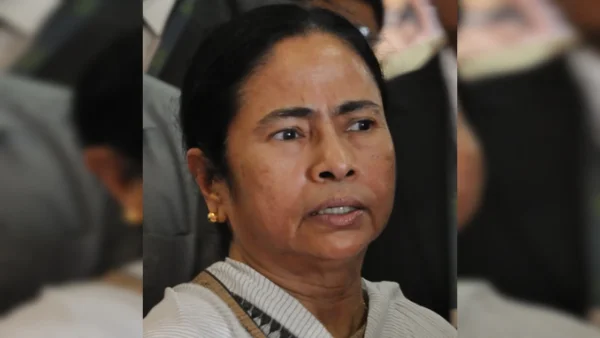
At a meeting for the public, Mamata Banerjee spoke directly to the Prime Minister. She asked why the President was standing in the photo, while he was sitting. ‘This photo shows who has respect, and who doesn’t,’ she said, making the argument about what things mean and correct behaviour.
Banerjee also said the state had nothing to do with arranging the International Santal Conference. She said a private group had run the program, and the state had warned them earlier about not having enough space. The President’s office, she added, had chosen to accept the invitation.
She also said Siliguri mayor Goutam Deb had met the President at Bagdogra airport, going against claims that the state had completely ignored what the rules were. As for her not being there, Banerjee said she was in the middle of a sit-in protest in Kolkata, and could not leave it.
What the Bharat Ratna award event was like
The 2024 photo is from a serious award at Advani’s house, not a normal event run by the state. That small difference has affected the argument. The TMC says that, no matter the situation, what things look like matters when you are judging if someone consistently respects official roles. BJP supporters say that correct behaviour can change with the location and how the event goes.
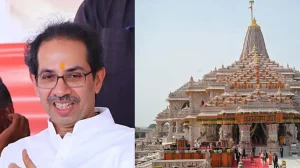
Using what things look like in politics is not new in India. Abhishek Banerjee – a TMC leader – made the argument wider by asking why the President had not been invited to open the Ram temple, or the new Parliament building. For the TMC, these examples back up their charge of people only being angry when it suits them.
BJP’s reply, and the argument over respecting official roles
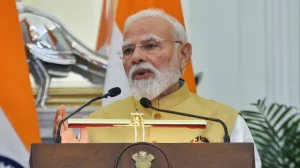
PM Modi, speaking on International Women’s Day, said the West Bengal event was an insult not only to the President, but to women and tribal groups. He stated that the people of West Bengal wouldn’t excuse the ‘insult’, and blamed the TMC for going too far in terms of what is proper behaviour towards the government.
BJP politicians said the same thing, connecting the event to what they think is a habit of not valuing institutions. They made a point of comparing this to national programs meant to help women and groups of tribal people, in order to clearly show the difference between the TMC’s actions and style of politics.
The TMC, however, says the central government is turning a private event’s arrangements into a political issue. Banerjee repeated that the airport authority – not the state – is in charge of the place’s services, like the restrooms. She claimed that any failures were about management, and not the state’s responsibility.
Both parties are really trying to shape how this is seen: the BJP is presenting a failure of duty and respect to the President, while the TMC is making the issue one of being even-handed and acting in good faith – with the photo of the President standing and the PM sitting as the main point of their argument.
Requests for explanations about protocol, arrangements, and what the centre wants to know
The central government has formally asked the West Bengal government for an explanation. Govind Mohan, the Union Home Secretary, asked the state’s chief secretary for a full account of the protocol issues that supposedly happened. The request includes the change of venue, the route the President took, and the fact that top state officials weren’t there.
It wasn’t yet known when the state would give in the report. The state’s answer will decide whether the argument stays a verbal one, or turns into an official finding of blame. It might also show what part, if any, the state had in choices which changed who came and had access.
Normally, when a President visits, senior state people should be there – though exactly what is needed depends on if the event is run by the government, or by private people. This uncertain area is now the main point of the argument, with each side using different parts of the situation to make their point.
Banerjee said the President’s office chose to go to a conference run by private people, and that her government wasn’t involved in the arrangements. She also said the state had warned the people holding the conference about how many people the place could hold, suggesting problems could be expected and were caused by outside factors.
What’s at stake politically, getting to communities, and what will happen
The quarrel is now more than just about a reception at the airport and a change of venue. With elections for the assembly coming, both the BJP and the TMC are trying out messages aimed at women, tribal groups, and voters who haven’t made up their minds. North Bengal and the Santhal people are very important in these plans.
The images are very strong: the President making a remark about how she was received, a chief minister protesting by sitting in public, a photo which is argued about from a Bharat Ratna ceremony, and a prime minister speaking for respect for institutions. Each side will use this set of images on the campaign.
Social media has made the argument louder. The TMC’s video posts and the sharing of the 2024 photo on X have kept the issue in the public eye, and caused BJP supporters to post against it, and look at past ceremonial choices involving the President again.
The stakes go to how the country is run. If the report the centre asked for finds specific failures of protocol, it could lead to advice to the administration, or new political criticism. If the state proves the claims wrong with documents, the TMC will likely make its argument about selective anger even more strongly.
Besides the immediate results, the event shows how strong pictures are in Indian politics. Who stands, who sits, who attends, and who doesn’t, can be more important than longer arguments about policy. For voters, the test will be whether these pictures match what they think of respect, inclusion and being held to account.
Both sides are sure the meaning of the pictures will be what they want. The BJP is counting on respect for institutions and reaching out to tribal people. The TMC is depending on the state’s freedom, details of management, and reminders of past ceremonies where – it says – respect for the President was also about images.
In the near future, look for three things: the state’s formal report to the centre, any extra visual proof either side may show, and efforts to reach out to the Santhal community. In a close election time, even one photo can decide a week of campaigning – and maybe more.