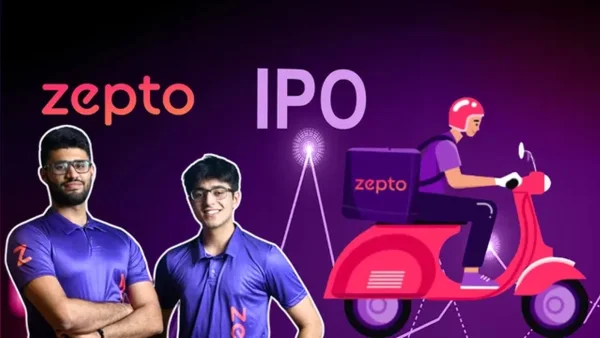
The race for quick commerce in India is now going to involve companies being listed on the public market. Zepto is preparing for its IPO in June or July of 2026, with the goal of raising about Rs 11,000 to 12,000 crore. Investors will use the listed Blinkit and Swiggy (which runs Instamart) to judge Zepto, and the winner will be determined by how large a company is, how much profit it makes from each item, and how much money it has available.
Zepto’s IPO timeline and deal contours
Zepto has secretly submitted its plans to the Securities and Exchange Board of India (SEBI) and is working towards being listed in the middle of 2026. Because it’s hoping to get Rs 11,000 to 12,000 crore from the IPO, it will be one of the biggest new Indian companies to do so recently.
Before the IPO, Zepto made its financial situation stronger. In October, they received $450 million from both new and existing investors, which made the company worth approximately $7 billion. This new money will help the company expand and make it less likely to need to borrow money soon.
Being publicly listed will also force Zepto to be more careful. They will have to publicly announce their results every three months, and this will push them to show improvement in how much they make from each sale, how much each order costs, and how much money they are losing. This increased attention is happening as quick commerce moves from growing very quickly to making a consistent profit.
Market structure and scale: Blinkit leads, Zepto closes in
Blinkit (owned by Eternal) has the most “dark stores” (small warehouses in neighborhoods) of the three. As of December 31st, 2025, they had about 2,027, and plan to have 3,000 by March of 2027. Having a lot of these stores all over a city means shorter delivery routes.
Swiggy Instamart had 1,034 dark stores during the same time. Zepto currently has over 1,100, putting it in between the other two. How good the network of stores is, not just how many there are, is important for finding the best delivery routes and selling items quickly.
Order volumes and demand profile
In terms of how many orders each day, Blinkit was in the lead in the last three months of t2025 with around 2.6 million. Zepto averaged about 2.4 to 2.5 million orders a day from January to March, getting closer to Blinkit. Swiggy Instamart handled roughly 1.2 million orders daily.
When you have more orders in a specific area, you get more benefit from how the business operates. Delivery people can drop off more orders per hour and group orders together more easily, which increases profits, especially when the average amount of each order stays the same. The leading companies are also encouraging customers to buy more with their own brands and carefully chosen selections.
Financial performance and path to profitability
Blinkit reached a milestone in the October-to-December 105 quarter of 2025, making an adjusted profit of about Rs 4 crore (before interest, taxes, depreciation, and amortization). This is an improvement from a loss of roughly Rs 156 crore in the previous quarter, and shows how operating efficiently and getting more money from sales increase profits as the number of orders and revenue go up.
Swiggy Instamart is still losing money. It lost about Rs 791 crore in the same quarter, even though its adjusted revenue went up to around Rs 1,052 crore. The company’s leadership has stopped offering free delivery and expects to break even on contribution margin (revenue minus variable costs) between April and June.
Zepto is doing better but still reports a loss. It had a loss of about Rs 55 to 60 crore in the three months ending in March 2026, which is an improvement over the Rs 100 to 110 crore loss from July to September. However, compared to how large it is, Zepto is losing more money than the other two.
The companies that own Blinkit and Swiggy are helpful. Eternal can make up for Blinkit’s ups and downs with the profits from its food delivery service. Swiggy has also gotten money from the public market and institutional investors. Zepto, however, is going for an IPO without a parent company that’s making a profit to balance out any problems.
All across the industry, companies are being more careful with their prices. Companies running these services are saying they won’t go back to things like completely free delivery or dropping all handling fees. Instead, they’ll have promotions aimed at specific groups of customers, change how their fees are set up, and work on steadily increasing how much money each order brings in.
Funding firepower and competitive advantages
Companies are again starting to gather lots of money. Zepto’s recent $450 million gives them the financial ability to build more of their small warehouses, improve their technology, and get deliveries to people more efficiently. However, they still have to show they are consistently spending less money as they get bigger.
Swiggy got about 10,000 crore Rupees in December 2025 from a sale of shares to institutions. This followed their November 2024 IPO (initial public offering) which brought in about 4,500 crore Rupees. Eternal received roughly 8,500 crore Rupees in 2024, which gives Blinkit more time to grow because they have the funds to do so.
Having capital allows for more types of products and better profit on each item sold. Leaders are putting money into programs that figure out the best routes for delivery, predict how much will be bought, and plan inventory to avoid running out of items or having things go bad. Getting items back in stock more quickly and selling more of their own brands can improve how much money they make on each sale.
The items they sell are important too. They are aiming to fulfill more of a household’s needs, from fresh food to medicine to phone accessories. Also, advertising and deals with brands on their apps can bring in a lot of profit, particularly as they grow.
Key metrics investors should track ahead of listing
When looking at how much each order actually makes, look at the profit after delivery costs, discounts, and general business costs are taken out. To get to the point where earnings before interest, taxes, depreciation, and amortization (EBITDA) are zero (breaking even), they must have a positive profit on each order.
How much people spend on average per order, and what they are buying, is also important. A higher average order value helps cover the delivery fees. Selling more of their own brands and items that aren’t groceries can also increase how much money they make on each sale.
Relying too much on delivery and handling fees can limit growth. It’s healthier to have a mix of ways to make money with loyalty programs and advertising.
How well the small warehouses are working is measured by how many orders each store handles each day, and how quickly items are picked within the hour. These numbers show how efficiently they’re operating and how well they are using their workers.
How efficient the final part of delivery is (the “last mile”) is shown by how many deliveries each driver makes each hour, how often orders are grouped together, how often orders are cancelled, and how often deliveries are on time. These things affect how happy customers are and how much it costs.
How often the inventory is sold and how much is wasted are important. Items being sold quickly reduces the amount of money tied up in stock. Reducing waste is particularly important for fresh foods.
Looking at how groups of customers behave – how often they order again, how often they order each month, and how many customers stop using the service in each city – shows how loyal customers are and how long it takes to make a profit from them.
How much money is being spent and how long the company can continue at that rate (the “runway”) will decide how much Zepto can invest after becoming a public company.
When they open in new cities or smaller areas within cities, those areas should grow predictably and not cause problems for areas where they already have a lot of customers.
Risks, outlook, and valuation context
Competition is still very strong. Blinkit’s size and the fact they are getting more profitable set a high standard. Instamart has money to grow and improve its profits. Zepto needs to grow their network but also spend carefully so they don’t reduce their profits.
How stable the price of supplies are is another risk. Increases in the price of gas, packaging and workers can reduce profits unless they raise prices or become more efficient. What types of items people are buying also matters; if more people buy fresh food and the company isn’t very good at predicting demand, more of it will go to waste.
Changes in the rules could affect delivery fees, platform fees and how workers are classified. Anything that makes it more expensive to follow the rules or limits how much they can charge will reduce profits. Having good management and being open about what they are doing can lessen some of these worries.
On the positive side, quick commerce is becoming more and more a part of how people in cities shop. As people order more frequently and more types of items, the platforms have more chances to interact with each household. Money from advertising, working with financial tech companies, and offering services to merchants can provide income beyond just delivery fees.
How much the company is worth will depend on how well they do things. Investors will compare Zepto’s growth in revenue, how quickly they will reach a point of positive EBITDA, and how efficiently they use their money to other public companies. Blinkit is almost consistently profitable and Instamart is saying they are breaking even at the contribution level, so Zepto has a clear goal.
In short, Zepto’s IPO is happening at a crucial time for quick commerce in India. If they continue to increase how much they sell while decreasing their losses each quarter, the stock market will likely respond well. The next year will show if they can actually operate efficiently and turn speed into lasting profits.