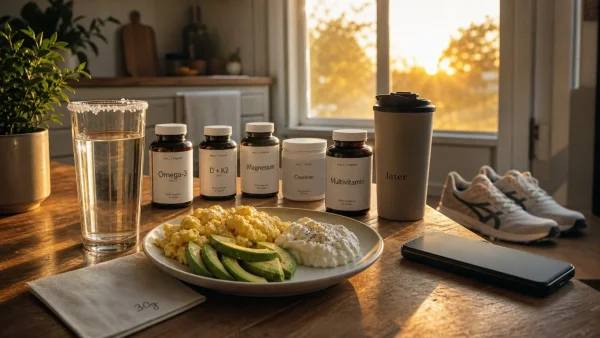
If you ask a doctor like Vassily Eliopoulos, what you do in the a.m. is going to put you in a certain headspace for the 16 hours or so that follow. In a video from June 13, he made a case for five habits he won’t do without – they run about 45 minutes in total.
Put simply: those first 90 minutes are where you have the upper hand. That’s when you can put down some roots for your circadian rhythm, which in turn will have a say in your cortisol, melatonin, and even how you handle food and sleep well after you’ve had your breakfast.
Why the first 90 minutes matter
It’s not only about when you hit the hay. Your circadian rhythm has a hand in whether you’re on top of things at 11, why you might be hankering for something sweet at 4, and if you can wind down in the evening. For Dr Vass, the morning is a way to put that clock back in order.
So he’s for putting the phone down and getting some sun. He’ll tell you that 30 minutes of daylight is what you need to get your body in sync and have your hormones in the right place for the rest of the day.

Light first, screens later
The advice is to let some sun in your eyes as soon as you’re up, and hold off on the screen time. It’s the one thing the body needs to know it’s time to be up. Do it and you’re looking at more even-keeled energy and a better night's rest, he says.
Don’t overthink it. Get in front of some natural light, then you can get to your inbox. It’s a minor change but it underpins the rest of his pre-breakfast regimen.
Hydration and movement beat early caffeine
You’ve been up to eight hours without a drop of water, so you’re running a little dry. To make up for it, Dr Vass will have you put 16 to 24 ounces of water with a dash of sea salt in you within the hour.
‘Drink a litre of water with a pinch of salt within the first hour of waking,’ he puts it. The idea is to put some electrolytes in the system to get your cells working again and clear your head for the day ahead.
Then you put in some work. A 20 or 30 minute walk or some light lifting, but no caffeine yet. He figures if you move first, you don’t end up with as much of a jolt from the coffee when you finally have it.
It’s a way to let the body come to. Move, and then have your drink. You can make a small change and it will have an outsize impact on your stress levels and how you’re able to concentrate by the time the morning is well under way.

Put off that first cup, and savor it
When you have to have your coffee, he’s for having it 60 to 90 minutes in. Since cortisol is at its highest in the early hours, holding back on the caffeine can take the edge off your stress response and stave off the lull you might hit in the afternoon.
Caffeine has more of an effect when you are already up and about. Have some water, see some light, put in a little movement and the coffee is something to add to your day, not rely on.
A breakfast with some staying power
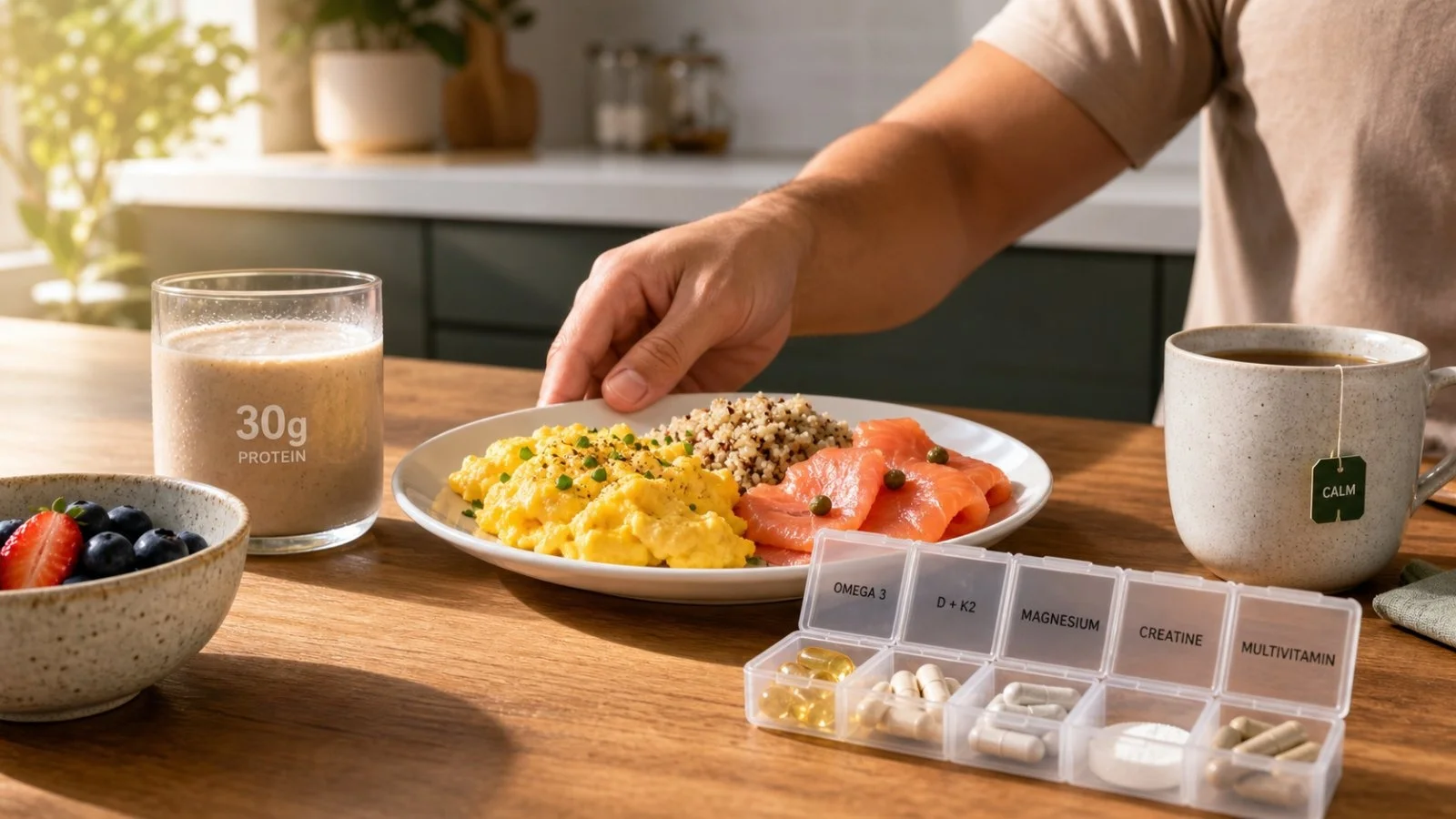
For Dr Vass, breakfast is what keeps your metabolism in check. He’ll have you down a protein-heavy meal within 90 minutes of getting up – 30 grams or so to be on the right side of things.
It does a number on the insulin you’d otherwise put out for later meals and is good for your muscles. You end up with more even-keeled energy, less of a yo-yo effect, and it all adds up to better health as you get older.
Make a habit of your supplements with your meal
He likes to tie his must-haves to breakfast so they don’t get left behind. We’re talking omega-3, vitamin D and K2, magnesium, creatine, the usual multivitamin. His rule of thumb: being consistent is what counts, not how much you take.
Having them with food is easier on the system for the fat-soluble ones and makes it part of the routine. It’s about being reliable, not overcomplicating it.
In practice
Dr Vass, an MD from Cornell and the CMO of Longevity Health, is hard on himself to stick to these. He doesn’t see them as some kind of trick but as no-nonsense, low-cost fixtures in the day.
Put them all together and it’s a matter of timing, not will. Some light before you look at a screen, water before the coffee, a bit of activity before you open your inbox, protein to head off any hankering. They are unassuming on their own; in combination, they are the plan.
Here is how he puts it:
– Get some light in the morning
– A glass of water, maybe with a little salt
– 20 to 30 minutes of moving in
– 30 grams of protein
– Your supplements with the meal

Why do it?
Because for most people the morning is a blur of phone, coffee and running out the door. Change the order and you change the result. Come noon, you can either have your energy or be in pursuit of it.
These are the things he does every day, he says. They’re meant as a guide, not a doctor’s orders, and they come from his own track record and what he’s put out there online.
What you need to know
There is no need for a complicated regimen to be in a good headspace by mid-morning. If you can manage the first 90 minutes, as Dr Vass would have it, the rest of the day will show for it.
*This is for information only and should not be taken as medical advice.*