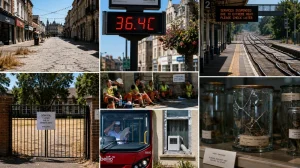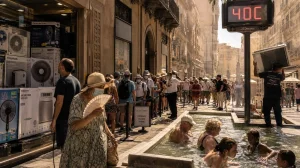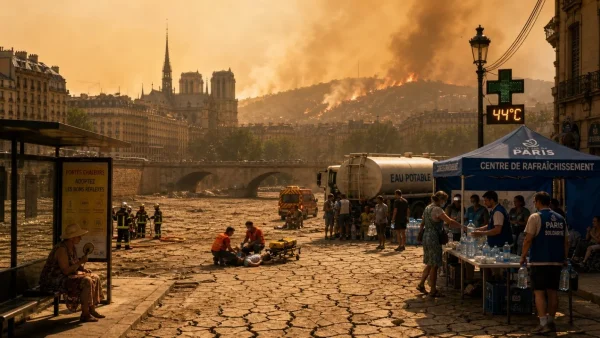
It has been a deadly, disruptive few weeks for Europe. Since June 21 we’ve seen more than 1,300 excess fatalities, along with roads that won’t hold up, tram lines giving way and power grids on the fritz. You have countries where it’s over 40C; in Ukraine the war-torn grid is under pressure, and in the Balkans, wildfires are on the move, prompting red alerts and a heavy hand from the authorities.
Infrastructure buckles as Europe sizzles
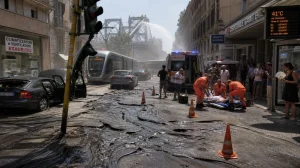
In city after city, the heat is making a nuisance of everyday life. Transport companies have had to put up with rails and tarmac that don’t want to be worked with, leading to some hasty closures in areas not used to this kind of long-haul weather.
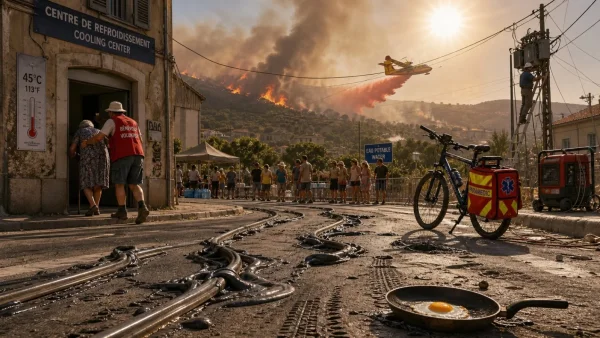
There was a clip from Leipzig that made the rounds, of sealant around tram tracks melting and oozing before it set into a hard lump. It’s a good example of how the sun is getting the better of materials put in for a more temperate summer.
Then in Poland, a video from Warsaw went viral of a woman cooking an egg in a pan in the open as it neared 40C. A bit of a stark image for a heatwave that made its way from the west and is now well to the east.
Deaths climb and health systems strain
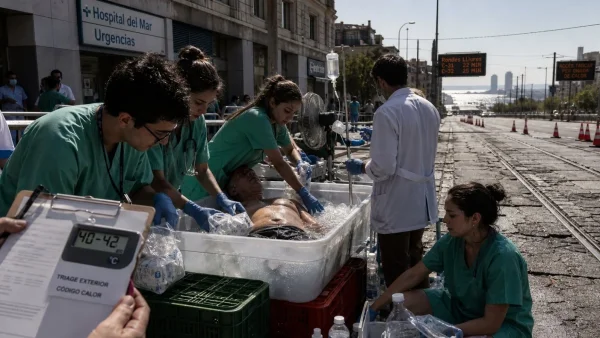
By the WHO’s count, we are looking at 1,300-plus excess deaths since the end of June. The numbers tell a story: 85 per cent of those who have died were 65 or up, and when the nights don’t cool off and you can’t find any shade, the elderly are in the most danger.
You see the toll in other ways too. There have been 74 drownings since mid-June, people who thought a dip in a river or lake would do them some good. In Paris, the morgues and funeral parlours are full to bursting with the upturn in deaths.
Some of the west is seeing a lull, but the trouble is moving. Monday should bring 35C or more to 130 million, which means the hospitals and care homes will have to keep up the pace.
Ukraine’s grid faces emergency outages
All of this is on top of the damage from the war. After 36C was reached in the Rivne area, Ukraine had to call for some emergency blackouts in the west. They did the same in Khmelnytsky and put five other regions on notice to be ready for the lights to go out.
The state weather service is calling for 35-38C, and with that comes the need to cool down. “We are putting additional stress on what is already at its limit,” said Yasno’s Sergii Kovalenko, as they work to make repairs.
When the demand is this high, you have to make some tough calls to keep the supply steady and the equipment from failing. It’s a fine line to walk after four years of Russian strikes on your energy system.
Balkans battle wildfires and red alerts
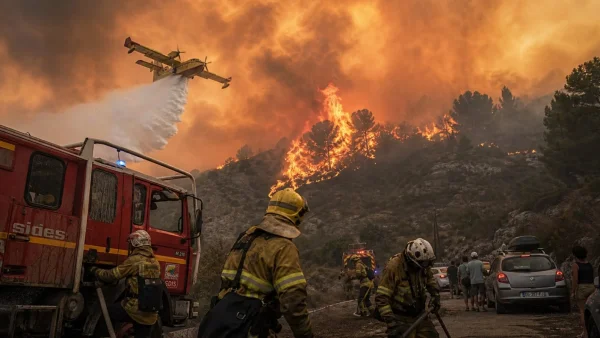
With 40C in the offing, the fire crews are having their hands full. On the island of Vis in Croatia, they put out dozens of men and planes to put a lid on a forest fire. In Bosnia they are at it near Mostar, and in Albania they put out one that had run through the olive groves and brush by the village of Klos.
Zagreb, Split and Dubrovnik in Croatia are under red alert. Serbia says it could be 39C, and in Kosovo they are telling anyone at risk to stay in until the worst of the day is over.
Records and official responses
World Weather Attribution has it down as the worst we’ve ever had in Europe. As the heat has moved to the east, so have the record books.
Turna nad Bodvou in Slovakia hit 41C for a new high. Germany and the Czech Republic have been over 41 and 40 respectively. Basel in Switzerland saw 38.8C, Denmark had its hottest day in 150 years, and the UK had a record for a June.
Hungary was right on the cusp of a national record with 41.8C in Aszod, only a fraction off the 41.9C from 2007. You can see the governments in a hurry to do something about it as the thermometer doesn’t seem to want to budge.
Here is what is being done or put in place in some of these places:
– Telling civil servants in Hungary to work from home
– Moving any public work outside to when it’s cooler
– Having restaurants put out free water
– Making sure the air-conditioned spots in public are open
– Red alerts for the Croatian coast
– A heads-up from Serbia on 39C
There is some finger-pointing in the public sphere, of course, even as the agencies are trying to get everyone to look out for each other and the heat.
It all comes down to whether the night-time holds or if we get some cooling rain. France is already saying to expect another one in July, so in a way, we haven’t even seen the height of summer yet in Europe.