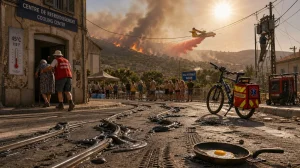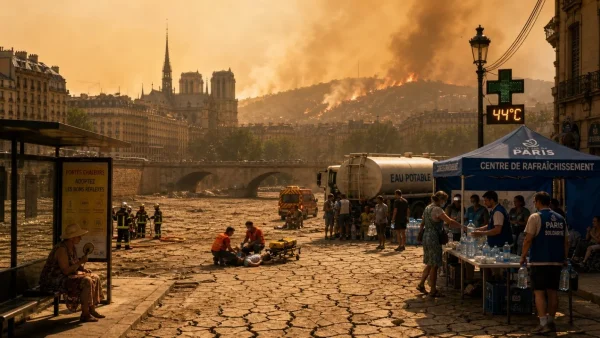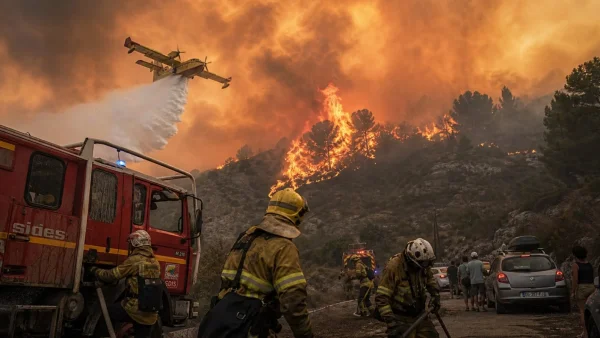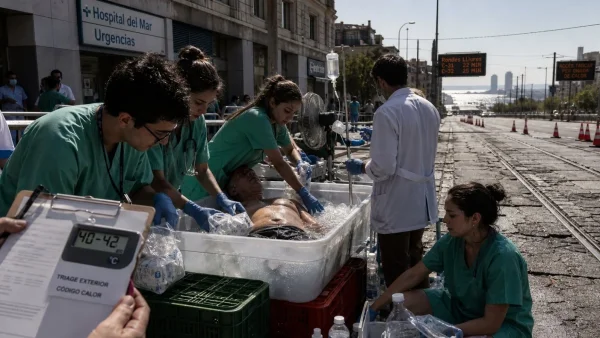
It has been a fast and fatal affair in Spain, where 1,028 have been confirmed as having died from the heat while the rest of Europe bakes. The numbers have the health system on edge and travel in tatters. Even the World Health Organisation is putting it at over 1,300 extra lives lost in Europe since 21 June, with scientists pointing to climate change as the culprit behind the scale of it all.
Spain’s toll and why it spiked
Put this in context and the rise in fatalities is hard to miss. In June 2025, which was already the hottest June in the books, there were 407. The 1,028 we are seeing now is more than double that.
Aemet, the Spanish weather service, will tell you 2026 has been the warmest first half of any year, with an average 1.6C off the charts. And if you look at the seven warmest first halves ever, they have all come in the last decade.
Then came June 2026 to ratchet up the tension. At 3.2C above normal, it was the second-hottest June in history. For the World Weather Attribution group, a heatwave like this in June would be ‘virtually impossible’ if it weren’t for the changing climate.
Hospitals describe a fight to keep patients alive
There has been a deluge of cases for doctors in Europe. Dr Nicolas Gonzales, who runs the ER at Paris-Saclay, puts it plainly: the heat is a ‘physical assault on the body’. He says when the body can no longer make the adjustment, the heart just gives out.
For a solid week starting 20 June, the hospital was swamped. We’ve had everyone from young to old with everything from kidney failure to dehydration and heart attacks. We even had a 50-year-old come in after being found at home, unresponsive, running 40C.
When our own systems couldn’t cope, we had to get creative. We put some in cold-water baths to bring their core temp down in a hurry. Without an ice machine on hand, we made a run to the corner fast-food place and the supermarket for some. You’ll find us using fans and ice to keep the meds from going bad.
Not every room is set up for this. The main part of Paris-Saclay is air-conditioned, but the older wings are another story; one of the top-floor psych units was 33C. We had to call on student nurses to make sure no one dehydrated during the worst of it.
In a way, it is the winter of the world in reverse. You have flu and COVID-19 clogging the wards in the cold months; now the 'climate crisis‘ is the summer version. The message is simple: don’t think this is the end of it, the next one is coming.
Record heat smashed systems across Europe
We are looking at new numbers in the record books. Germany, Poland, the Czech Republic, Slovakia and Hungary have all seen their highest marks. The UK and Switzerland have had their best June, and France has never seen night-time averages like this before.
Germany has had to deal with both the size and the length of it. The German Weather Service has 41.7C on the table for a spot in Brandenburg, and it was the third day in a row of breaking records. With ‘tropical nights’ holding above 20C around the clock, there is no respite.
And the infrastructure has given way.
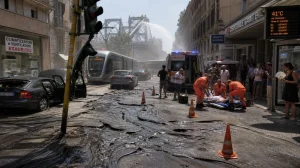
The tarmac in Brandenburg and Saxony-Anhalt has given way, with the A2 put off-limits to drivers. Down in Leipzig, you can find asphalt that’s literally run over the tram lines, a nuisance for anyone trying to get to work in this kind of weather.
It’s not just here; Britain is feeling it too. “You have to make do,” says Sanjeev Kumar, an entrepreneur from London. He points out that most of our homes are double-glazed to hold in the cold, and you won’t find much in the way of air conditioning on public transport or even in some of the local cafes. So people are left to their own devices, buying what they can.
Oceans supercharged the heat, raising future risks
What we’re seeing on land is being driven by the sea. June was the warmest on record for the world’s oceans at 20.98C, besting 2023 and 2024. And with El Nino on top of climate change, scientists say we could be in for more.
There is a direct line from that kind of oceanic heat to the kind of weather we are in now. The WHO puts the toll at over 1,300 extra deaths in Europe since 21 June. They also have a stark way of putting it: if we don’t put in the work to prepare for these summers, we will be paying for it with lives. It’s a hard-nosed look at hospital capacity and who makes it through.
Emergency fixes and long-term upgrades
Public health is now being treated as a priority. In France, Prime Minister Sebastien Lecornu has put 100 million on the table to see to the cooling in hospitals, starting this summer. You’ll see 30,000 new AC units in health facilities before long.
Hospitals are done with making things up as they go along. Paris-Saclay has put in an order for its own ice maker. At one of the older psychiatric hospitals where the top floor was an oven at 33C, they are putting in a ‘cool room’ on each floor and shifting some of the elderly to newer, better-equipped sites.
“We are closing those gaps in a hurry,” says Cedric Lussiez, the hospital director. With another hot spell in the offing for next week, he figures they are in a much stronger spot than they were last time around.
Some of what has been put in place:
– Wards that were too hot to be of any use
– No more running for ice; there are machines for that now
– Staff on hand to make sure at-risk patients are drinking
– Some quick, funded work on the cooling systems
Health consequences and the path to adaptation
When it’s this hot, it’s not a matter of comfort. You have heart and kidney issues, strokes, and dehydration. If your body can’t cool down, you are in trouble.
Across Europe, you see cities trying to keep up. There are misters in the squares and water play for the kids, a mix of good sense and city planning to see you through the day.
We are living in the collision of the problem and the solution. The heatwaves are coming in earlier and with more force. As the figures from Spain will tell you, waiting has a price. The question is how quickly we can put the right measures in place.