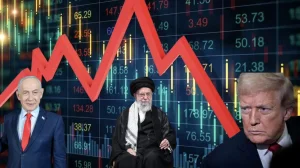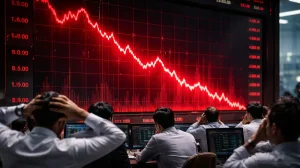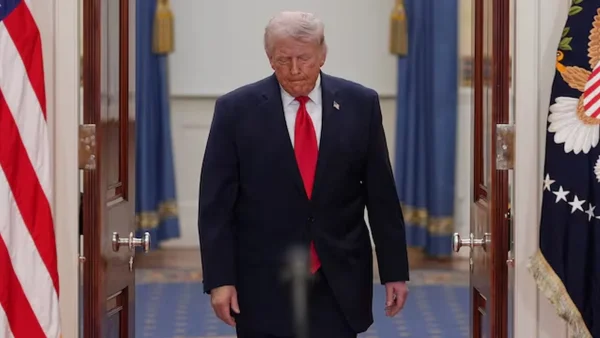
On Monday, during the day, Pakistan’s main KSE-100 index went down drastically after Donald Trump, the U.S. President, ordered the Iranian ports to be blocked, and this caused a lot of up and down movement on the Pakistan Stock Exchange. The index started down more than 5,000 points, reaching a low of 161,638 during the day, but later recovered somewhat to around 163,000.
Market Reaction at the Pakistan Stock Exchange
When trading began, people sold stocks quickly because of the increased political danger. The KSE-100 went from a closing value of 167,191.37 to a low of about 161,638.07, and this quick move showed that both Pakistani and international investors were avoiding risk.
Lots more shares were bought and sold as people changed how much money they had in stocks that could be affected by trouble in the region. By mid-morning the index had gone up to 163,429.78, but it was still well below the previous day’s close and people were still unsure about what would happen.
Drivers of the Sell-Off
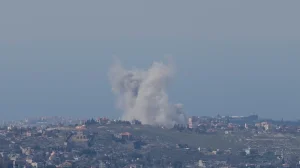
The selling happened after the U.S. decided to block Iranian ports because talks with the Iranian government had failed. People in the market quickly started preparing for a larger military conflict and a longer interruption of shipping routes.
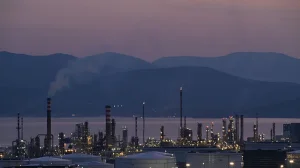
The main worry was the Strait of Hormuz, a very important and narrow route for the world’s oil deliveries. If oil isn’t flowing, or if there is a threat of fighting, shipping costs, insurance, and the price of oil itself will likely go up, and this would hurt countries like Pakistan.
Impact on Energy Markets and Shipping
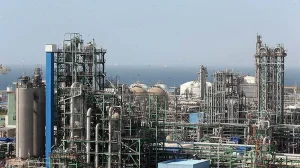
The Strait of Hormuz handles a large amount of the world’s oil and natural gas (in liquid form). A blockade or increased fighting in that area would create a quick risk of not having enough oil, and could increase the price of oil and the cost of shipping, making it more expensive for countries that depend on energy imports.
Pakistan gets a large portion of its oil and gas from other countries. If shipments were stopped for a long time, it would increase prices (inflation) and make Pakistan’s balance of payments worse, which would then negatively affect stocks and how confident investors are in the Pakistan Stock Exchange.
Recent Rally and the Sudden Reversal
This big drop in the market followed a recent and massive increase in Pakistani stock values. Earlier in the month, the KSE-100 went up sharply at the beginning of trading after news of a ceasefire, going up by over and marking one of the biggest single-day gains in the market’s history.
That increase happened because investors were relieved and thought a conflict was less likely, so they bought stocks. The decision to block the ports more or less cancelled out those gains, and showed how quickly political events can totally change the market, especially one that reacts to feelings.
Outlook for Investors and Policy Implications
Investors should prepare for continued volatility because of the high levels of political uncertainty. In the short term, trading will probably be heavily influenced by news about the blockade, what’s happening with the Strait of Hormuz, and any military action or diplomatic attempts to solve the situation.
People in government and regulators will need to carefully watch how much money is available and how well the market is working. Managers of companies and people deciding where to invest money should test how the company would do if energy prices suddenly rose, protect themselves against changes in exchange rates, and have enough cash available as the situation develops.
The main thing for the markets in Pakistan and the rest of the region to understand is that political hotspots can very quickly change how much risk is built into prices. This means investors must think about possible political events in their plans, and governments must clearly explain what they’ll do to keep the market stable.
In the next few hours and days, traders will be following what happens around the Strait of Hormuz and any diplomatic efforts to reduce tensions. Right now, the large swing of the KSE-100 during the day is a reminder that things happening outside of Pakistan continue to impact the country’s market and its economy.