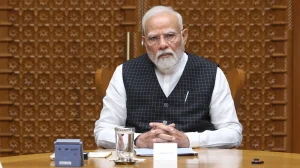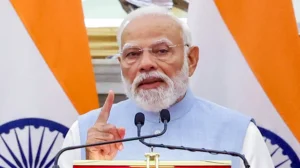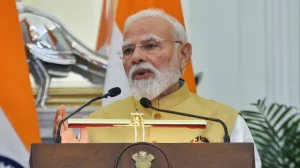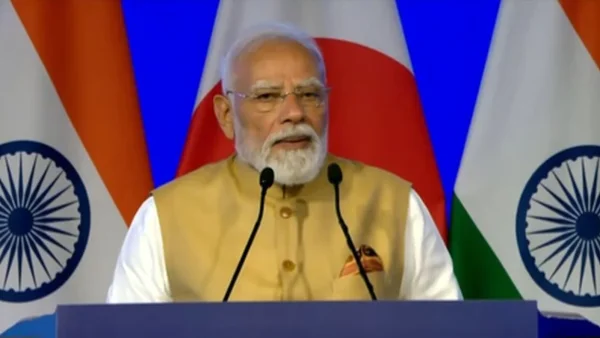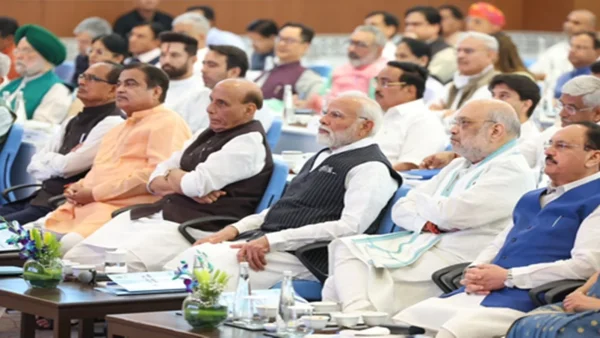
On Friday, Narendra Modi led a very important video conference with the chief ministers and lieutenant governors of all states to look at India’s preparation for the troubles in the Middle East. He asked states and the central government to work together to keep the delivery of goods running smoothly, to stop hoarding, and to look after people. He said everyone needs to work as “Team India” and constantly keep an eye on how things are changing.
National priorities and a coordinated response
The Prime Minister clearly said what the country’s most important goals are: to maintain stability in the economy and with trade, to have enough energy, to protect people, and to make businesses and the way goods are made and delivered stronger. He pointed out that a group of different ministers has been looking at what is happening every day since the beginning of March, showing that the government is taking the initiative and working on all aspects of the problem.
He stressed that state governments are the most important part of putting plans into action and keeping local government workers on alert. He told them to quickly share information, be ready to act administratively, and focus on stopping disruptions that could make people and businesses even more worried.
Keeping supply chains moving and preventing profiteering
Modi asked the states to make sure the movement of things like gasoline, cooking gas, and essential goods doesn’t stop. He wants strong action against people who save things up and raise prices, because creating artificial shortages would harm customers and destroy people’s faith in the market.
State-level readiness: control rooms, helplines, and coastal vigilance
To achieve this, states are to open special rooms at both the state and district levels to watch the amounts of goods available and how they are being moved in real time. The idea is to combine watching what is happening with quick enforcement of rules so that problems with the movement of goods don’t turn into shortages in stores.
States should create help lines and ways to support Indian citizens in the Middle East and their families who need help at home. These systems should give help quickly and close the gap in information that can cause panic.
Border and coastal states, which deal with shipping, important supplies, and activity at sea, will need to be especially careful. Officials were told to work closely with ports, customs officials, and sea-related organizations to prevent delays that affect trade and the importing of fuel.
Agricultural planning and fertiliser monitoring ahead of Kharif
The Prime Minister said it is necessary to plan ahead for farming, particularly to watch the amount of fertilizer in storage and how it is delivered before the Kharif planting season. Having fertilizer on time is still extremely important to protect planting schedules and farmers’ incomes.
State governments need to keep track of how many goods are available, make the movement of goods to distribution centers more efficient, and get involved if people are behaving in a way that is based on speculation and threatens the supply. This forward-looking approach is to reduce how much prices change and protect the planting process in the main areas where things are grown.
Energy security and fiscal measures to ease impact
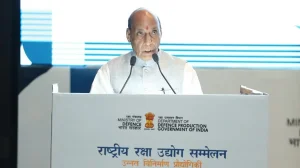
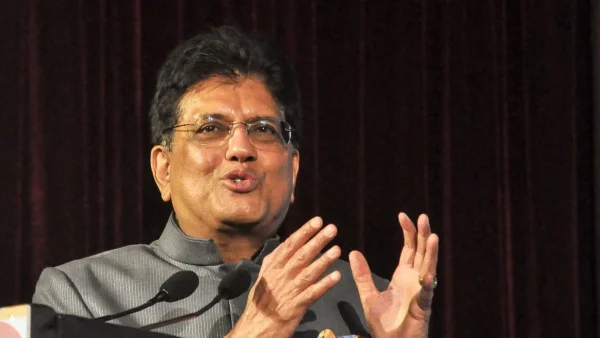
The Defence and Home Ministers were also at the discussion and explained what the central government is doing. This includes making sure there’s enough LPG (cooking gas) and lowering the tax on gasoline and diesel. The chief ministers liked that more LPG is available for businesses and the tax cut on fuel at the pump.
The meeting showed both what is being done now and the need to speed up finding oil and gas within the country and to find different sources of energy. Using short-term tax and supply strategies at the same time as making long-term investments will make our energy supplies more reliable.
Accelerating alternative energy and long-term resilience
Modi said to really encourage other ways of getting energy, like solar, biofuels, electric vehicles, and more gas in pipes, to lessen how much we need to buy from other countries. Policymakers were told to quickly approve projects that will make our energy supplies more secure in the long run.
This combination of doing things to immediately stabilize the market and moving toward cleaner, domestic energy is to make the economy less affected by problems from other countries. The officials all said that making more things within the country will improve stability and help growth that lasts.
In conclusion, the leaders of the states said things are stable in their areas and praised the central government for taking steps ahead of time. The meeting included both immediate instructions for what to do and longer-term policy goals, stressing the importance of working together, being open about information, and taking quick action to keep goods moving and protect people as the situation in the Middle East continues.