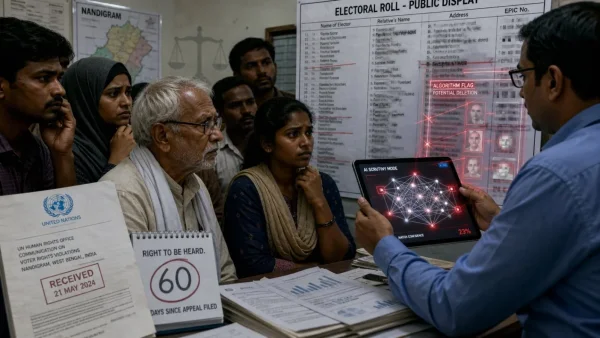
The 60-day period has begun after three of the UN’s rapporteurs made it clear that the ECI’s revision work could well be weeding out minority voters. In their message they put forward a number of issues: the use of AI, where due process is lacking, and a kind of political spin that may give cover to such exclusions.
What prompted the UN warning
It was the sheer volume of names being taken off the rolls by the ECI under the SIR process that caught the eye of the Special Rapporteurs. They wrote to say this has had a particular impact on some in the minority. There is also the matter of the talk before the rollout, which some see as painting deletions as a way to root out ‘illegal Bangladeshi immigrants’ – a line of reasoning that can too easily lump in Indian Muslims with foreigners.
This is not the first time such a letter has been sent. Back in December 2018, a like-minded communication took issue with the ECI’s part in the National Register of Citizens in Assam, pointing to the perils for ethnic and religious minorities.
Concerns over AI and due process
The rapporteurs see the SIR as being propped up by AI systems that are hard to read and even harder for a voter to put in question. Then there are the tenuous reasons for a name to be dropped, like a misspelling, and not enough time for a person to put together the right papers.
There is little recourse for those who have been cut from the list, the report says. In the view of the rapporteurs, if the deletions are done with intent, it is a serious infraction of human rights, and one that adds to the headwinds already faced by the more vulnerable in society.
Rights obligations flagged
As a party to the 1979 International Covenant on Civil and Political Rights and other instruments, India is bound by certain standards. The letter makes reference to possible flouting of ICCPR articles on non-discrimination and the right to vote, not to mention the one on minority rights.
In making these points, the UN is putting a finer point on the fact that the SIR is more than a bit of housekeeping; it is a matter of constitutional and international law.
Nandigram as a flashpoint
West Bengal is front and centre in the document. Take Nandigram: the report puts it that 95 per cent of the voters deleted were Muslim, while they only account for a quarter of the electorate. That is put forward as a case of discrimination in action.
What the government is being asked
The Government of India has been put to the test with seven questions. Some of what the rapporteurs are after in terms of clarity and protection include the following:
– Data on the religion and ethnicity of those left out
– A plain explanation of how appeals and verification are handled
– What can be done when a deletion is in error
It is a way of holding the line on accountability when it comes to the mix of technology and human judgment in deciding who can vote.
Timeline and next steps
Dated 1 May 2026, the correspondence allows for a 60-day window for the government to come back to the special rapporteurs on minority, expression and religious freedom with a response.
Per the rules, the exchange will be made public on the Special Procedures website in 60 days, or sooner should India put in a reply. That prospect of a public airing of the issue means the government will want to make its answer count.
The repercussions will go on past this round of revisions. It will set a precedent for how India handles its data in the running of a democracy, and how it goes about protecting minorities as its databases are brought up to date.