Scorching summer heat across Asia has turned a little-known Chinese cooling hack into a global talking point. Videos of rooftops releasing a cloud-like mist, nicknamed rooftop rain, show neighbourhoods cooling within minutes. The clips have fuelled urgent questions: does it work, how safe is it, and could other countries roll it out fast?
Why the rooftop rain videos matter now
The timing is no accident. Cities are searching for quick ways to protect residents as extreme heat intensifies. Urban areas trap heat, making streets, playgrounds, and courtyards dangerously hot well after sunset.
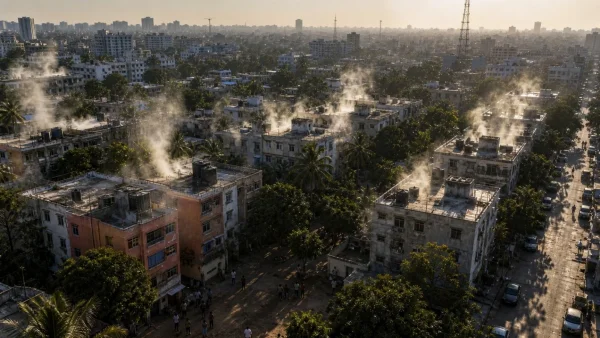
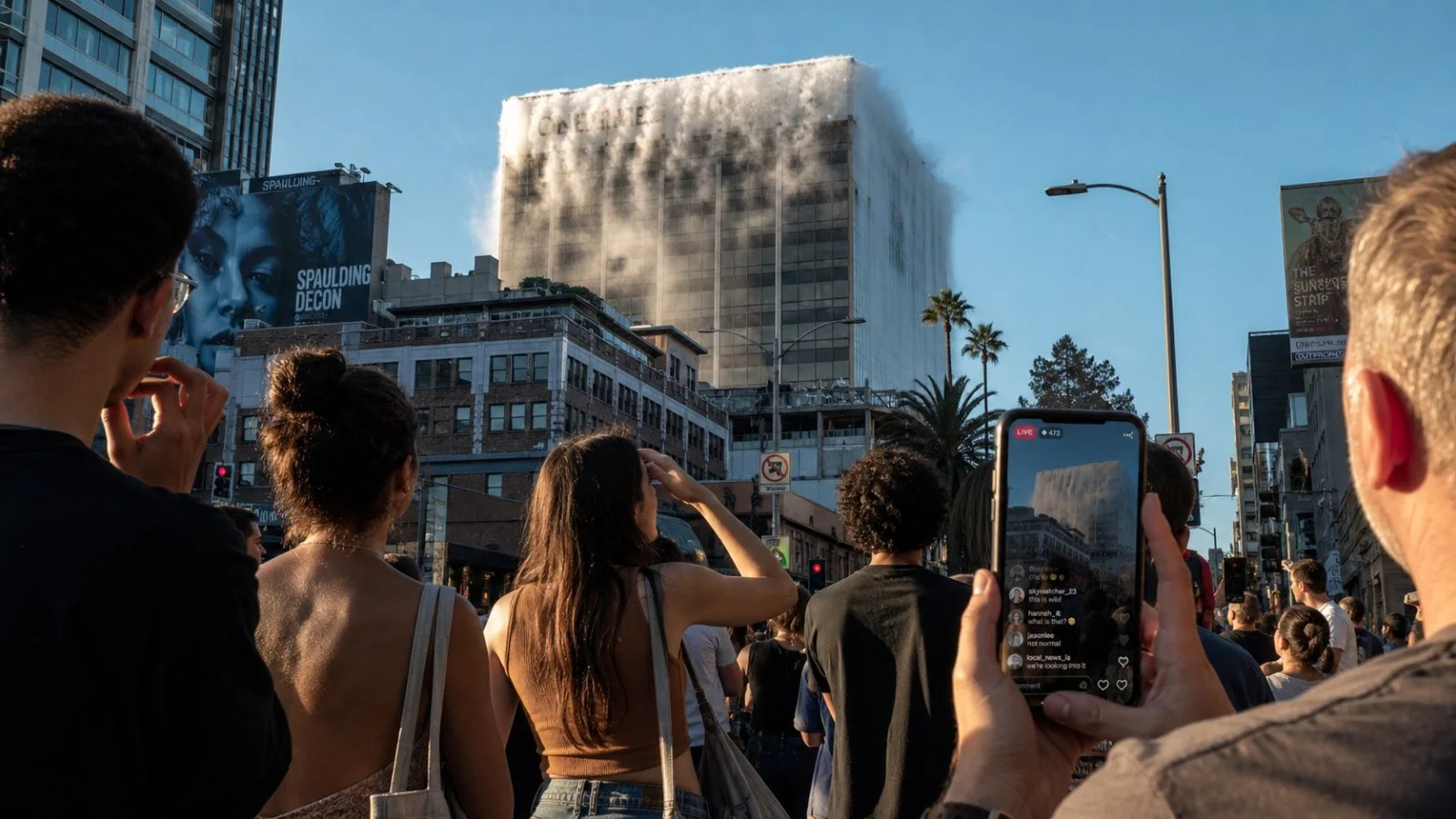
In this backdrop, Yuncheng in China’s Shanxi Province offered a striking visual: entire facades veiled by mist pouring from building tops, then fading before reaching the ground. The spectacle suggests a futuristic fix to a very present crisis.
Online posts claim these rooftop mist-cooling setups can lower temperatures by 5 to 8 degrees Celsius within minutes under the right conditions. One widely shared clip framed the drop as 5 to 8 degrees Celsius, or 9 to 14 degrees Fahrenheit, and emphasised the speed of the effect.
The allure is obvious. If a localised, outdoor solution can shave several degrees off sweltering courtyards and streets, it could save lives, reduce heat stress, and cut the burden on power grids during the worst hours.
How the system cools without making people wet
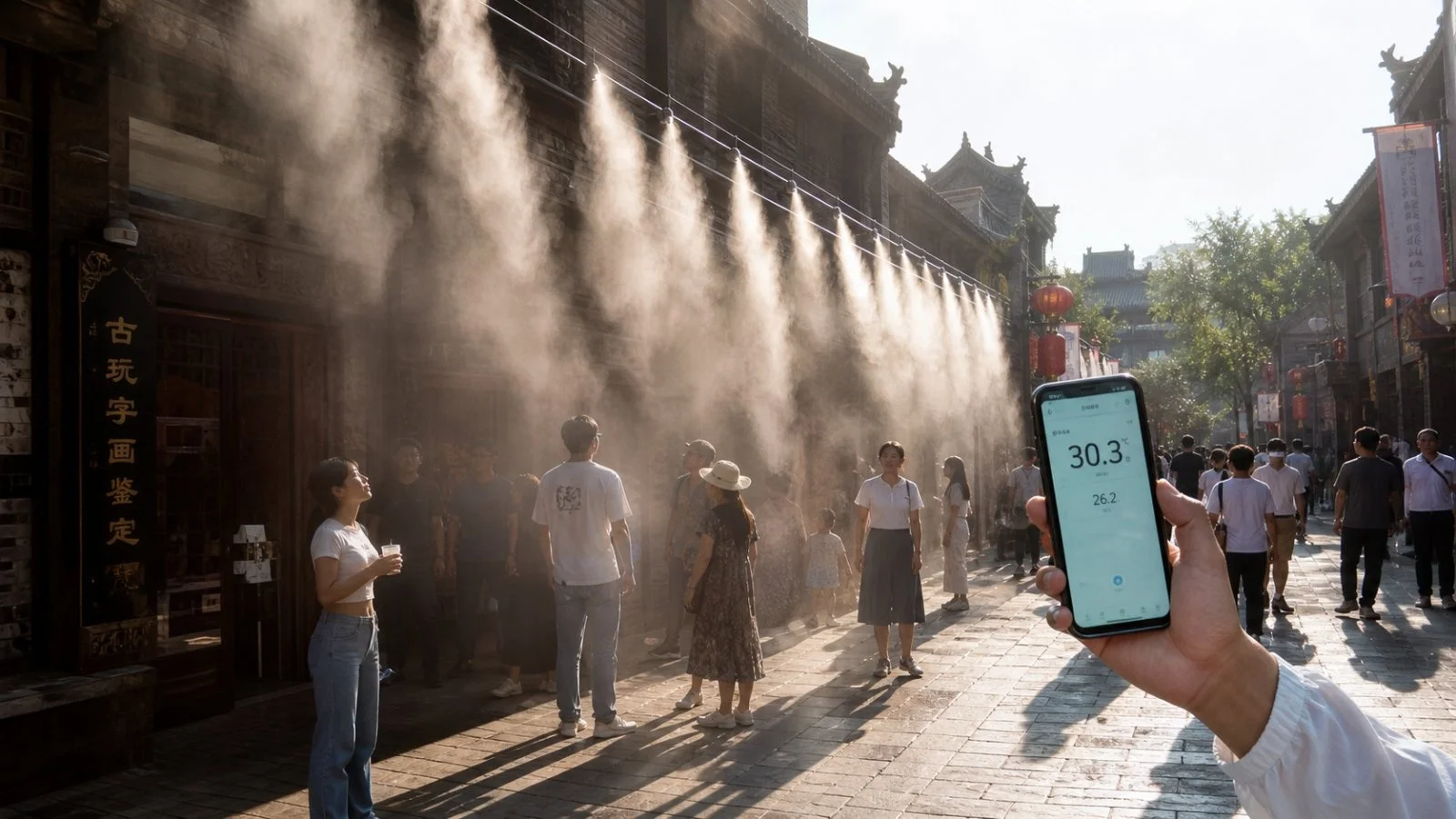
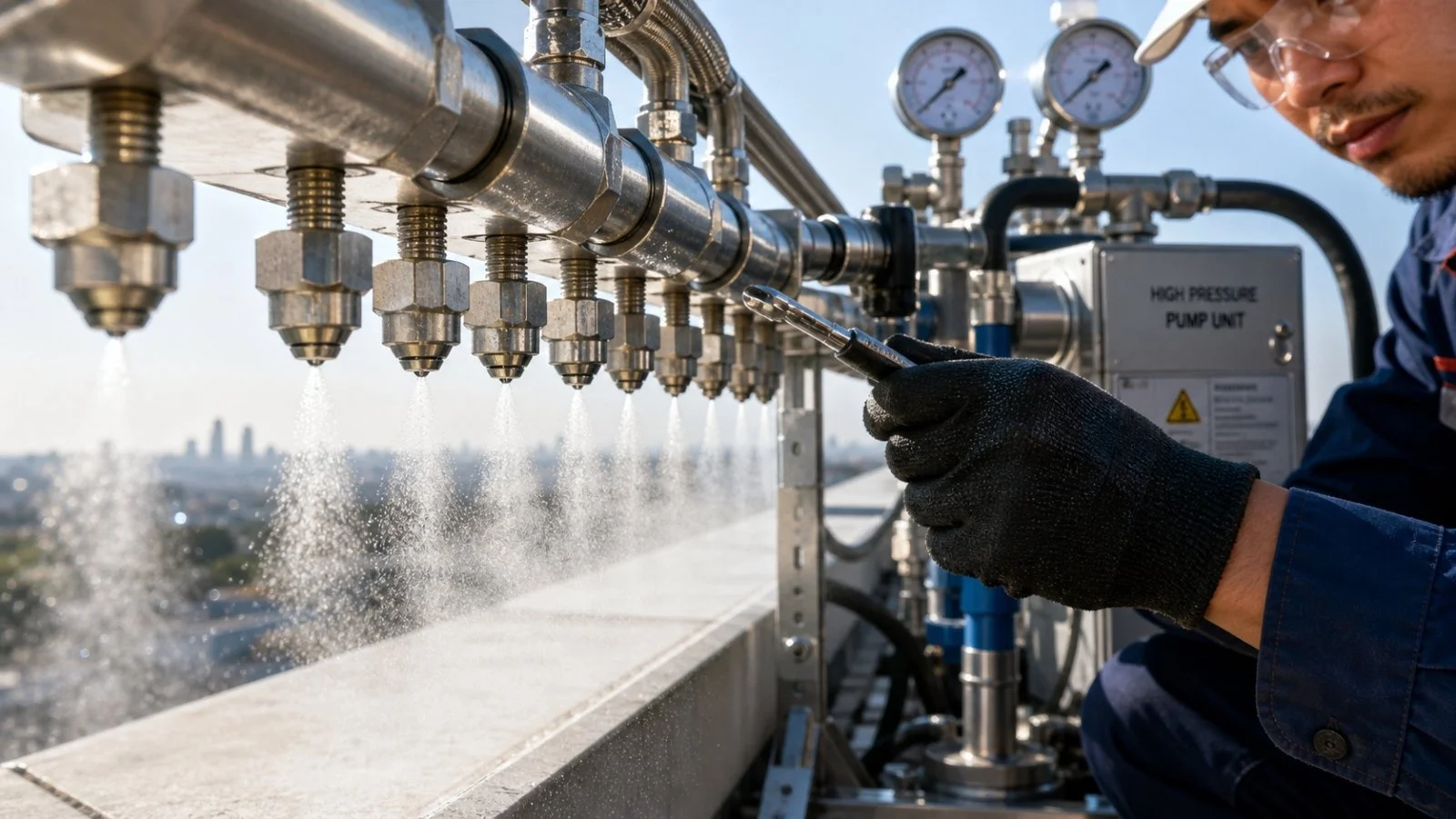
The mechanism is familiar science rather than sci-fi. High-pressure pumps push water through specialised nozzles on rooftops, breaking it into ultra-fine droplets. In hot, dry air, those droplets evaporate before they hit the ground.
Evaporation pulls heat from the surrounding air. That energy transfer is the same principle that cools our skin when sweat evaporates. The result, according to reports from China, is a rapid local temperature reduction of around 5 to 8 degrees Celsius.
What makes these deployments striking is their scale. Instead of a few misting fans at a cafe, entire residential towers are fitted with nozzles, allowing mist to drift between buildings and across shared spaces. People below often do not feel wet at all.
Not an outdoor air conditioner, and not weather control
Despite the nickname outdoor air conditioner, this is not mechanical cooling. It does not use compressors or refrigerants. It accelerates a natural process that is most powerful when the air is both hot and relatively dry.
Some posts suggested China created artificial rain or manipulated weather. Correctives quickly followed, clarifying that the recent viral clips came from rooftop mist-cooling tests in the Yuncheng area and that the effect relies purely on evaporation.
The distinction matters for expectations. You cannot dial in a perfect temperature. The system performs best when conditions favour evaporation. If humidity rises, evaporation slows and the cooling impact falls.
Limits, trade-offs, and local realities
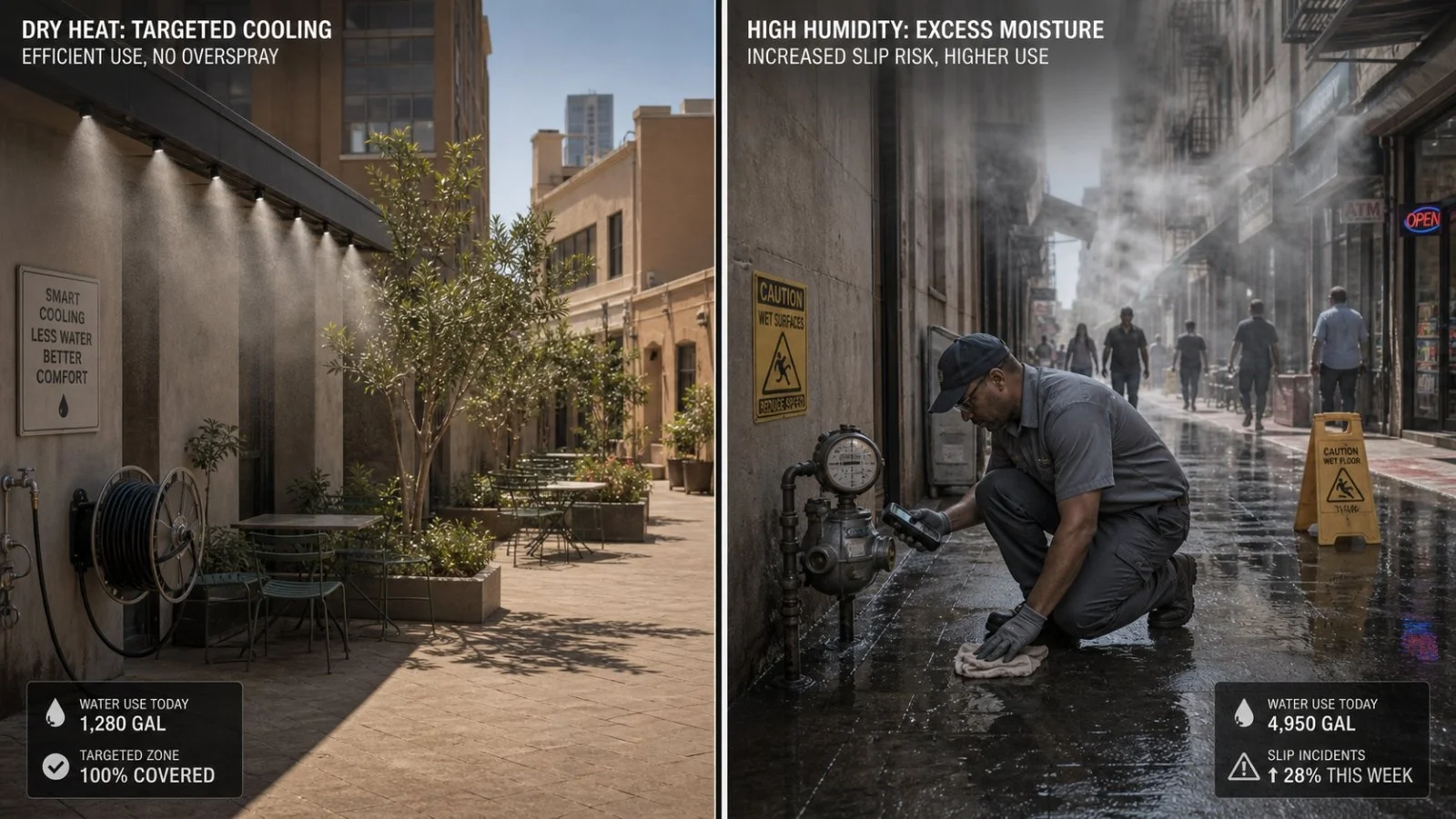
Rooftop misting is not a magic wand. It is a targeted tool that works well only in specific conditions. Hot, dry air is ideal. High humidity dulls the effect because the air is already saturated, making it harder for droplets to evaporate.
There are practical questions too. Water use, especially during long heatwaves, must be managed carefully. Maintenance of high-pressure nozzles and pumps is non-negotiable. Designers need to prevent overspray and avoid creating slippery surfaces.
Experts also stress that misting should complement, not replace, broader cooling strategies. Green roofs, reflective materials, more trees, shaded walkways, and thoughtful urban design are all part of a resilient heat response.
Here are the key concerns decision-makers will need to assess before any rollout:
– Local climate and typical humidity profiles
– Reliable, sustainable water supply
– Maintenance capacity and long-term costs
– Overspray risks and wind-driven drift
– Equity of coverage across neighbourhoods
Even where it works, rooftop misting does not solve energy strain by itself. China’s southern power grid recorded an unusually early record demand in May 2026 as temperatures spiked, underscoring how heat pushes electricity systems to their limits.
Could India and other countries adopt it?
Yes, potentially, but with caveats. Cities with hot, relatively dry summers could benefit most. Dense neighbourhoods where courtyards and streets become heat traps may see meaningful relief, especially during peak afternoon hours.
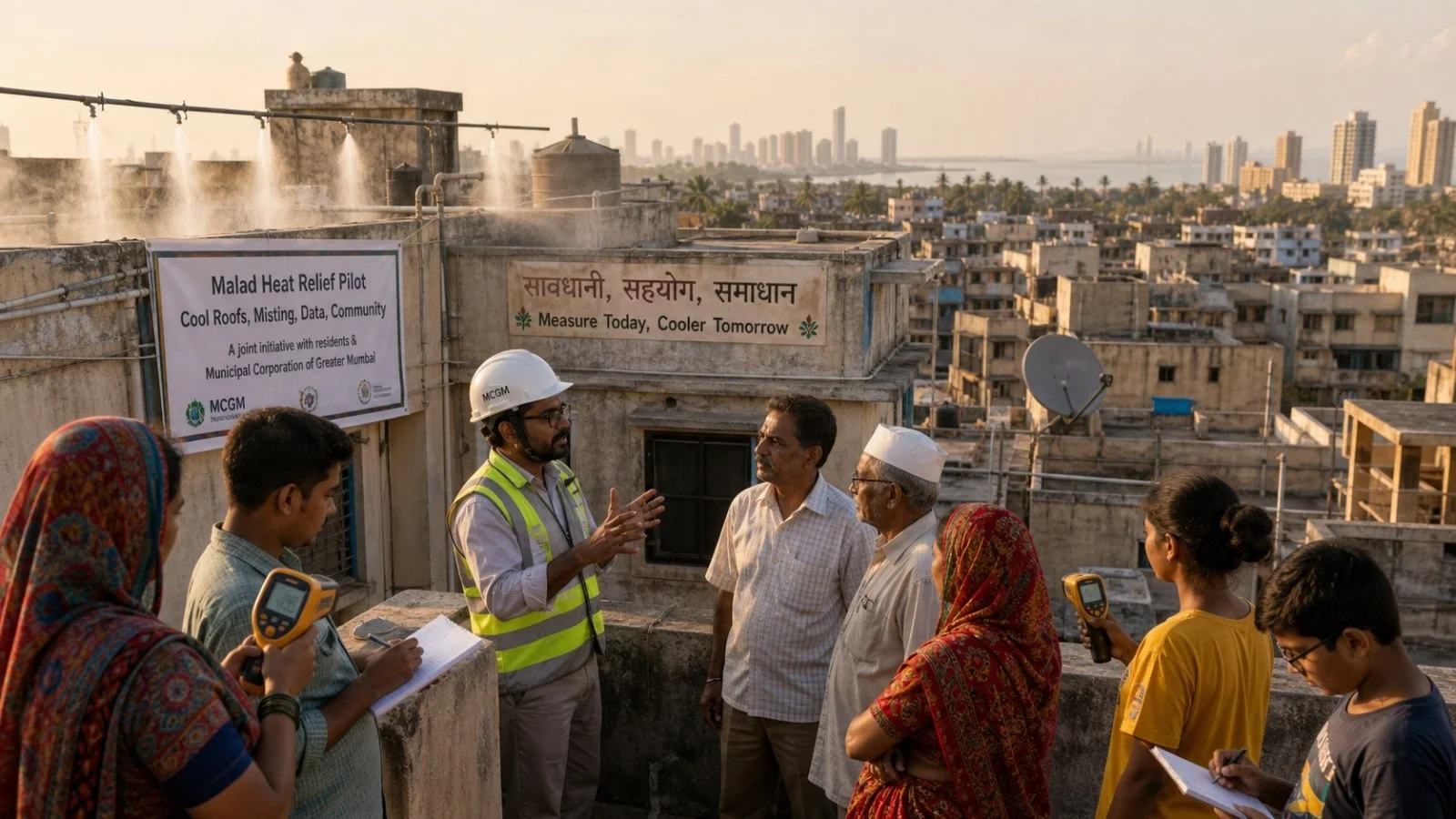
In India, conditions vary sharply by region and season. Dry-heat cities can explore pilots around housing complexes, markets, and transit interchanges. Coastal or monsoon-humid areas may see weaker returns and would need to validate performance carefully.
Adoption would also require public clarity. A viral clip framed the system as lowering temperatures by 5 to 8 degrees Celsius within minutes. That can be achieved under suitable weather, but it will not be consistent across all geographies or times of day.
Municipalities weighing trials should move in measured steps. The goal is to reduce outdoor heat stress, not to promise indoor air conditioning levels of comfort. Precision about benefits and limits will keep public trust intact.
Before committing to citywide projects, officials can use a phased checklist:
– Start with small pilots in dry-heat zones
– Monitor temperature, humidity, and water use
– Track resident comfort and safety outcomes
– Evaluate costs across a full summer season
– Scale only with clear, repeatable gains
What is actually installed on the roof
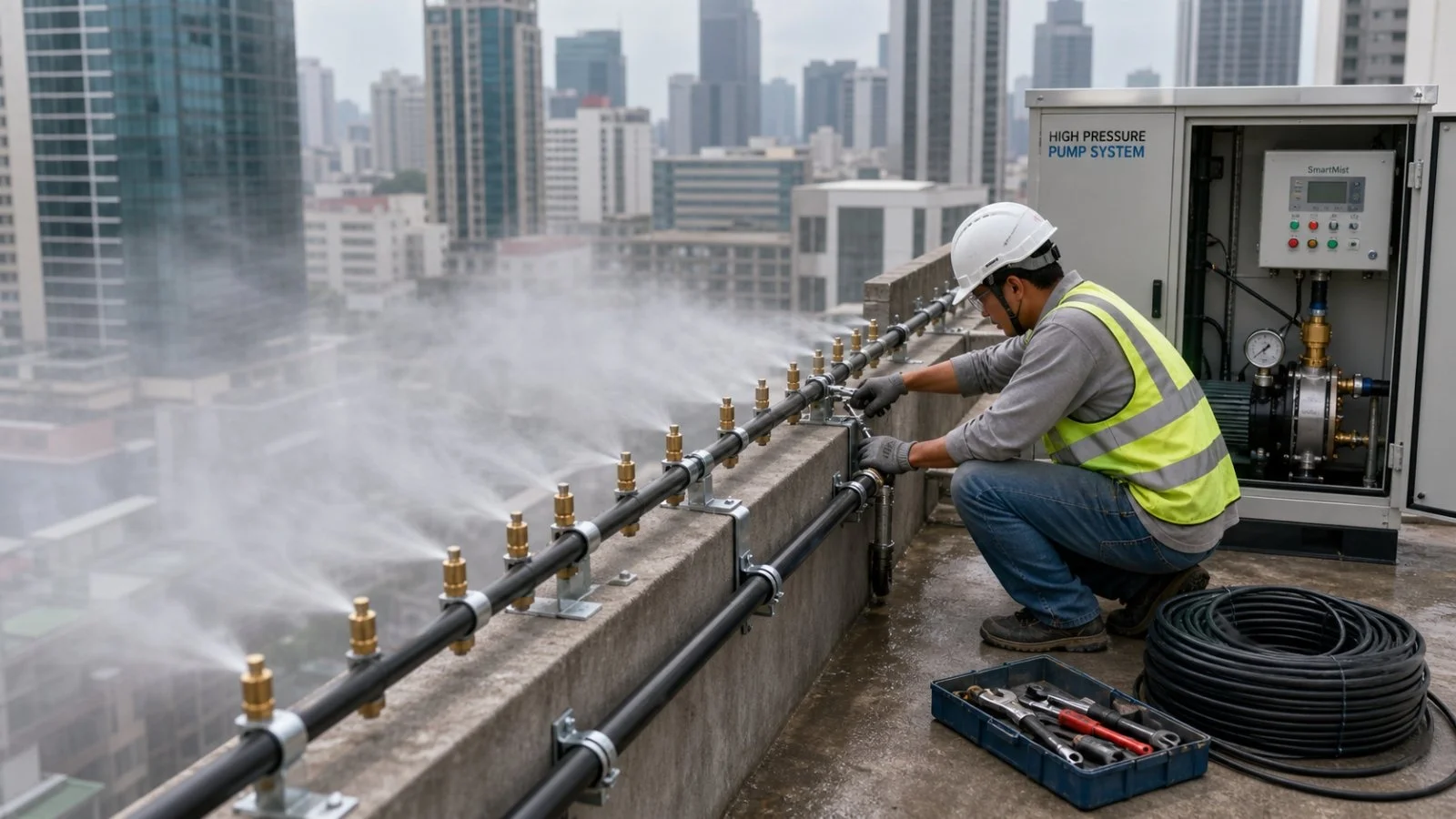
The visible effect can look like buildings are making their own weather. The hardware is straightforward. High-pressure pumps feed lines of nozzles along the edges of rooftops. Those nozzles create microscopic droplets that disperse into the air column.
From a distance, the mist appears to form a white curtain. Closer up, it thins and disappears. That vanishing act is the point. Evaporation is converting liquid water into vapour and taking heat along with it, cooling the immediate environment.
In Yuncheng, the visuals are dramatic because of how many floors the mist can traverse. But the system remains fundamentally simple. It is water, pressure, and the physics of phase change applied at neighbourhood scale.
Why the idea is drawing such strong reactions
The aesthetic taps into deep anxieties about climate disruption. Watching rain appear from a roof while the sky stays clear feels uncanny, like a city trying to rewrite nature under duress.
One widely shared video described mist evaporating before reaching the ground and credited it with lowering temperatures. Another popular post pushed back on the notion of artificial rain, underlining that the system is a rooftop mist-cooling test in the Yuncheng area.
The debate is really about how cities will stay livable. The planet recently experienced its second hottest May on record, according to data cited by the Copernicus Climate Change Service. As heatwaves stretch longer and arrive earlier, outdoor cooling becomes essential infrastructure, not a novelty.

What this means for the next heatwave
Rooftop misting will not replace indoor air conditioning. It targets a different problem: the public realm itself becoming hostile. When pavements and building skins store heat, evening relief vanishes, and outdoor activity becomes risky.
Used well, this tool can reduce outdoor temperatures around residential buildings, slow heat absorption by surfaces, and make shared spaces usable again. It will work best when paired with trees, shade structures, reflective roofs, and ventilation corridors that carry hot air away.
The real test is whether cities can act before the worst heat arrives. Careful pilots, honest communication of results, and smart integration with broader climate strategies will decide whether rooftop rain becomes a standard option or stays a viral curiosity.
Public agencies should also plan for equity. If one compound enjoys cooler courtyards while a neighbouring block swelters, heat risk can deepen existing divides. Scalable, fair deployment must be part of any long-term plan.
The bottom line is urgent but pragmatic. Rooftop misting is neither a miracle nor a gimmick. It is a practical application of evaporative cooling that can shave critical degrees off outdoor heat when conditions align. In a summer where one degree can be the difference between discomfort and danger, that matters.