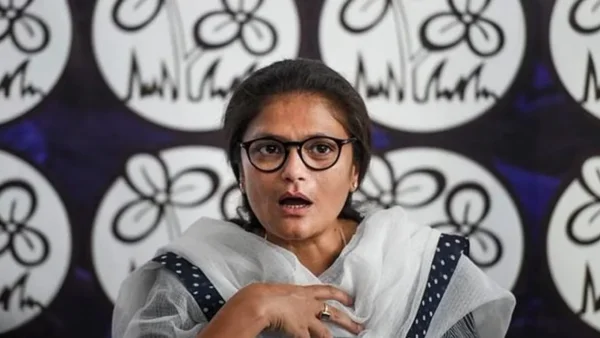
Weeks after quitting the Trinamool Congress, former Rajya Sabha MPs Sushmita Dev, Sukhendu Sekhar Ray and Prakash Chik Baraik have joined the BJP in Kolkata, sharpening West Bengal’s post-election realignments. Their switch comes ahead of Rajya Sabha bypolls on July 24, adding urgency to the BJP’s consolidation drive and deepening TMC’s internal strain.
Why the switch matters for the BJP
The BJP, which now governs West Bengal, gains three seasoned parliamentarians just as it seeks to expand its organisational reach. State BJP president Samik Bhattacharya said their experience would strengthen the party across districts and inside Parliament.
The vacancies they created carry weight. Ray and Baraik’s terms were to run until September 2029, while Dev’s tenure was scheduled until April 2030. If the BJP converts these openings in the upcoming bypolls, it could underscore its post-assembly poll authority.
How the induction unfolded
The trio were inducted at the BJP’s Salt Lake headquarters, where Bhattacharya presented them party flags in the presence of senior state leaders. The leadership, including Chief Minister Suvendu Adhikari, welcomed them ‘wholeheartedly and with great happiness,’ Bhattacharya said at the event.
Their induction follows resignations from the Upper House last month and a severing of ties with the TMC after the assembly results. Dev had earlier resigned as a Rajya Sabha member on June 10, 2026.
TMC’s internal rift and street flashpoints
Mamata Banerjee has publicly warned dissidents to choose sides. In a video message, she urged those ‘playing games’ to either remain loyal to the TMC or ‘directly join the BJP,’ warning against ‘staying in the middle of the river.’
Her remarks came amid unrest on Kolkata’s streets. A TMC youth wing rally over the rape and murder of an 11-year-old girl in Baruipur saw clashes with BJP workers along Hazra Road. Police used baton charges to disperse both sides. Banerjee also alleged police had cancelled permissions despite court approvals, and accused the BJP of disturbing peace.
What the numbers say
The assembly outcome reset West Bengal’s political arithmetic. In the 294-member House, the BJP captured 208 seats and the TMC 80. The Congress and the Aam Janata Unanyan Party (AJUP) won two seats each, while the CPI(M) and the Indian Secular Front (ISF) secured one each.
Subsequent resignations nudged these figures, bringing the BJP’s strength to 207 and the AJUP’s to 1. That left the ruling party with a comfortable majority, and the opposition bloc with 85 legislators. Under normal circumstances, that combined opposition strength could have yielded one Rajya Sabha seat.
But the TMC fractured after the loss, with rival factions forming around Mamata Banerjee and Leader of Opposition Ritabrata Banerjee. That schism changed the equation ahead of the bypolls on July 24, which the BJP is widely anticipated to sweep.
For quick reference, here are the pivotal figures shaping the contest:
– Assembly size: 294 members
– BJP seats at result: 208
– TMC seats at result: 80
– Congress and AJUP: two each
– CPI(M) and ISF: one each
– BJP after resignations: 207
– AJUP after resignations: 1
– Opposition bloc strength: 85
What the defectors are saying
The three leaders framed their move as a response to voter sentiment and governance concerns. Dev avoided direct criticism of Mamata Banerjee but said she would not be ‘part of two boats at the same time.’
Ray alleged the TMC was rejected for ‘rampant corruption and extreme oppression of women,’ faults he said the party did not correct. Baraik, an influential tribal voice, said he was ‘accepting the opinion given by the people of West Bengal.’ Their positions underline the BJP’s attempt to court diverse constituencies.
Bhattacharya, highlighting their legislative record, argued that the TMC and Left alliance chose confrontation over cooperation with the Centre. He asserted the BJP would channel the trio’s parliamentary experience to accelerate development priorities.
What comes next
Three Rajya Sabha bypolls on July 24 now serve as an early test of the new order. With the assembly math favouring the ruling party and the opposition divided, the outcome could validate the BJP’s momentum and complicate TMC’s recovery path.
Inside the TMC, the leadership faces an organisational test. Banerjee has urged cadres to resist the influence of ‘traitors’ and remember grassroots sacrifices that built the party. Whether that message slows the drip of defections remains uncertain.
Watch for these near-term developments:
– Candidate selection for the three Rajya Sabha seats
– Cross-voting risks amid factional churn
– BJP’s deployment of the new entrants statewide
The broader stakes extend beyond numbers. A clean sweep in the bypolls would give the BJP another platform to argue that the assembly result was not a blip. For the TMC, stabilising the ranks and reasserting control could decide whether the current turbulence hardens into long-term attrition or becomes a turning point.