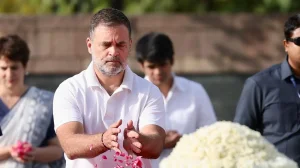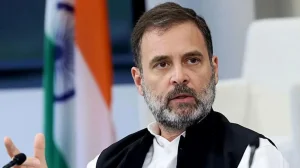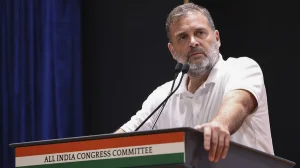
With the re-exam set for June 21, Gandhi made of the city’s coaching hub a place to talk about the toll on students. He put it bluntly: the way things are in India ‘suppresses’ and even ‘butchers’ the young. It is an urgent, systemic problem, he said, one that requires a stand against those running leak rings and a way out from under the kind of pressure he described as crushing.
Why the Kota rally matters
You have 1.2 lakh or so would-be toppers in this town, a lot of them far from home with one eye on the entrance exams. On Wednesday, the Dussehra Ground was like a concert, but there was an undercurrent of worry over leaks, whether the game is fair, and how much it all costs.
The crowd was out in force with headbands and signs. Some of the students we spoke to were fed up with the leaks and wanted to know what was being done to make sure the next round of exams is above board.
Gandhi’s core charge: a rejection system
‘The Indian education system is a rejection system. It is not a selection system,’ Gandhi told the 'Chhatron Ki Goonj‘ rally, putting his finger on the NEET-UG leak and the way CBSE has been handling evaluations. In his view, the kids are being let down by the very design of it.
It is an approach that leaves you with fear and exhaustion, and in the end it is bad for the country. Pointing to a young woman at the rally, he said, ‘I want us to work together so no student here has to go through what she did.’
He was quick to put to rest any idea of a political stunt. ‘This is not a party show. This is a meeting for you, for the ones who are having to fight for a future.’
Voices from the stage
Five of them – three girls, two boys – came up after he was done with his piece. They are in the thick of it, prepping for the NEET, JEE or the civil services, and they opened up on what it takes: the money, the hours, the drive.
For Gandhi, the system’s fatal flaw is that it doesn’t let a kid’s dreams breathe. He went back to his Bharat Jodo Yatra, the 4,000-kilometer trek from Kanyakumari to Kashmir, where he met with innumerable young people and heard the same five come-up-or-bust choices: be an engineer, a doctor, a lawyer, an IAS, or join the forces.
‘There was never a sixth answer,’ he put it. That chasm between what they really want and the run-of-the-mill options is a sign of a system that doesn’t ‘nurture the dreams of our children’ or value any other way of life.
Policy criticism and proposed course
Then there was the matter of the Telegram ban. Gandhi had some choice words for the government, saying they have their priorities wrong. “Let the Centre put an end to the show and get to work on who’s to blame for the leaks,” he told them. “The Modi government should be after the paper leak ring, not the students.”
That is the line from the Congress with its 'Chhatron Ki Goonj‘ program. The party says it is zeroing in on a few things: the so-called paper leaks, the cost of taking exams, and what it sees as the government’s inability to put in place an education and hiring system that is both open and fair. In the coming month, you can expect NSUI and Youth Congress members to take this to the streets in Allahabad, Patna and Delhi.
Rahul Gandhi, in his capacity as Rae Bareli MP and Opposition Leader, will be at the vanguard of these calls, which include a demand for Education Minister Dharmendra Pradhan to step down. It is also an opening to have a broader talk about what kind of future we are building for young people.
In short, the Congress is putting out a clear word to students and the institutions they rely on:
– Hold someone to account for the leaks before the next round of tests
– Put a stop to the extra costs and burdens of prep
– Give more than five options for a career
– Be open in how you grade and evaluate
– Don’t make the first move to police the students
What the BJP has to say
Not surprisingly, the BJP has some pushback. They see the event in Kota as a way to pull students’ attention away from what they should be doing. Sudhanshu Trivedi, a party spokesperson, made no bones about it: “When they are in the thick of their NEET-UG retest prep, why subject them to that kind of mental strain?” He asked the Congress to lay off the politics and the anxiety for once.
It is a matter of timing, of course, and while each side says it is looking out for the aspirants, in places like Kota the real issue is whether the exam will be on the up-and-up. You see this all over the country, in coaching towns and on campuses: it comes down to trust. Young people want to know the papers are safe and the process is even-handed.
Gandhi is trying to put the onus on the system, not just on a student’s hard work. The BJP would have you believe that all this noise only adds to the pressure. But for the ones in the room for the test, it is the same worry: how do you make sure the system doesn’t let you down?
Should the Congress go ahead with its roadshows in the three cities, the talking points on leaks and reform will probably end up in policy circles. Then it will be up to the students to make of it what they will – a real movement or just some pre-exam posturing.