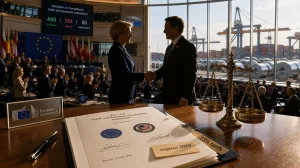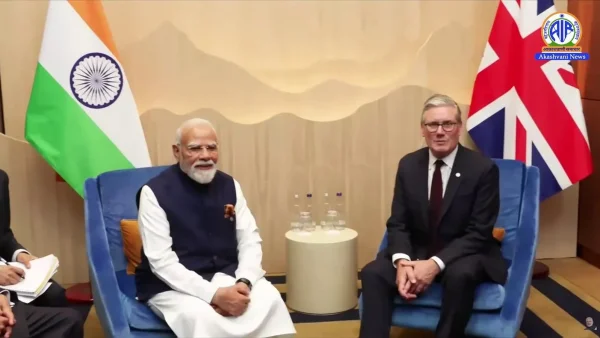
It didn’t take long for a few unguarded words from Starmer and Modi at the summit in France to rattle up expectations for the India-UK trade deal. You could say it was a sign we are over the hump of a dispute that has been holding things up. And for London and New Delhi, this is as much about strategy as it is commerce.
What the leaders said, and why it matters
When the two were on the sidelines, you could hear Modi say to Starmer: We did it. To which Starmer came back with: We did it. Yes, yes, I hear you. We got it over the line. It was good. He didn’t put a name to it, but the tone made it plain a major obstacle was out of the way.
Then an aide on the Indian side chipped in: how do we make an announcement of it? Starmer put in: I’d say we put a statement out. Or, he mused, we could do something more. Then he asked if he should have our teams figure out the best way to handle it.
The unresolved pinch point: UK steel safeguards
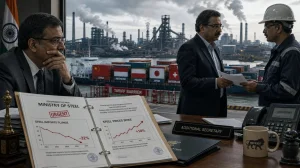
The negotiations have been heavy with the matter of UK steel safeguards, which India feels go against what the pact is all about. Some in the Indian camp have let on they can put the brakes on if the new measures stand, as they see it as a question of honouring the agreement.
From their vantage point, the safeguard regime will put a crimp in the tariff-free quotas. New Delhi has in the past pointed to the UK’s parliamentary wrangling for the hold-up, but of late they have intimated the steel matter may be enough to make them look again at some of the give-and-take.
Quiet readouts, loud implications
We put in a call to Starmer’s office for comment and had no takers right away. The two also had a sit-down in Evian on Tuesday, but if you read the official write-ups from either side, there is no word on the steel row. Which is what makes what we overheard on the hot mic so telling.
Post-Brexit positioning meets India’s export push
You have to go back years to find where the FTA has been bogged down – market access, services, mobility, the works. Nailing this would be a big deal, fitting in with the UK’s post-Brexit need for some growth and India’s own plans to put more exports and investment on the table.
On the Indian side, it is about opening up the British market to their pharma, textiles, engineering and the like. For the UK, it is a way to get in on the ground floor of one of the most dynamic economies out there and build a partnership that goes well beyond trade into defence, tech and clean energy.
In a nutshell, here is what the hot mic tells us:
– Some movement after a long, hard road
– The logjam on implementation could be on its way out
– A straighter line for Indian products and services
– Better for the UK to tap into India’s market
How we reached this point
The ink was dry on the deal last year, but putting it into practice has been another story. India has had its doubts about the new steel rules and made it known some of the terms might be up for review. Still, both have left the door open, and the G7 has been a place to put some wind in the sails and show they are on the same page when it comes to resilience.
If you listen to the aside, it seems the two are in a position to put these to bed. But without anything on paper, it is hard to say for sure. You have the kind of optimism in front of the camera and a certain reserve behind it that is typical of the final stages of a trade deal.
What comes next
All eyes are on when and how any news is broken. With Starmer toying with the idea of a statement or “something more,” it is clear they are thinking about optics. Get some clarity on the steel and you will see how quickly the pact can be put in motion.
For now, the message is straightforward: a blockage is being cleared. Should this hold water, we could be looking at a swifter reordering of the India-UK relationship, with trade in the middle and a lot of strategic co-operation to come.