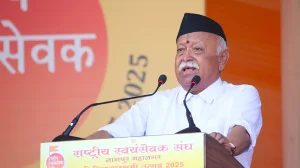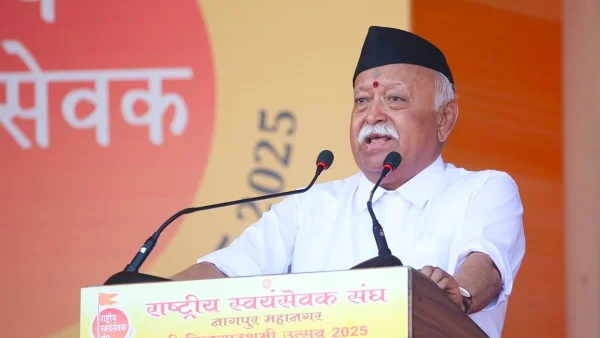
When he spoke at an education event in Nagpur on July 1, it was to make a point: the ones who arrived in 1947 were no mere refugees but ‘warriors of struggle’. And if there is one thing education should be doing, it is to build character, not just line up careers. His words put the onus on students and the institutions that guide them.
Why this matters for campuses
The occasion was the 75th Foundation Day of the Sindhu Education Society, a body of the Sindhi community. There, Bhagwat told us to use such jubilees to have a hard look at our values and the way we teach. He put it simply: you can’t separate right from wrong without a value system, and that’s as much about how a teacher carries himself as what is in a book.
Getting a job is fine, he warned, but it shouldn’t be the end-all. The point is to make good people who give back to society. For the kind of schools and colleges that are part of a community with a history of being uprooted and put back together, his words have a ring to them in the day-to-day running of things.
Some of the points to bear in mind for those in charge of education and for the students:
– Make sure your lessons have some civic and ethical weight
– Let the teachers be the example
– Take stock when you hit a milestone
– Don’t let academics be the only thing; train for resilience too
Reframing Partition migrants
Bhagwat put a different spin on those who made the crossing after 1947. They left behind the land, the wealth and the businesses their forebears had put in place in what was then Pakistan, and ‘chose to come to India’. Why? To be in Bharat and to be able to live out their religion in peace.
‘They were not refugees, even if they were moved from where they were – that was the wrong word for them then,’ he put it to the room. 'Warriors of struggle‘ is what he has for them, for the sacrifices they made. ‘They lost a battle, not for want of trying on their part.’
He was blunt about it: ‘No career, no wealth. They chose the country, they chose their dharma.’ When you are teaching the children of families affected by the Partition, that is a way to put dignity and service ahead of any sense of being a victim.
Collective responsibility and identity
‘We, all of us, lost that battle to keep India as one,’ Bhagwat said. In making it a shared loss, he brings the talk into the here and now. What he is saying to the young is that you don’t just read about duty and identity in a syllabus; you pick it up in the community and you do it.
Resilience over despair
Then he turned to the mindset. You can’t let the circumstances or fate get to you. ‘One should not become helpless,’ he said. Hard work is what gets you there. If you run from trouble, you have already thrown in the towel.
That is the tie-in to his view on education. Whether you are a student with exams to face or money to make, being tough is a skill, not a platitude. For the ones in the admin office, it means more in the way of mentorship and the kind of culture you foster.
Event context and attribution
All of this came out of the 75th Foundation Day of the Sindhu Education Society in Nagpur. The RSS chief pointed to the 75 years the group has been at it as a chance to see where you stand and remember why you are here.
As the Sarsanghchalak of the Rashtriya Swayamsevak Sangh – the ideological parent of the BJP – his remarks carry weight. Given the Sindhi community’s own story of rebuilding since the Partition, his focus on education struck a chord.
What it means for students now
In a way, Bhagwat has tied three things together: the courage of the past, a learning process with some values, and not caving in to hardship. It is a nudge for students to have some conviction in what they do. For the institution, an anniversary is a time to be held to account, not just to put on a show.
So as the year is being put in order on campus, the question is how to put it into practice. You have to see these values in the way you teach and lead. That is how a term like ‘warrior of struggle’ comes to life in a classroom.