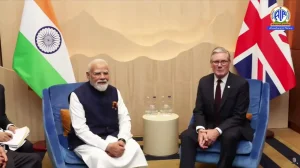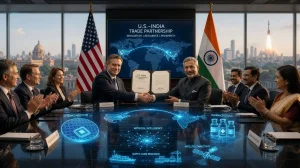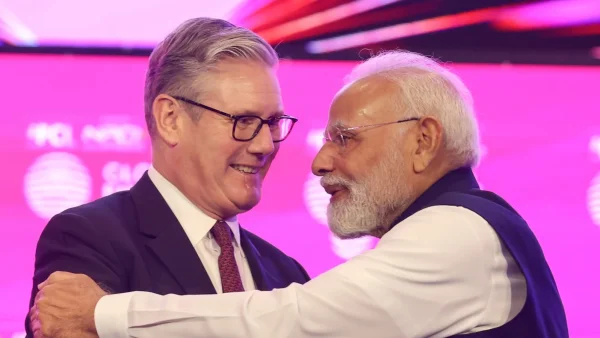
The off-microphone chat between PM Narendra Modi and his UK counterpart, Keir Starmer, in France has given the stalled talks a new kind of energy, with the sense that we may be close to a way forward. It was a sign of a strategic reset, with real-world consequences for the steel, auto and premium liquor industries.
Should it come to pass, this would be the most significant UK trade accord since leaving the EU and the largest for India in ten years, redefining how the two economies do business with one another at a time when they can least afford not to.
Why this is in the news
Think of the deal, which was put to paper last year, as the crown jewel of their economic ties. They finally made it happen in May after putting in over three years of work on the nitty-gritty of tariffs, visas and tax rules.
The numbers don’t lie. With $21.9 billion in two-way trade in 2024, the governments on both sides say this pact is set to put another 25.5 billion into the pot over time.
A few words on the hot mic
Modi and Starmer were talking on the periphery when you could hear: “We did it,” from the Indian PM. “We did it. Yes, yes, yes, I hear. We got it over the line. So this is good,” came the reply from Starmer. It was a small thing, but it read as a sign that the final hurdles to the deal being put in place have been cleared.
Then there was a bit more back-and-forth on how to handle the PR. An aide from New Delhi put in, “how will we announce it today?” “I think we put a statement out,” said Starmer, before hedging, “or we could do something more.” He then turned to his side: “should I ask our teams how we should do this?”
What held things up
India would have you believe it was the UK’s parliament causing the hold-up. Lately, though, it’s been the new British steel safeguards. They put a crimp in the tariff-free quotas and ruffled some feathers.
New Delhi had put out a warning: if the steel measures stayed, they might have to look again at some of what they’d given up in the pact. But after a get-together in Evian on Tuesday, the official word was noncommittal on the matter. The statement from India was simply: “The leaders looked forward to the early entry into force of the comprehensive economic and trade agreement.”
In the fine print
It’s a lot of moving parts. India is set to let in about 90% of British export lines at lower or no cost, with 85% of those going to zero in a decade. The UK is doing the same for 99% of what comes out of India, opening the door for textiles, jewellery, farm goods and the like.
The big picture on tariffs
Here is what you’ll see on the ground:
– A 90% cut for British exports coming in to India.
– 85% of that is free and clear in 10 years’ time.
– The UK trims duties on 99% of Indian lines.
– Whisky and gin: 75% to start, 40% by year 10.
– Cars: down to 10% (with quotas) from well over 100%.
It’s all about easing old grievances. You’ll see better prices on the good stuff in a bar, and Indian carmakers will have a lane to the UK, if only in measured amounts. For us in the UK, it means we can be more of a factor in a market that’s hard to ignore.
Where we go from here
The audio suggests an announcement is in the works, but we don’t have a date yet. When they put out a joint piece, people will be reading between the lines for any word on the steel and when exactly this all kicks in.
There is also the Vision 2035 to consider. It’s a broader partnership on defence, tech, climate and the rest. We’re talking about electric propulsion and jet engines – a way of aligning that goes deeper than a tariff sheet.
Assuming the logjam is broken, you can expect companies to want hard dates and to know where they stand on quotas and red tape. There’s a lot to play for, but from where they’re standing, the message is clear: we’re moving on.