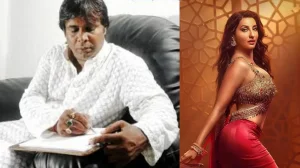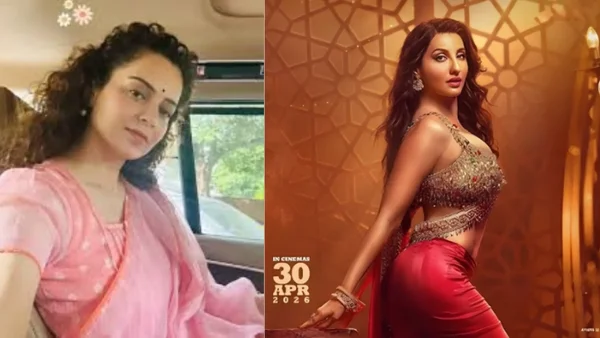
The song, which has Nora Fatehi and Sanjay Dutt, was complimented on its dancing, but quickly criticized for its words and images being too sexual and inappropriate for most people. This argument moved from social media to official places dealing with legal and regulatory issues.
What started the public upset?
The criticism started when short clips of the song appeared online, and people said the words were offensive. Many people who watched the song and its dance routine said they were very sexual and not suitable for everyone. On YouTube and X (formerly Twitter), people reacted with disappointment and asked for the song to be taken down. Armaan Malik, a popular singer, said the words of the song were the worst he’d ever heard in a song made for money. He said this showed a bigger problem of lyrics getting worse and worse and people using shock value just to get attention. Both fans and critics wondered if this sort of thing should be in the advertising for mainstream movies.
What happened with the law and the people in charge of rules?
The argument got worse quickly, and official complaints were made to the authorities. A legal request asked for the song to be banned, saying its content was “extremely offensive” and could harm young people. The Delhi Police Cyber Cell got a criminal complaint that named everyone who worked on the song. The complaint says the song might break section and 294 of the Bharatiya Nyaya Sanhita (Indian Penal Code), the POCSO Act (Protection of Children from Sexual Offences Act), and parts of the Information Technology Act of 2000. At the same time, the National Human Rights Commission reportedly started looking into the matter, telling the government to investigate and the Central Board of Film Certification to be stricter.
What did the platforms do and what songs were removed?
After the complaints, the Hindi version of the song was taken off of YouTube. The authorities asked the places where the song was available to look at and remove anything that breaks the rules. This shows how having movies and music available online can cause problems with regulations, particularly when a lot of people are angry about something. At the same time, people were worried about the versions of the song in other languages, and pointed out that the Kannada words were also causing issues. This meant the argument was about more than just one song or one country.
What did people in the industry say and who said they didn’t write the song?
Kangana Ranaut, an actor and politician, strongly criticized the song, saying “Bollywood has gone too far with being too sexual, using tricks, and trying to get attention.” She said there should be more control, and that this sort of content changes what is acceptable in society and makes it harder for families to watch things together. Raqeeb Alam, the lyricist, publicly said he hadn’t written the song and was embarrassed to be thought of as having done so. This added another complication to the argument and raised questions about who gets credit for what and who is responsible for things in filmmaking. Arjun Janya (the music composer), Mangli (the singer), and Prem (the director) were also named in the complaints.
What does this mean for Bollywood and the argument about censorship?
The argument over "Sarke Chunar Teri Sarke” has brought up the long-running debate about creativity, the pressure to make money, and censorship in the movie industry. People who want more rules say that platforms and filmmakers should respect what the community thinks is acceptable, particularly when children could see it. People who are against too much control say that banning things too quickly can limit artistic freedom. The current situation shows how much we need clear rules about how things are shown to the public, what age ratings are used and how to make sure people can only see things that are right for their age, so that being creative and being responsible to society can be balanced. As the investigation continues and the groups in charge of rules make their decisions, this situation will likely change how movies are advertised and what ratings they get in the future. For now, the argument over the song is a major issue that combines cultural beliefs, the law and how music and movies are available online. More will happen as the authorities, the people who made the song and the platforms all react to the public’s concerns about “Sarke Chunar Teri Sarke” and what it means for mainstream movies.