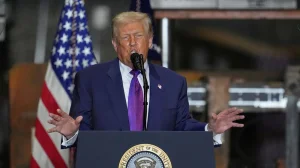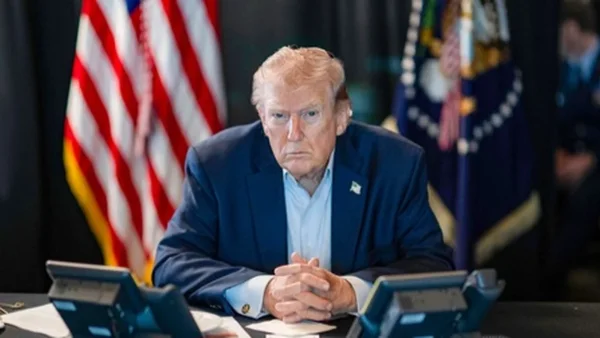
Donald Trump has repeatedly said contradictory things about a war with Iran, even though many more American soldiers are going to the Middle East. He says the U.S. is winning, while also warning of the situation becoming much worse. He has criticized allies for not helping, then said he doesn’t need their help, and has changed the dates for things to happen regarding the Strait of Hormuz.
Trump’s shifting war narrative
Over the last few weeks, Trump has gone back and forth between very strong threats and saying the U.S. isn’t really being harmed. He’s twice pushed back the deadline for Iran to reopen the Strait of Hormuz, which is a very important route for the world’s oil supply, and threatened to completely destroy Iran’s oil facilities if that waterway stays mostly closed.
At other times, he has said the United States hasn’t been impacted by the problems with the Strait, ignoring the possibility of oil prices going up and the dangers to ships. He also claimed a past president had secretly agreed with what he was doing, but every one of those former presidents’ staff said that no such conversation happened.
This kind of thing isn’t unusual for a president who likes to make a big show with strong statements. But wartime is different than a political campaign when it comes to being believable. As this situation with Iran has gone on for a second month, the difference between Trump’s strong words and the way things are actually going has gotten bigger, and that has greater effects on the financial markets, conversations with other countries, and military plans.
Strategy or improvisation?
Leon Panetta, who used to be Secretary of Defense, pointed out that in a war, “the truth is the first thing lost”. He thinks the administration’s positive spin and changing stories make it harder to understand what’s really going on, and that’s a major problem when people’s lives and the stability of the region are at risk.
Michael Rubin, an Iran and Iraq policy advisor and historian, says Trump seems unusually unwilling to stick to the usual way politicians talk about important issues. Rubin says this naturally causes confusion, especially when it involves the lines that shouldn’t be crossed and the dates for things to happen, and those are things both Iran and our allies are watching carefully.
People who support Trump believe that these changes in direction aren’t a bad thing, but a deliberate tactic. They say that being unpredictable keeps Iran and other countries who might be against us guessing. The President himself said something along those lines, joking that “in Trump time, a day… is a very long time” as he was deciding whether to extend the deadline for the Strait of Hormuz for a second time.
The Strait of Hormuz and deterrence signals
The Strait of Hormuz is now the main subject of Trump’s statements. Theoretically, threatening huge force one day and downplaying the seriousness the next could prevent Iran from acting by making them unsure of what will happen. But it could also make it harder to influence others through discussion if other countries and investors start to doubt the U.S.’s determination or how consistent it is.
These confusing signals can create dangers for military operations. Sending ships and planes requires a clear understanding of how much risk is acceptable. When the way Trump talks goes from “not affected” to “obliterate”, it’s harder for military leaders in the area to make plans and it gives mixed signals to Iran’s leaders and companies that insure ships.
The energy markets are also paying attention. Even though the price of oil hasn’t gone up hugely, talk of war and changing timelines cause instability. This instability influences what people in the U.S. expect to happen with inflation and how they feel about the economy, which puts more pressure on the White House to appear to be in control.
Confusion on Capitol Hill and among investors
Investors showed their concerns when the stock market had its worst week since the war began. Democrats in Washington, D.C. have criticized the Biden administration for not having a clear plan and seeming to make things up as they go along, especially since members of Congress have to explain things to people back home and maybe vote on whether the president has the power to wage war or how much money it will take.
Republicans are concerned, but not as strongly. Senator John Kennedy said the people he represents do support what the president is doing, yet are also worried about how much things are costing. If the price of things, and especially energy, goes up a lot, that support could change, and this is an election year.
Chip Roy, a Representative, is for attacking Iran to reduce their military strength and keep shipping lanes open, but doesn’t want to send soldiers to fight on the ground. He also said the information they received from the administration wasn’t much more than what they’d already read in the newspaper, and generally they need to know exactly what is happening.
Republican backing with clear red lines
Polls show most Republicans support bombing Iranian military targets, but very few want to send in ground troops. This difference in opinion could cause problems if the fighting goes on for a long time or gets worse, and could reduce the strong support Trump has historically received from his supporters.
The question of money is another difficulty. The administration will likely ask for about $200 billion more. Saying that much money is just “good to have” while also saying the war is almost over probably won’t convince those in Congress who carefully watch the budget to approve the spending, especially with the November elections coming up.
If the White House goes beyond just air and naval attacks, more people will strongly oppose the war. Many Republicans have said sending in ground troops is something they absolutely won’t allow. To do that, the president would need to convincingly explain how the war will end, how to measure progress, and a schedule to calm voters who don’t want to be involved in another never-ending war in the Middle East.
Messaging as leverage and its limits
Some experts think there is a reason for the confusion. Karen Rubin thinks the talk of secret talks with Iran (which Iran denies) is meant to create distrust among Iran’s leaders. If those in charge in Iran suspect people are secretly trying to leave the government, they might turn on each other and the government will become less unified.
However, there’s a very thin line between putting psychological pressure on Iran and just letting the strategy become unclear. Being too flexible with what is said could lead to Iran making a mistake. Iran might interpret softer language as permission to see how far they can push things, and the U.S.’s allies might be reluctant to join in if the goals and rules of the operation change with every news story.
The White House says the plan is working. A spokesperson said Trump is “correct to emphasize the great success of Operation Epic Fury,” and that Iran “really wants to make an agreement.” The point is that the pressure is working and the president has not ruled out any options.
What the mixed signals mean for U.S. policy
But these mixed messages make three important things harder: getting other countries to work with us, keeping financial markets stable, and preventing the situation from getting out of control. Allies need to be able to predict what will happen so they can share information, arrange supplies, and enforce sanctions. Investors need to understand the government’s policies to make smart financial decisions. And Iran needs to know where the U.S. will respond to avoid a dangerous misunderstanding.
Congress will insist on being given more detailed information about what the goals are, what powers the president has, and when the fighting will end. People in Congress, from both parties, want to know if ground troops might be sent in, how the ships protecting the seas will be supported, and what will show that the operation is successful or should be stopped.
In the end, how the war ends is critical. As Representative Adam Smith pointed out, completely getting rid of Iran’s ability to make nuclear weapons may not be possible with the current plan. If that’s the case, the president could say he has won a smaller victory and start to reduce the fighting. In war, how a conflict is presented to the public can bring it to a conclusion, but it doesn’t doesn’t replace a true strategy.
This war in Iran will show if it’s possible for a political story to be as important as a carefully planned military approach. Trump’s changing messages may keep his enemies unsure of what he will do, but they also make the financial markets nervous, make allies hesitant, and make Congress impatient. In the coming months, having a clear plan will be as important as having weapons.