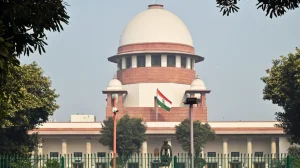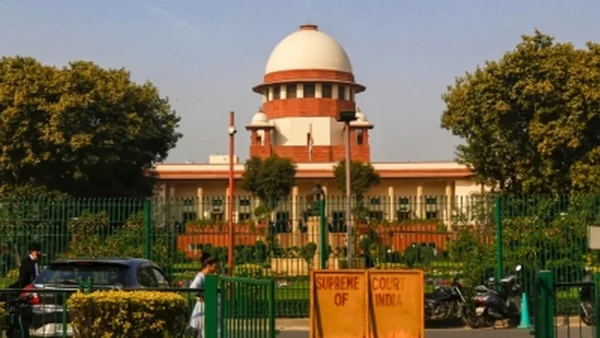
On Friday, the top court turned down an attempt to overturn the bail granted by the Allahabad High Court in the case involving the seer. In so doing, they have left his pre-arrest protection in place for the time being. Justices MM Sundresh and N Kotiswar Singh were of the view there was no need to step in and put an end to the complainant’s challenge.
It was Ashutosh Brahmachari who had put in the appeal. The bench made its position plain: they had no appetite to meddle, which is to say the High Court’s relief is where it stands.
What the order means now
So the March 25, 2026 order from the Allahabad High Court holds good. Swami Avimukteshwaranand and his disciple, Mukundanand Brahmachari, have their anticipatory bail. The terms are as before: neither side is to be talking to the press and the accused is to work with the investigators.
You could say this is a continuation of what happened back on February 27, when the High Court put a hold on the seer’s arrest. With the Supreme Court not making a move, the probe is left to run its course as per the High Court’s instructions.
How the High Court assessed the case
In a 22-page order, Justice Jitendra Kumar Sinha saw some holes in the prosecution’s story and went ahead with the bail. He pointed out the First Information Report was put in at the Jhunsi police station in Prayagraj because a POCSO court told them to.
They also put aside the state’s complaint that the accused should have been in front of the sessions court first. When you look at the way the FIR was filed – after a special POCSO judge gave the word on a Section 173(4) application under the BNSS – the bench felt it was only right to go to the High Court.
Key inconsistencies flagged by the High Court
For the most part, these were the things the High Court zeroed in on:
– The victims confided in a stranger, not those who should have been looking out for them
– A six-day lag before going to the police
– The numbers in the statements didn’t add up
– School records put the lie to where they said they were living
– Nothing definitive in the medical reports
Allegations and the contested timeline
We are talking about claims of sexual exploitation of a number of ‘batuks’ by the seer and his disciple, hence the FIR that came in on the say-so of a POCSO court.
The paper trail puts the alleged acts between January 2025 and February 2026, around the time of the Maha Kumbh and Magh Mela in Prayagraj. Then one of the would-be victims comes along and says he was assaulted in June 2024 at an ashram in Madhya Pradesh. That doesn’t fit the FIR.
The High Court also took note of the fact the victims didn’t tell their own guardians at first; they went to the complainant. The court called that hard to reconcile with how people usually act. And as for why the police were only seen six days after January 18, 2026? The complainant had it in for him that he was up to his ears in religious duties, yet he was filing another legal motion in the same window of time.
Why the Supreme Court’s stance matters
In not putting in an oar, the Supreme Court is leaving the High Court to its own devices: the accused has some cover, the investigation is on, and there is a hush on public pronouncements. It is about the evidence and the procedure, not locking someone up before the trial is even in view.
There is no point in re-litigating what the High Court has already put to rest, be it the prosecution’s wobbly case or whether one can walk straight into the High Court for bail in such a scenario.
What happens next
Over at the Jhunsi station, the work will go on with the court in the background. The gag on the media for both the applicants and the complainant is still there, so we can expect less of a show.
Make no mistake, this is not an acquittal. The ones on the ground will be looking at the documents, the doctors’ views and what the witnesses have to say. The courts will put that to the test against the kind of discrepancies we have seen – the timeline, where they claim to be from, and medical reports that found no external harm but wouldn’t rule out an assault.
The High Court has also made it clear that any row over the seer’s title is for another day and has no place in this criminal case. Now that the Supreme Court has put a lid on it, it is down to the evidence in the coming months and at trial if it comes to that.