With some parts of the country seeing 45 degrees Celsius and above, this analysis is a warning. One hot day is tied to 3,400 extra fatalities; a week of it could be 30,000. The way the risk is laid out means we have to rethink how we put our money behind heat resilience.
The figures are from Piyush Narang and Ashok Gadgil of the India Energy and Climate Center at U.C. Berkeley, and you can find them in Frontiers in Environmental Health.
What the study says about the toll
Put simply, 3,400 people die in a given day of extreme heat across the country when you factor in what would be normal. If the heat doesn’t break for five days, the number is close to 30,000.
They call these “excess” because they are the difference between what you actually see and what history would have you expect in the same time frame.
Where the danger is most acute
If you look at the map, Uttar Pradesh on its own has some 8,100 excess deaths in a five-day event. In cities like Ahmedabad, Jaipur and Surat, you can put down over 250 for one bad day, the projections say.
Then there are the 100 districts with the heaviest burden. They hold a third of the population but make up 44% of the projected excess deaths in a five-day window.
Why funding must change direction now
There is a 2.3-fold skew between where the deaths are and where the money is. Take Gujarat, Bihar, Rajasthan, Madhya Pradesh and Uttar Pradesh: 66% of the excess deaths in a five-day heatwave come from them, but they only put 29% of the GDP on the table.
That kind of disparity is hard to ignore when you’re making policy. The authors make the case that federal spending on adaptation should be steered to the states with the most to lose and the least to show for it, rather than just following headcount or who has the best bureaucracy.
Based on what they’ve put together, the researchers are calling for some focused moves:
– Put more weight on NDMA and National Action Plan on Climate Change funds for high-burden, low-GDP states
– Don’t let allocations be a matter of population or administrative clout alone
How the estimates were built
Good district-level mortality data isn’t easy to come by, so the team made do with what was there. They took a multi-city look at heat-related deaths in 10 Indian cities and applied those patterns to every district to get a clear picture.
By running the Civil Registration System’s mortality rates through 2024 population models, they could see what a one-day or five-day scenario would do. It chimes with other work out there showing South Asia, India in particular, is in a very exposed position.
Risk is rising as heat intensifies
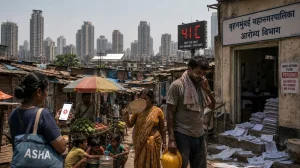
You don’t have to wait for a report to know things are urgent. We’ve had severe conditions in the north, central and east of the country. In the last few days, you’ve seen 45 degrees in Madhya Pradesh, Rajasthan, Haryana and bits of Uttar Pradesh.
The point is, the risk of dying in a heatwave isn’t just about how many people are in an area. It is where you find the states with the slimmest economic output and the least ability to pay for their own adaptation.
The bottom line
Heat in India is an equal-opportunity hazard, but not an even one. A 30,000 death count from a five-day spell is going to be felt in the states with the thinnest wallets. The authors’ view is that if we want to save lives before the next one comes, we have to move some of that federal finance to the districts that need it.