You know the type: you’re in a bit of a rush, you’ve left the heavy jewellery at home, but you still want to put together a look. The dupatta is your saviour. We have put together the top five ways to style one so you can be wedding- or office-ready without the accessory overload.
When you want instant impact
Make the dupatta the centre of attention. Go for something with mirror work, a Banarasi weft, a tassel, or just a pop of colour, and let the rest of the outfit be simple.
Put a statement piece over a plain kurta and you are done in a matter of seconds. You won’t feel the need to drape on any extra pieces to get in the festive spirit.
For some structure and to keep your hands free
If you have a lot of moving around to do or like a more defined silhouette, put a belt on it. Drape the fabric however you see fit and cinch it in with a thin belt at the waist for a tidy line.
Good for a wedding or a fusion kind of outfit. The belt has enough of a personality of its own that you can forgo a chunky necklace.
From the office to puja in one go
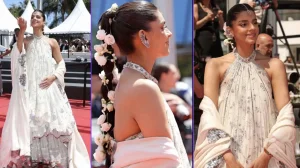
Your day might have you going from work to a small get-together with the family. A front-fall is the way to handle it. Put the ends over both shoulders and let them hang straight down in front.
It has a very put-together air to it. Any border or print on the fabric will be on full display, and you don’t have to try hard for it to be the highlight.
Elegance, no fuss
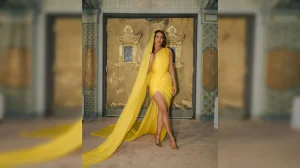
To get that off-the-cuff style, do a one-shoulder. Neatly lay the dupatta on one side and let it be.
This is a no-brainer if your suit is already making a statement with some embroidery. Toss on a pair of bangles or some studs and leave the necklace where it is for a clean finish.
Some warmth, not too much of it
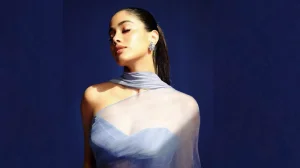
For a soft, well-put-together layer on a cool evening, wear it as you would a shawl. Just wrap it over the shoulders.
A silk or chiffon with some work on it really stands out this way. It’s the right kind of composed for a lunch with the in-laws or a wedding function.
How to be smart about it
Let the dupatta be what people talk about. Is your outfit on the plain side? Then you want some boldness or fine work. If the suit is already doing the talking, a simple drape lets the details come through.
A belt is for when you want to be secure; a shawl is for when you want to be soft.
Here is a handy guide to what works for what:
– Late for something and want to make an entrance: a statement dupatta
– Going to be on your feet or dancing: belted
– Something for the office or a formal thing: front-fall
– For a good picture: one-shoulder
– An outdoor event with a bit of a breeze: shawl style
What makes these five stick
They are not hard to do. You don’t have to be a pro at draping or put up with anything cumbersome. You get your result – be it some flair, some order, or some ease.
But then, they are for the real world. You can be put together without having to juggle a stack of necklaces or change things up in the middle of the day.
Make the most of your outfit
A good dupatta can stand in for a lot of jewellery if you want to keep things light. A belt keeps everything in place for a long ceremony. A front-fall puts the border art in the limelight. A one-shoulder does the same for your embroidery. And a shawl gives you a little luxury without being over the top.
Dressing up made simple
Put together a few to have on hand: a mirror work or Banarasi for when you want to be seen, an embroidered chiffon for shawl days, and a couple with nice borders for the other styles.
Once you have these in your repertoire, getting ready is less of a chore and more of you.