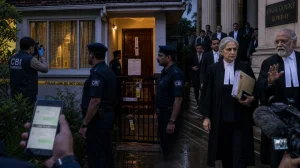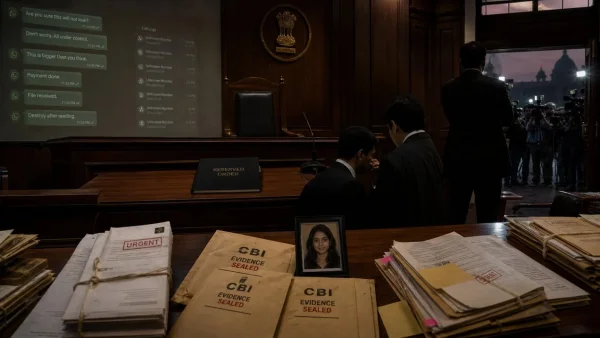
It was on Wednesday that the MP High Court reserved its judgment on pleas to cancel the bail of ex-judge Giri Bala over the death of her daughter-in-law, the late model-actor Twisha Sharma. The CBI and the state were firm in their view that her media presence could colour what witnesses have to say, and that puts some pressure on the coming part of the probe.
What the court considered
Tushar Mehta, the Solicitor General, put it to the court on behalf of the government that Giri Bala’s public pronouncements are anything but harmless. “This isn’t non-cooperation, it’s arrogance,” he said, adding that a string of press conferences can only serve to sway witnesses and put a fair inquiry in jeopardy.
For his part, Piyush Tiwari, who is with the family, says both sides have had their say and the order was put on hold on 27 May 2026. He says the judge was thorough, going over every document before making the call to reserve judgment.
Claims of narrative-building and bail misuse
In their submission, the CBI says the way the case has been put before the public by Giri Bala at pressers may be having an effect on witness statements. The state is in favour of bailing her out, contending she should be held to the terms of no evidence tampering and full cooperation.
Tiwari points out that the family has put WhatsApp records in front of the court. He notes how, in the 24 hours after the FIR was put in, an order came through to let her go on bail. In his view, that has been taken advantage of in the form of media rounds and the kind of messages that get put around.
Phone calls under scrutiny
There are accusations from Twisha’s side of a ‘judicial cover-up’. They say that in the wake of the death in Bhopal, Giri Bala was on the phone to all the right people in a hurry. More than 40 calls to judges and others with clout, they claim, were made in the aftermath.
Her father has put out a list of numbers. The family’s version is that she put in nine calls to a district judge in a day, got in touch with a CCTV man and an IPS in the Lokayukta, and phoned her son Samarth Singh three times once he was on the run.
Ankur Pandey, an advocate, made the point that for all the calling of the powerful, there wasn’t one to the victim’s kin. The defence didn’t elaborate on those call records in open court on Wednesday.
The investigation and custody moves so far
The CBI is asking for her to be in their custody for some questions and for the bail to be done away with. They also pointed to some chats that, in their reading, show the mother-in-law was behind the strain in the marriage.
A Bhopal court had just sent Twisha’s husband, Samarth Singh, to the CBI a few hours before this. The federal agency has been in charge since Monday, when they re-filed the FIR with him and his mother as the accused.
Samarth was in the hands of a state Special Investigation Team from Jabalpur as of May 22, after he had been on the lam for 10 days. The CBI is now looking at charges under the Dowry Prohibition Act and for common intention, among other things.
Background to the case
Twisha Sharma, once Miss Pune, was found hanging at her in-laws’ in Bhopal on 12 May. Her family says she was put through mental and physical torment and hounded for dowry, which the accused were not content with after the wedding in December 2025.
When the parents had some misgivings about the first look into it, the MP High Court had AIIMS-Delhi doctors do a second postmortem. Those results were not on the table for Wednesday’s session.
Some of the things the High Court has to mull over before it gives its order:
– Any influence of the press on witnesses
– A breach of the bail terms
– Whether she needs to be in custody for interrogation
– The possibility of evidence being meddled with
What comes next
Now that the order is in abeyance, the court will make a call on whether her bail is to be or not. Tiwari says they will issue it once they have gone through what has been put on the record.
Whatever is decided will set the tone for the CBI, which has made clear it wants to have her in for a talk to keep the evidence and the witnesses in order. For the family, it will be a test of the story they have been telling about interference.