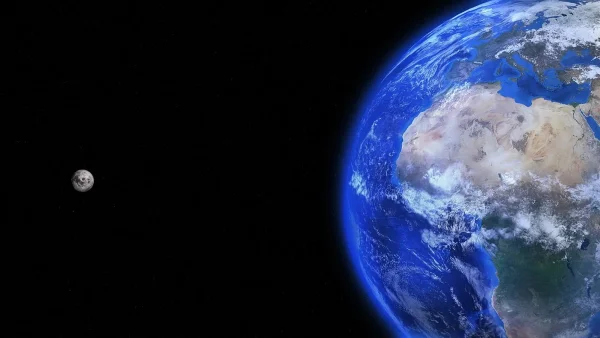
The Earth spins at 1,670 kilometers per hour and travels around the sun at nearly 67,000 miles per hour at the equator. Still, your coffee doesn’t spill, your chair doesn’t move, and you don’t sense anything. This isn’t magic. It’s because our bodies react to change in movement, not a smooth, continuing speed.
What we actually feel is change
You really notice when something starts, stops, or turns. Roller coasters are thrilling at those points because of those quick changes in speed or direction.
Earth doesn’t do that. It turns and goes around the sun at almost a constant pace for billions of years, with no sudden stops or sharp turns.
We move with Earth, not against it
Imagine being on an airplane when it’s at its cruising height. It’s going a long distance quickly, but you can walk around or sleep. You, your seat, and the air are all moving at the same speed.
The same thing applies to Earth. You, buildings, the oceans, and the air are all moving with the planet. Because there’s no difference in speed between you and anything around you, the sensors inside your body don’t register anything.
If Earth suddenly went faster, slower, or turned, we’d all feel it immediately. But in our normal daily lives on Earth, that doesn’t happen.
Here are the core reasons you do not sense Earth’s speed, in plain terms:
– Our bodies detect changes in speed or direction
– Earth’s spin and orbit are steady over time
– Everything around us shares the same motion
– Space provides few nearby reference points
– Gravity holds us tightly to the surface
Scale and perspective hide the movement
We’re very small compared to the Earth. It’s about 13,000 kilometers across. Movements that are huge on a planetary scale seem slow and gentle to us.
When you’re in a car, trees and buildings rush by, letting your brain know you’re moving. In space, the stars are so far away they appear to stand still. Without nearby things to compare to, it’s harder to tell that you’re in motion.
Day, night, and seasons prove the spin and orbit
Even if you can’t feel the movement, you can see what it does. Night turns into day because the Earth finishes one spin every 24 hours. The side of the Earth facing the sun gets light, and the other side gets dark.
The seasons are caused by the way the Earth is tilted on its axis as it travels around the sun. The angle of the sunlight changes throughout the year, and that changes the temperature and how long the days are.
Look at the stars at night and you’ll see them slowly drifting across the sky, then shifting position over the course of a year. These patterns show us both the Earth’s daily spinning and its yearly orbit. Satellites and space trips have confirmed what the stars have been showing us for a long time.

Why we do not fly off the surface
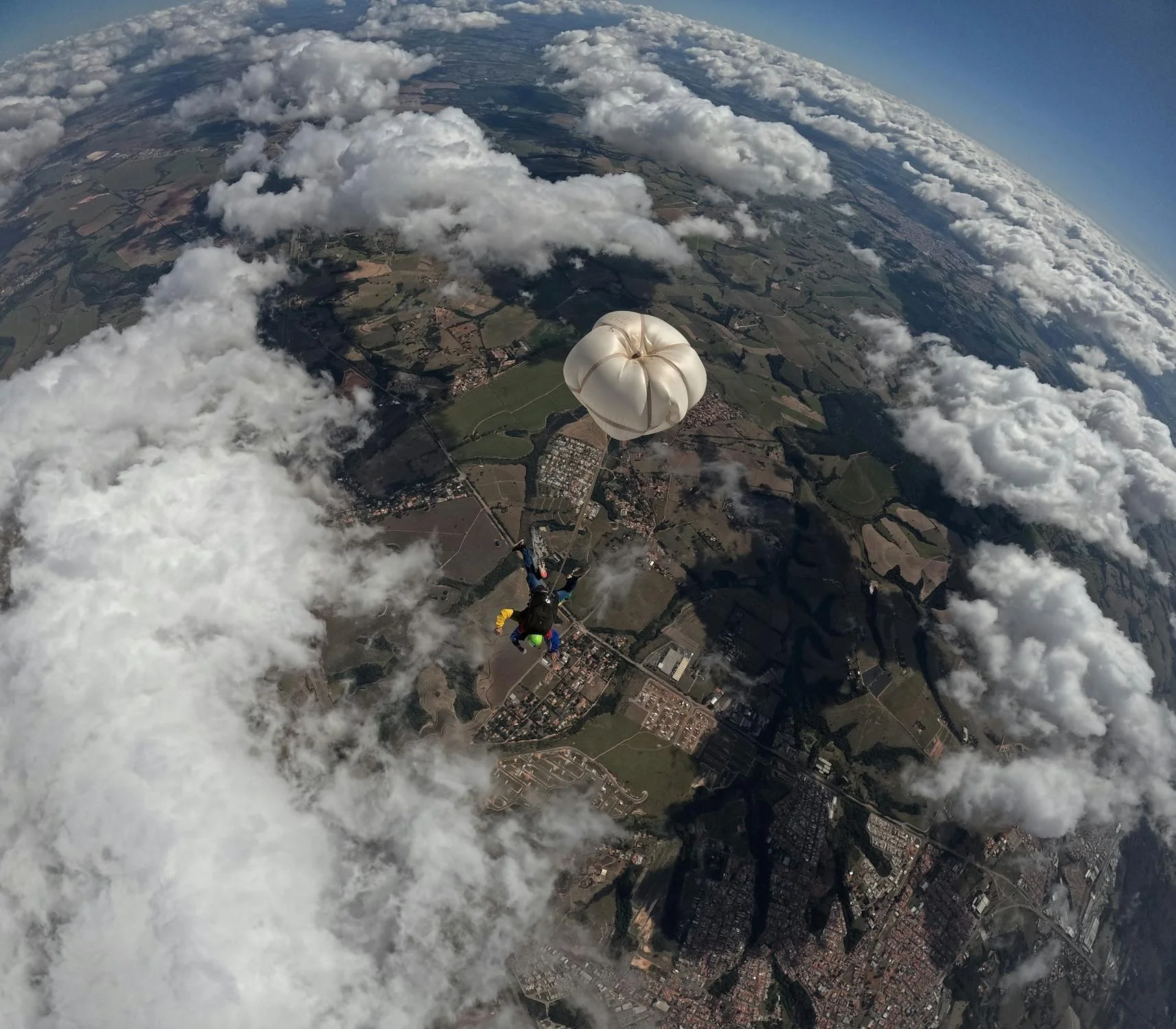
If the Earth is spinning so quickly, why aren’t we thrown off into space? The answer is gravity. It pulls everything towards the center of the Earth, holding the oceans, the air, and all living things on the surface.
Gravity is much stronger than the pull of the Earth’s spinning. So even as the Earth rotates and travels through space, the ground, the water, and you stay put.
Speed in numbers, calm in experience
At the surface of the Earth, and especially close to the equator, the speed of the spin is about 1,000 miles per hour. Around the sun, the Earth travels at nearly 67,000 miles per hour. Both of those are huge speeds, but life feels steady because nothing around us is changing its speed compared to us.
This is the same idea as keeping a tray steady on a smooth train or passing a cup to someone on a calm flight. When everything is moving together, it cancels out the signals that would normally make you feel off balance.
A moving planet in a moving universe
Earth isn’t the only thing moving. The Sun is moving through the Milky Way, and the Milky Way is moving too. In the universe, very little is truly still. Movement is typical.
The peaceful feeling you have isn’t because of a lack of movement. It’s what happens when speeds are stable, directions don’t change, and gravity holds everything in place. To put it simply for students or anyone who’s curious: something that seems still can actually be moving very fast, as long as everything moves at the same pace.
And finally, to put it all together… we go around the sun once a year, we spin on our axis every 24 hours, and we do both of those things smoothly. It’s this consistency that makes sunrises predictable, the seasons come back, and makes sure your morning tea stays in your cup.