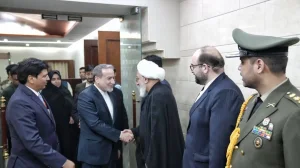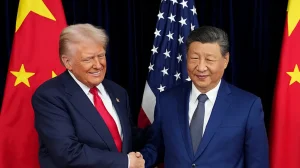
Donald Trump is going to Beijing this week and won’t be as warmly welcomed as he was in 2017, because of the possibility of war with Iran and the fact that trade problems with China have started up again. The White House is saying Trump will achieve certain things, but China’s relationship with Iran and its influence over important materials could change what Trump gets out of the visit.
Why the Iran front hangs over Beijing
China is very involved in Iran’s economy and will be very affected by any financial problems because of the conflict. China’s economy was already predicted to grow at a slower rate, and a long war could make that even worse, which would give China a stronger position in its bargaining with the US.
Trump asked China to get the Strait of Hormuz reopened after Iran had effectively closed it. He didn’t get what he wanted, but China, because it buys most of Iran’s oil, used its power to persuade Iran to agree to a ceasefire that is still not very secure.
If China can stabilize the area, it will be in a better position to negotiate on trade. This is happening at the same time Trump is arriving in Beijing, and the image of the visit will be important, but it will have to compete with the actual facts about oil, shipping routes, and how things are made and delivered.
Pomp, pressure, and a thinner itinerary
Trump has said very nice things about Xi Jinping for years, and even said before this trip that Xi would ‘give me a big, fat hug when I get there.’ But being friendly isn’t likely to mean a big show of celebration or major policy changes.
He’s only expected to be in China for parts of three days, because he doesn’t like long journeys. People inside the government say the planned events will be less elaborate than his 2017 visit, when he and Melania Trump had a private dinner in the Forbidden City.
That earlier trip included a formal welcome at the Great Hall of the People, a military parade, and a formal dinner with a video showing highlights of Xi Jinping’s trip to Florida and a clip of Trump’s granddaughter Arabella singing a song in Chinese. China doesn’t usually put on such a big display for other leaders.
Lower expectations, higher stakes
Ali Wyne of the Crisis Group says Beijing will still want Trump to feel as though he has had an unusually successful visit. However, he adds that the reason for the ceremonies has changed: Xi Jinping now understands Trump better, and the government has a more realistic view of China as a country that is nearly as powerful as the US.
Jonathan Czin, who now works at the Brookings Institution, doesn’t think many definite results will come from the trip. He believes Chinese officials are ‘planning from the point of our midterm elections,’ thinking that as the election gets closer, they will have more power and the US will be less likely to make big compromises.
Republicans are trying to keep control of Congress, and polls show most Americans aren’t pleased with Trump’s economic policies and think the US went too far in dealing with Iran. Because of this situation at home, the White House has less flexibility in Beijing.
Trade track record and tariff flashpoints
The government is saying Trump is being firm about tariffs, but the Supreme Court later said those tariffs weren’t allowed. Last year, Trump’s announcement of large tariffs on goods from all over the world caused China to react strongly: they stopped buying American soybeans and reduced the amount of rare earth minerals they would sell to factories in America.
Things calmed down after a trade agreement in the fall limited tariffs on both sides. Scott Bessent, the Treasury Secretary, believes the relationship between the US and China will be pretty steady, but he also thinks the amount by which the US buys less from China (the trade deficit) can continue to get smaller.
However, past announcements about deals with China make you worry. In 2017, Trump said there were $250 billion in trade deals, but these weren’t firm commitments and some of them never happened. In 2020 a $200 billion deal was announced, and like before, most of it didn’t happen before Trump finished his first four years as president.
The personal diplomacy puzzle
Trump often talks about his good relationship with Xi Jinping, and once said Xi was “really good” but he didn’t want to say ‘friend’, or appear silly by calling him his friend, but that he got along with Xi very well. He even suggested that maybe the US wouldn’t have to use the military to stop China from taking Taiwan, because Xi “respects” him. Though, more recently he has talked about possibly selling weapons to Taiwan.
Ali Wyne warns that Xi probably sees this as a rare chance to deal with an American President who likes him and has a limited understanding of the competition between the two countries. Because of this, Wyne says, Beijing might try to get as many economic and security benefits as they can.
Czin points out that Xi Jinping doesn’t enjoy traveling and doesn’t make personal friendships the way Trump does. In fact, in January Xi removed many people from the Chinese military, replacing them with people who had been loyal to his family for a long time. This shows that Xi thinks the system and the military’s goals are more important than being friendly with people.
A dense calendar could amplify leverage
Trump and Xi Jinping could meet four times in just eight months. After Beijing, Trump intends to have Xi Jinping as a guest at the White House. He might also go to the Asia-Pacific Economic Cooperation meeting in November in Shenzhen, China. And Xi Jinping could come to the G20 meeting the next month at Trump’s golf resort in Doral, Florida.
Czin cautions that not all of these meetings will necessarily happen, as Xi doesn’t like to travel. Even just the possibility of these many meetings can change how they negotiate, leading each side to put off difficult decisions until the next time they meet.
The White House is saying they care about what is achieved, not just appearances. Anna Kelly, a White House spokesperson, said President Trump is about getting results, not just making things look good, and that the meeting will be important both in how it looks and what is actually done.
What to watch this week
The visit now doubles as a test of deliverables under wartime pressure. Key signals could set the tone for the months ahead:
– Any movement on tariff relief or new trade irritants
– Signs China will reinforce the Iran ceasefire
– Clarity on Strait of Hormuz reopening efforts
– Whether soybean purchases or rare earths shift
– Announcements shaping the next three leader meetings
Can Beijing’s leverage meet Washington’s demands?
Trump has told China to do more regarding the seas and the energy market. China instead quietly used its influence with Iran. If this shaky agreement with Iran holds, Xi Jinping’s team will have more influence in the discussions about security and the economy.
However, Washington is focused on reducing the trade deficit with China while at the same time saying things are generally stable. Trying to do both of those things makes it hard to make a joint statement that sounds meaningful without restarting a fight over tariffs too quickly.
Anna Kelly says Trump “doesn’t go anywhere without getting something good for our country.” This idea will be tested against Trump’s past habit of making big promises that weren’t fully kept, and the situation in Iran which is always changing things.
Optics matter, but outcomes will decide the tone
The elaborate welcome Trump received in China in 2017, with the military bands and a visit to the Forbidden City, was an extraordinary display. The visit by British Prime Minister Keir Starmer in January, without Xi Jinping present and with tourists around, showed how unusual that earlier arrangement had been.
But this time it’s different. With just a little over three days in China, a war that is affecting shipping and energy supplies around the world, and a fragile agreement about trade, even small improvements will be noticed. If nothing much happens, the next scheduled meeting might be more important than anything decided in Beijing.