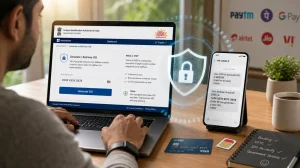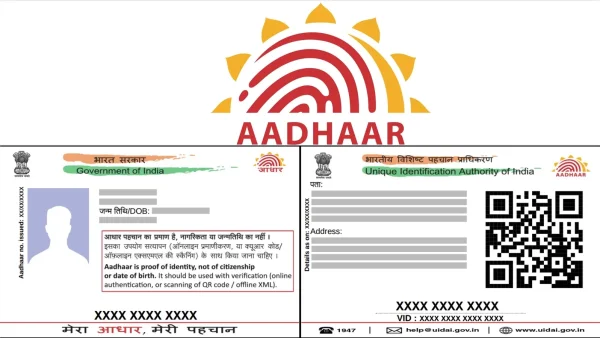
India has started a crucial stage towards being paperless on the identification front. The Unique Identification Authority of India (UIDAI) is going to tell hotels, event managers, and other firms down the line to just forget about collecting photocopies of Aadhaar cards and shift to the registration of the Aadhaar verification process in offline digital mode. The decision mainly targets the privacy threats from digital Aadhaar copies, the operational efficiency of the verification process, and the non-compliance of stored papers as legal evidence.
The upcoming rule changes at the UIDAI
The UIDAI needs offline entities to register with the authority if they are in Aadhaar verification. Once they complete registration, the UIDAI will give them the ability to do the verification with secure tools they can use only for contactless verification. These tools are scanning the QR code and a new Aadhaar app currently in the beta stage.
Just wait for the regulation. One of the key goals is to eradicate the use of paper-based Aadhaar verification, and to stop the collection and storage of photocopies of Aadhaar cards. Such storage is already a breach of the Aadhaar Act, which is aimed at preventing the misuse and unauthorized retention of identity data.
Why the photocopy ban is significant
Archiving and copying Aadhaar cards impact privacy and security at a structural level. Physical copies are vulnerable to loss, misuse, or leakage by someone. The UIDAI replaces the use of photocopies with the check through the digital route and in this way; it aims to prevent the identity theft that results from data exposure.
The reliability element is also being attended to through the transition. Currently, intermediary servers handle many checks that connect to the central Aadhaar database. In the event of these connections failing, the verification process stops. Developers built the offline tools to ensure verification continues even when there is no network or the intermediaries are down.
The process of going paperless in Aadhaar verification
The registered entities may embed the APIs in order to access Aadhaar verification for their systems. The personnel can verify the ID through a secure QR code scan or an app-to-app verification process in a manner that avoids the need to store the physical copies of the documents. These two methods have the main purpose of confirming the truthfulness while keeping the data leakage to a minimum.
UIDAI, however, is in the beta stage of an app that will allow verification without contacting the central database at every single request. The local verification model is going to be a blessing for the quick, yet robust verifications done in heavy traffic areas like airports, event grounds, and A-stores.
Using the app by an individual means not only an easier process of verification but also the comfort of making updates and having the whole family on one platform whether they have a phone. This simplification provides more convenience to the users in all aspects of the service.
privacy compliance and the new data protection regime
UIDAI claims that the paperless approach accommodates Aadhaar authentication to the Digital Personal Data Protection Act, the latter of which is foreseen to be fully operational in around 18 months. It is in full accord with the law’s principles to minimize data at the verification point, to get rid of photocopy storage and to only carry out consent-based digital checks.
Therefore, the shift being an advantage to the users means that there is less personal information at stake. As for the organizations, they have a clear and easy way to comply, find out the person’s identity, refrain from copying, and show that checks were securely done. The ultimate purpose is to have trust that is verifiable without having to collect more information than necessary.
What enterprises will have to follow
– Get ready to be able to register with UIDAI right after the notification gets out.
– Develop API integration for offline verification of Aadhaar and test the QR/app workflows.
– Cease the practice of taking hard copies of the Aadhaar card and adjust the SOPs accordingly to reflect this.
– Give the necessary paperless verification and consent practices training to the front-line staff.
– Update the privacy policies in order to cater to the changes in the verification mechanism.
– Check through the whole set of documents that are there and adhere to the guidelines set by UIDAI regarding old data management.
Standardizing these controls and keeping the audit logs will be beneficial for companies that work with different sites. By so doing, managements can easily prove the operation of a company being under the Aadhaar Act and the new data protection framework that is still in the pipeline.
Consequences to the public and operations
For customers, the check-in process will be quicker, and they will not face the same requests for sensitive document copies as before. To them, the whole thing may seem to be more confidential as less information is being revealed and there is no more paper trail. Operators no longer have to worry about downtime because they do not need a continuous connection to the centralized server for verification.
The industries of aviation, hotels, conferences and expos, and counter sales will all experience the beneficial effect of the sped-up service flows, especially that of the overcrowded time slots. The combined use of QR codes and application interactions is the secret of the envisioned high-scale and yet secure e-KYC.
What to expect and the schedule
The authority has already endorsed the rule, and soon, it will announce it. The app and APIs are likely to be in beta, and it will be a gradual rollout as they move from beta to production. Over the next 18 months, they will adhere more strictly to the Digital Personal Data Protection Act and also update the guidance on implementation and audits.
Paperless Aadhaar verification is the alternative approach that UIDAI is following, thus enhancing the privacy and compliance significantly. By Indian government disallowing use of photocopies and making it a must for everyone to register for digital checks, the identity verification part of the digital world will definitely become more secure and it will work as perfectly as it can even in the real world, live.
Plese follow the https://incometaxindiaefiling.gov.in to get more information about the paperless verification.