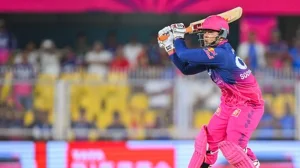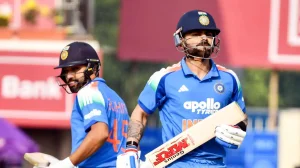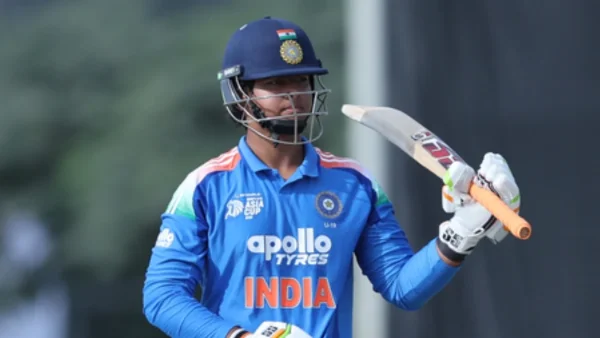
Then there is India’s most talked-about teen batter, Vaibhav Sooryavanshi, who has come up against his first real trial by fire. His outburst at some sledging during a hard-fought India A game in Dambulla has prompted some to say the 15-year-old would do well to put in as much work on his composure as he does on his power-hitting. Otherwise, the opposition will be all too happy to pull his strings.
Why the Dambulla flashpoint matters
You can’t miss the way Sooryavanshi has been on the up. In his time with Rajasthan Royals he was unplayable, racking up 776 runs at a 237.31 strike-rate to put the Orange Cap in his name. Put up figures like that and bowlers will start to talk. And so will everyone else.
The loss to Sri Lanka A in Dambulla was a teachable moment. The sledging got to him, and the game was lost. It’s a reminder, as some will tell you, that you can’t just wing it; you have to practice and internalise how to handle these situations.
Experts push for situational intelligence
Dr Swaroop Savanur, one of India’s top sports psychologists, thinks the raw material is there, but it has to be put on a firmer footing. He knows the boy from when they were at the National Cricket Academy with an under-16 cohort. Back then, he was a quiet kid, already going through the BCCI and NCA’s psychology profiling – the Centre of Excellence run by VVS Laxman today.
Savanur has put on 18 or 19 of these high performance camps for the younger set at the CoE, even back in the day when Rahul Dravid was in charge. The point isn’t to offer a band-aid, but to get the player to see how his own mind works and make peace with it when things get tough.
He calls it situational intelligence. You have the talent to get in the ring, but you need the head for it to stay there. Without it, he’ll be the first to tell you, your ability means nothing when the going gets hard.
From camps to the dugout: institutional response
Savanur says the BCCI is on top of it, with players being vetted for their mental side in camp. There is enough of an appetite for it. I’ve done my share with the Punjab Kings, Vidarbha, even the India U-17 footballers – it’s not just a cricket thing.
But don’t go thinking of it as a cure-all. Stress and nerves are part of the deal, not something you can just edit out. If you make the right kind of prep a habit, it will show in how you think when you’re in the line of fire.
Transition pressure on India’s next wave
One ex-selector sees a different kind of hazard in the making. You have the likes of Kohli, Rohit, Ashwin and Jadeja moving on from one format or another, and new lads are jostling to fill the void. It can become a bit of a stampede for the big numbers.
When you let that hunger get the better of you, it turns into anxiety. A little guidance from the BCCI and some straight talk from the team can put them at ease. Keep it simple: we have your back, no need to put the pedal to the metal. That’s how you win over a player.
Savanur would be the first to nod along. Empathy is what you need to turn what could be into what is. You see it with the up-and-coming stars: they put on a show at 19 and then can’t quite put that together in the big time. The will and the craft are there, but you have to put in the work on the mental side to back it up.
The cricketing trap: when success becomes noise
Then you have a case like Sooryavanshi. His IPL run of form put a different spin on his season, maybe even his career. But as Savanur puts it, success has a way of reverberating. He sees the line between good and great in how an athlete handles the crunch. If you don’t have an answer for those moments, your mind is going to go to the noise.
It’s not some kind of voodoo. It’s a matter of logic, if you have the patience to see it. You’ll spot a change in a player’s routine, or in their headspace, and before long you’ll see it in how they handle themselves when things get hot.
Training for tight situations, not just skills
Where do we start? Some would say we need to be more methodical about it. It can’t be all nets and throwdowns; you have to have drills for pressure. Sledging is part of the job, so you might as well practice for it. India’s opposition is going to come for that nerve he showed in Dambulla until it’s no use to him.
That’s the thinking behind the way the CoE is putting players through their paces in camp. You want an athlete to have a pre-set reaction when riled up, not to just go with his gut. It’s conditioning, plain and simple.
Here is what you should be making a priority:
– Make mental prep part of the day
– Put in the work on sledging scenarios
– Get the team on the same page about patience
– Keep an eye on how they’re prepping for matches
– Give credit for the process, not the result
Why this is more than one player’s story
This isn’t just about a kid with a lot of hype. It’s about a team redefining itself. You’re going to have new faces in the role where the old guard used to just know what to do. Rivals will be looking to get under your skin as much as they are to hit your stumps.
Savanur is making a case for a bit of a cultural shift. We all know sport is 90 per cent in your head, but too many still see pressure as something to be fixed. Treat it like an old friend and you’ll see a different kind of talent.
Sooryavanshi’s road ahead
He has the temperament for it, says Savanur, and you could tell two or three years back. But what works for a junior has to be put in order for the senior circuit. That’s a process. You need the right feedback and a place where a misstep is information, not a spectacle.
Part of it is learning to take a loss. There will be some every year. With the right head on your shoulders, Dambulla is a marker, not a brand. You’ll see the results in the little things before they make it to the scorecard.
What it means for the dressing room
Let’s be clear: Dambulla was a wake-up call, not a scandal. No one is doubting the ability. What’s up for debate is if the next wave of Indian cricketers can make composure a habit. The coaches and the CoE have some work to do there.
It’s not complicated. You profile them, you talk to them, you put them in the fire. You build a message that takes the edge off. Because in the end, you do in a game what you do in practice.
Bowlers are going to keep at Sooryavanshi to hush the bat. If we can make this a lesson rather than a problem, we might be in for a very different outcome the next time we’re in a close one.