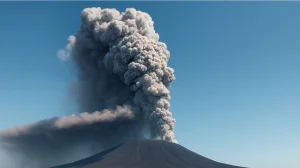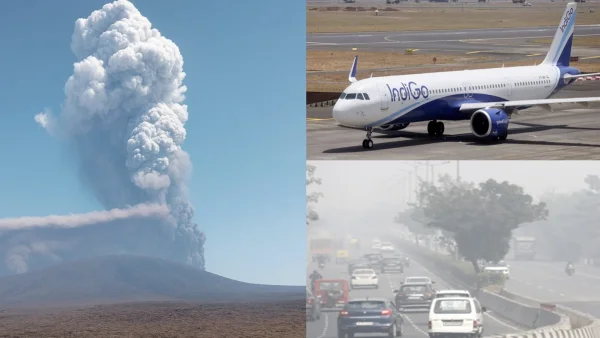
The huge cloud of ash from the Hayli Gubbi volcano (which hasn’t erupted for thousands of years) is now moving towards India and causing lots of trouble for flying. The ash arrived in Delhi late Monday and caused many flights to be cancelled or changed, and authorities say there will be even more trouble.
Volcanic Ash Clouds Disrupt Flight Operations
This ash from the volcano contains volcanic ash, sulfur dioxide, and tiny bits of rock. It’s between 10 and 15 kilometers up in the air and is especially a problem for airplanes. The India Meteorological Department (IMD) is watching it closely as airlines are finding it hard to fly around the cloud. Many flights were cancelled or redirected after the ash moved across the Red Sea towards Central Asia.
Airlines Take Precautionary Measures
IndiGo and Akasa Air in India have been quick to deal with this natural disaster, cancelling some flights and changing the routes of others. IndiGo cancelled six flights, one of them from Mumbai, just to be safe. The problem is even harder because Indian airlines aren’t allowed to use Pakistan’s airspace, so they have to find different ways to go.
The Directorate General of Civil Aviation (DGCA) has given advice to make sure flights are safe. Airlines have been told to stay away from the areas with volcanic ash and to plan their flights differently. Airports have to be checked and cleaned thoroughly before planes can start using them again if the ash affects things.
Impact on Air Quality and Public Health Concerns
The moving ash cloud could make the air quality even worse across northern India. The National Capital Region (NCR) already has bad air, with Delhi's Air Quality Index (AQI) at 382 on Monday afternoon. The extra tiny particles from the volcano could make it worse, though experts believe the height of the ash might limit how much it affects the air at ground level.
Even at that height, the volcanic ash could be bad for people’s health and the environment. Authorities are watching pollution levels closely to reduce any bad effects on people.
Global Aviation Adjustments
The effects of the Hayli Gubbi eruption aren’t just on flights within India; flights coming from other countries are being affected too. KLM, a Dutch airline, cancelled their flight from Amsterdam to Delhi because they didn’t want to fly through the contaminated air. Airlines everywhere are being very careful and are working with aviation groups and weather experts around the world to find a safe way through this complicated situation.
Looking Ahead: Monitoring and Mitigation
The ash cloud is continuing to move northeast at 100-120 km/h. Experts are still watching it closely. They are using pictures from satellites and weather information to keep a constant watch on it, as it might enter western India (Gujarat and Rajasthan).
This situation really shows how important it is to be prepared and to be able to react quickly when natural disasters happen and disrupt how people travel around the world. Airlines are making a commitment to keep passengers safe and to cause as little trouble as possible by communicating well and making smart changes.
In short, the volcanic ash cloud is causing big problems for flying and for people’s health, but airlines, meteorologists, and the organizations that control aviation are all working together to manage the situation. Authorities are continuing to watch what happens, and people who are flying should get the latest information about any changes to their flights and the air quality.