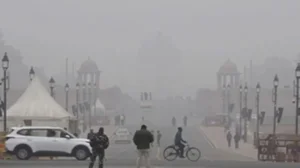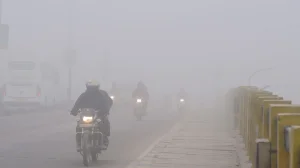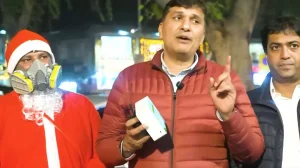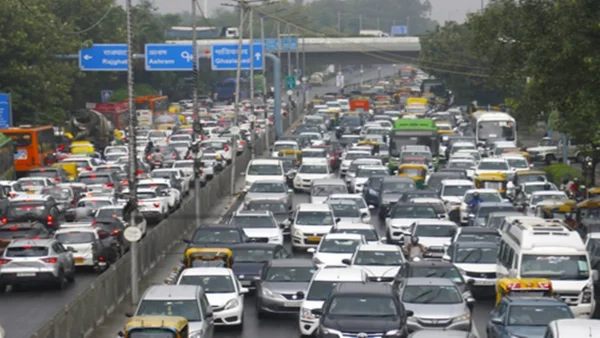
The air pollution crisis Delhi is experiencing is no longer under control, that’s why the governmanent has taken some serious steps. They decided to go with the most constraining of the possible measures defined by the different stages of the Graded Response Action Plan (GRAP). As a result of this action, only half of the staff are allowed in office. The other half has to work remotely. People expect this move will help in solving the pollution problem which is increasing at a very fast rate.
Understanding GRAP and Its Implications
The Graded Response Action Plan is a set of emergency measures designed to tackle the rising air pollution trend in Delhi. The current implementation of Stage III brings out the gravity of the situation as the Air Quality Index (AQI) in many parts of Delhi has topped 400, and the area has been put under a ‘severe’ pollution level. It is high time that public health be protected through immediate intervention.
A major step toward reducing traffic and thus, vehicle pollution in New Delhi comes by reshaping the urban sprawl into an urban structured network of centers, where people merely need to cycle or use public transportation to reach their destinations. This is achieved through the policies of smart growth and transit-oriented development, in which people live near bus and rail routes; thus, they don’t really need to use a car, the 6.5m population megacity of the nation, is served by a railway line that is just 2.0 km away.
Not only the reduction of emissions but also the reduction of congestion in peak hours are the goals of the work-from-home policy. The city, through the spreading of the travel times and the cutting of the cars on the roads, hopes to be able to share at least a little of her pollution load during this time of the year.
Exemptions and Enforcement
Some of the most important services have not been included in these restrictions. These are the hospitals, fire departments, public transport departments, electricity and water utilities, sanitation bodies, and agencies responsible for pollution control or enforcement. It is for this reason this list of exemptions that the city takes care of the most critical services still functioning while simultaneously trying to enhance the quality of air.
Implementation of these orders will be monitored by district magistrates, deputy commissioners of police, and local bodies considering the sectors as a whole. Breaking any of the rules will result in penalties per Sections 15 and 16 of the Environment (Protection) Act, which may include jail time or fines.
A Request for Immediate Action
It is a sad fact that Delhi is in a desperate situation where the quality of air has been at ‘severe’ levels for more than ten days. The Central Pollution Control Board (CPCB) has revealed that out of the 38 monitoring stations in the city, 15 have reported AQI levels above 400 recently. Areas as ITO, Punjabi Bagh, Patparganj, Ashok Vihar, Sonia Vihar, Rohini, Vivek Vihar, Narela, and Bawana are definitely the most hit by the pollution.
During the cold winter months, the air quality of Delhi is significantly deteriorated by excessive particulate matter content in the air, which surpasses the permissible limits for PM2.5 and PM10. Besides, amplifying the already bad condition during the period by 1.8% of the pollution level, the burning of stubble in the neighboring states would need a multilayered solution, which includes strict regulations on the automobile sector.
In the Future
The situation becoming worse for air quality in Delhi, stakeholders are now called upon to take a strong and effective action. Currently, Stage III or Emergency along with Graded Response Action Plan (GRAP) is following the issuance of mandatory work-from-home policies, which is the beginning of the addressing of one Papa major components of the Delhi air quality scenario.
By coming together and being firm about the implementation of the present laws, Delhi can control its air pollution problem up to some extent, and thereby public health will still be the number one priority.