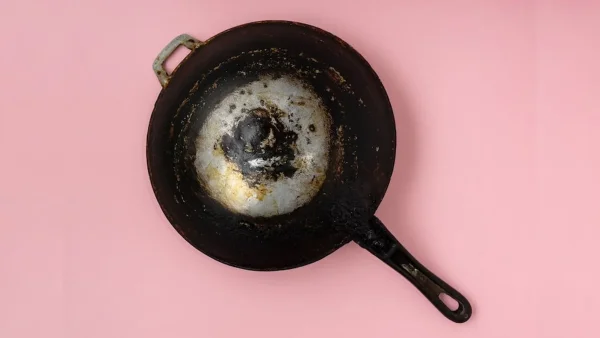
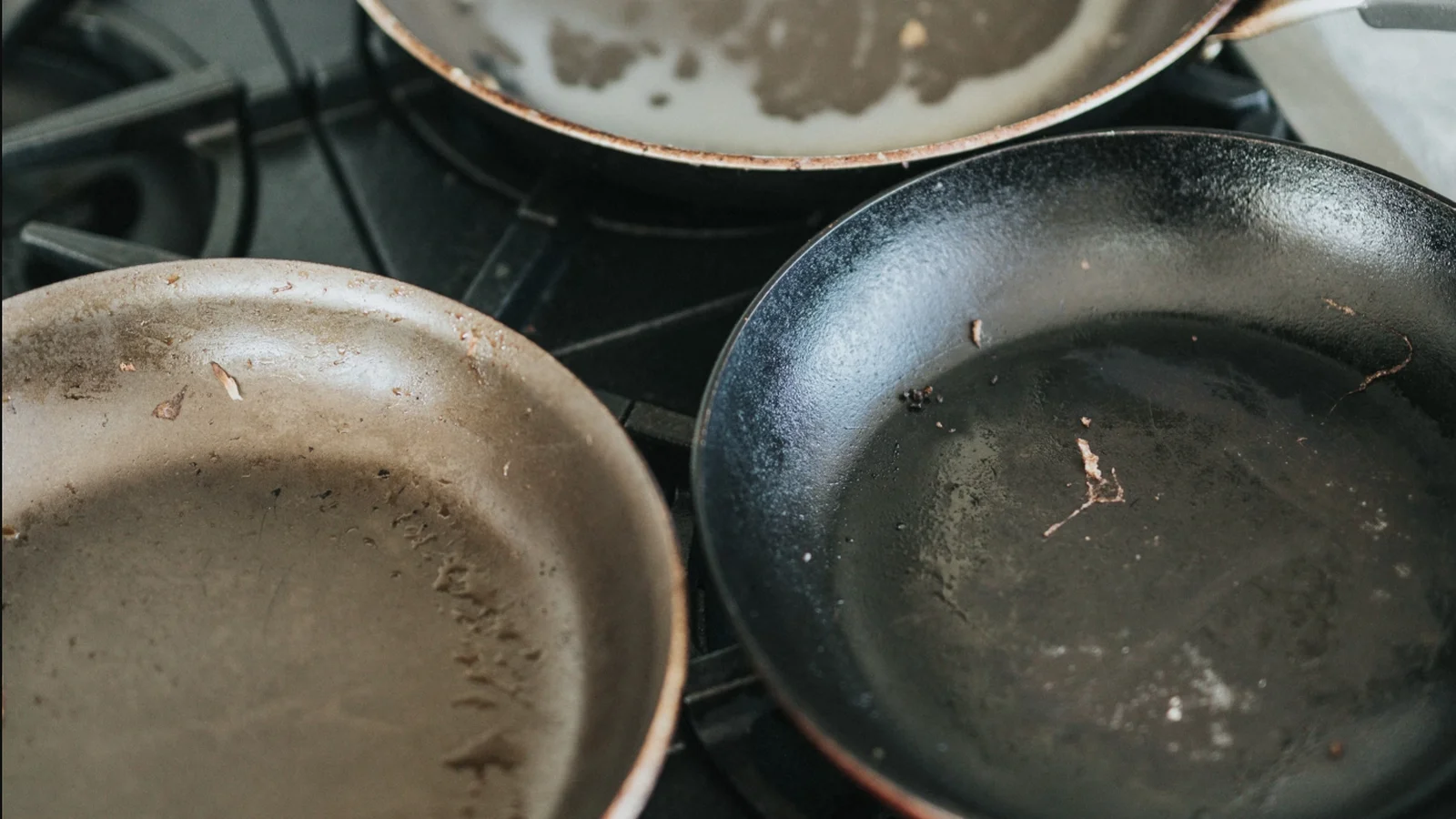
That little scratch in your pan might be doing more than just messing up your eggs. Recent warnings and earlier studies show that when the non-stick coating is damaged, it can break off PFAS containing particles into your food, and this is risky for the reasons mentioned above. These chemicals stay in your body, and so your kitchen is now a place where your health is directly affected.
A kitchen warning that will not stay quiet
A doctor on X (formerly Twitter) really got people thinking about their cooking when she said that even a little bit of wear and tear can send invisible pieces from the non-stick surface into your food. She said this is a problem in the kitchen, not something happening far away in the environment, and she wants families to reconsider what they’re using on their stoves.
She emphasized how much can come off: one scratch can release thousands of particles, and a really worn pan can release millions. This isn’t just a guess. There’s growing proof that PFAS, often called ‘forever chemicals’ because they’re in many non-stick coatings, don’t break down once they’re in you.
What the research already shows
In 2022, scientists at the Global Centre for Environmental Remediation found that just one scratch on a Teflon coated pan can release over 9,000 really small pieces (micro- and nanoparticles). If the pan is in very bad condition, the number goes up a lot, and some reports say over two million particles can be released.
We’re all exposed to these chemicals. The doctor pointed to research that shows nearly everyone in the world has PFAS in their blood. This wide-spread presence makes even regular cooking choices important, because any new exposure adds to what people are already holding in their bodies.
It’s also important to know the history of PFAS. Teflon pans used PFOA until 2013, and a major study at that time linked high levels of PFOA to a higher chance of getting kidney and testicular cancer. While production changed to newer PFAS, some of those have also been linked to similar health issues.
Health risks at a glance
Increasingly, PFAS exposure is being connected to cancer, hormone problems, being unable to have children, and immune system problems. It’s important to understand these aren’t things that happen immediately, but potential outcomes from being exposed to small amounts over a long period of time. That’s why a scratched pan is a concern, even though it’s something you use every day.
Use, replace, or switch: what to do right now
Health experts say to be sensible, not to panic. Not all non-stick pans are dangerous. A surface that’s in good condition and used on low or medium heat is generally safe. The danger increases when the coating is scratched, peeling, or very worn, or when you use metal utensils that mark the surface.
If you are unsure where to start, make small changes that reduce exposure quickly:
– Retire pans with scratches, chips or peeling
– Avoid metal utensils on non-stick surfaces
– Cook on low to medium heat as recommended
– Replace old cookware once the coating degrades
– Consider stainless steel or cast iron alternatives
The doctor’s main recommendation is to change the material you cook with. She describes this as being preventative at home, and says switching to stainless steel or cast iron is a simple but strong move for your health. For a lot of people, this will mean slowly replacing older non-stick pans, rather than throwing them all out immediately.
When to keep and when to toss
If your non-stick cookware is in one piece, smooth and treated with care, keep an eye on it. As soon as you notice the coating becoming dull, scratched or flaking, you should replace it. Using wooden or silicone utensils will help any remaining non-stick cookware last longer.
Beyond fear: building daily safety habits
The doctor was clear that this isn’t about being scared, but about being aware. Her main point is strong: health is built with what you do every day, and not just when you go to the hospital. Because PFAS don’t disappear, avoiding each exposure could be helpful, especially in homes that are already dealing with lots of environmental health risks.
And it’s important to look at the bigger picture. Most of us are already exposed to PFAS. If they’re in nearly everyone’s bloodstream, then decreasing how much more you get is a sensible and immediate thing to do. A scratched pan isn’t the whole story, but it’s one source of exposure that you can do something about today.
Here is the takeaway for households weighing cost and caution:
– Replace damaged non-stick cookware promptly
– Shift gradually to stainless steel or cast iron
– Review utensil choices to prevent new scratches
This discussion is happening quickly because it’s about things we do every day and our health in the future. Research will continue to develop, but we have enough information now to do something. As the doctor said, the question isn’t whether this impacts us, but what we are going to do about it now.