As Tamil Nadu goes to the polls on April tenty-three, Palaniswami is aiming for a complete restart for the AIADMK. He’s made a very confident calculation about how many seats each party in his group will get, but problems within the AIADMK and these new opponents are making the election a much tighter race. The DMK is depending on Stalin’s popularity, but the question is whether a good appearance will be enough when people on the ground are changing their minds.
EPS bets on alliance strength, but unity is thin
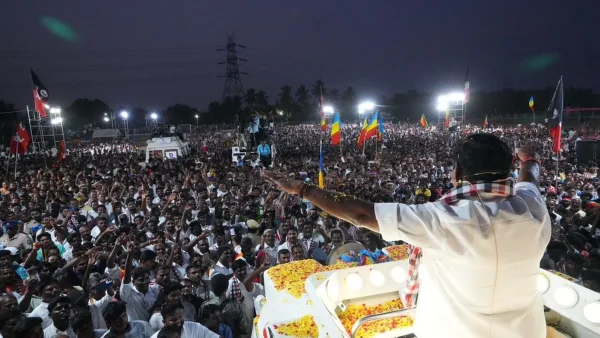
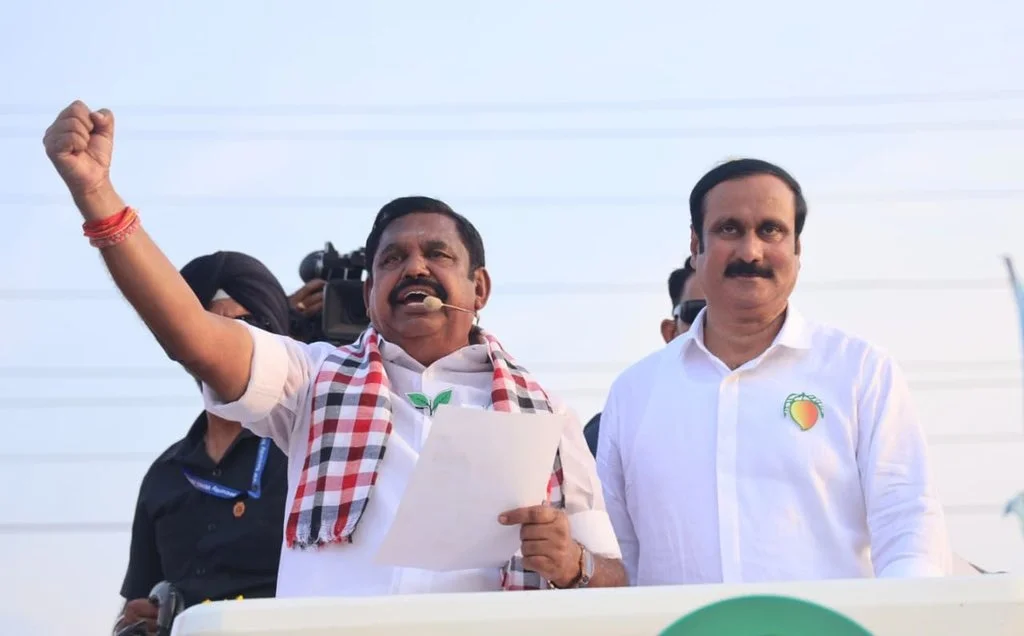
On March twenty-third, Palaniswami showed how much support he has in Chennai, with the leaders of the parties in his National Democratic Alliance (NDA) standing with him. He presented the sharing of seats as being generous: 27 for the BJP, 18 for the Pattali Makkal Katchi (PMK), and 11 for the Amma Makkal Munnetra Kazhagam (AMMK). However, what was not said was that EPS was making it clear he’s in charge. He wanted everyone in the party to see him as the single, most important leader.
The alliance looked like it was all working together publicly. But secretly, EPS seemed to be dealing with arguments both within his own group and between the different parties in the alliance. He made it very clear: after a lot of instability, he is now the leader, and the alliance will do things his way.
He also set the terms of his agreement with the BJP. People say he made sure the BJP only ran candidates in areas he picked – showing how confident he is in the AIADMK’s organization. But that alliance can be a disadvantage in Tamil Nadu politics, where people are suspicious of moving away from the traditional Dravidian (a historical, cultural and linguistic identity) political viewpoints.
A decade of thinning returns
The AIADMK’s results in past elections tell a pretty clear story. Since Jayalalithaa died, the number of votes the party gets has gone down, because of fighting within the party and people leaving to join other parties. O. Panneerselvam, a former chief minister who is now with the DMK, says EPS has “lost” ten times, and the party has lost every election while EPS has been in charge.
If you look at different parts of Tamil Nadu, the decline is obvious. In the north of the state, the party won 52 out of and 78 seats in 2011, 35 in 2016, and only 10 in 2021. In the delta region (the area of rice farming near the rivers), they went from 26 out of 41 seats in 2011 to just four in 2021. Even in the west, where they have traditionally done well, they got fewer seats: 42 out of 57 in 2016, but 35 in 2021.
Splits and new rivals reshape anti-DMK space
This time, the AIADMK is facing opposition in the south and north from V.K. Sasikala (who is campaigning against EPS) and from Panneerselvam. Panneerselvam has been asked to convince voters from the Thevar community (who have historically strongly supported the AIADMK, particularly in the south) to turn against EPS.
Actor Vijay’s Tamilaga Vettri Kazhagam has made things even more complicated. K.A. Sengottaiyan, a leading figure in the AIADMK, left the party (after being kicked out) and joined the TVK, bringing several other officials with him. When the TVK announced who they were running in the election on March twenty-nine, at least nineteen of the names were people who had been in the AIADMK.
The BJP-led NDA also changed who was on which side in the opposition in tenty-four. They attacked both the DMK and EPS, and got 18 percent of the votes, compared to the AIADMK’s 20.46 percent. The parties were allies from 2019 to 2023, then split, and then became allies again in 2025. Importantly, the BJP’s actions helped the AIADMK split in the first place.
Women and youth drift away
Women voters used to be the main source of support for the AIADMK, when MGR and Jayalalithaa were the leaders. Because Jayalalithaa no longer has her powerful personality, and because Stalin is promising to help people with things they need, the party has lost roughly 10 percent of their women voters. This loss of support from women weakens the AIADMK in the cities and towns where the election is likely to be close. Young voters are also shifting in their preferences. Vijay entering the election has drawn in younger people looking for someone full of energy and something new. This increasing support for TVK, and how many people he’s reaching on social media, is making the AIADMK’s claim of being the only party opposing the DMK, within the Dravidian political tradition, look less secure.
Ideology, identity and EPS’s tightrope
Political analyst Vignesh Karthik K.R. believes the AIADMK’s declining number of voters and its increasingly unclear beliefs are coming together. He points to EPS recently repeating ideas from Hindutva, for example, questioning if money from temples should be used for education. He says this doesn’t really appeal to the party’s typical supporters and isn’t a complete departure from the BJP’s ways of doing things.
EPS counters with governance pitch
EPS says his party continues to follow the traditions of MGR and Jayalalithaa. He states he’s fought off “second-choice” parties for ten hard years to keep his followers together. However, just being united might not be enough in a state with a strong Dravidian identity and where people are quick to notice if that identity is being weakened.
Palaniswami is presenting this election as a test of how well the government works rather than what it looks like. He says after five years of the DMK not keeping their promises, people are prioritizing being able to hold the government responsible, getting things done, and being able to trust them. After traveling all over the state, he believes a ‘quiet but strong’ desire for a change is developing.
He says people are clearly unhappy with rising prices, the lack of jobs, crime, problems with drugs, and farmers being ignored. At the same time, he says people remember the AIADMK being stable and responding quickly when they were in power. He doesn’t think campaigns should be about individuals, and that a government is judged by how people live their lives each day.
At 71, EPS also explains his decision to form an alliance as being a sensible one. He describes himself as a dependable, easy to reach, and unpretentious manager. He says the BJP fits with his overall plan and are only competing in the areas he allows them to, which shows how confident he is in his party’s local organization. He thinks this election is about getting people to trust in how the government runs again.
Stalin’s image meets ground reality test
The DMK has focused on Stalin as a person and what he says. EPS responds by saying that you can’t keep a government going just by creating a good image. He points to the public being worried about corruption, all the power being held by a small group of people, and the difference between what the DMK says it’s doing and what it’s actually achieving.
He refers to the standards set by MGR and Jayalalithaa, who both had a direct relationship with the public. It remains to be seen if this comparison to them will get people to vote for the AIADMK beyond its existing supporters, and if a focus on leadership can overcome a focus on benefits and support, particularly with women who have left the party and young people looking at different options.
What to watch ahead of April 23
A number of things could determine the final outcome, and these will be carefully observed in the coming days: the numbers from the alliance compared to unhappiness within the parties, how voters in the Thevar region react to people campaigning against EPS, how popular TVK is with first-time and young voters, how women balance welfare programs with nostalgia for the past, whether EPS makes his political beliefs clearer, how the BJP competing in 27 areas affects the results in each place, and how motivated the AIADMK workers are now that EPS is the only leader.
The AIADMK still has a large number of supporters, but that doesn’t mean they will win. The party’s strength has always been in its organization and people remembering the benefits it gave them, but its current problem is a lack of a common purpose. EPS is hoping that strong discipline and a promise of good government will be more effective than a party falling apart and a lot of conflicting messages.
If Stalin’s public image is the DMK’s main strategy, it will be judged against how people are doing financially and how safe they feel, not just the stories being told. For EPS, a comeback depends on being able to convince voters that the AIADMK is united, different from its allies, and able to deliver what it promises.
The election is close because both of these approaches have weaknesses. A good image without results might fail. A strong organization without a clear direction might get stuck. In a state with a history of strong leaders and a lot of important decisions, April 23 will show which method will persuade people in Tamil Nadu.