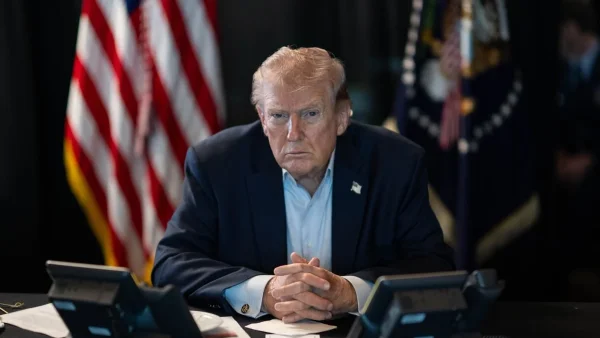
President Trump said Iran will have no more extensions to meet what the U.S. wants. He said Tuesday is the absolute last day for Iran to do something, warned that Iran will suffer greatly if it doesn’t follow the U.S.’s rules, and said the conflict could end quickly if Iran does comply.
He says the latest U.S. idea, which was previously allowed until late Monday, won’t be extended again. He’s saying Tuesday is the very last point at which Iran can act, and he thinks the offer is a good one that is meant to stop things from getting even more intense.
Trump repeated the most important thing: Iran must not have nuclear weapons. He says this isn’t up for discussion and is the central issue in the conflict. His administration believes Iran must show it’s controlling its nuclear program before there can be a lasting stop to the fighting or a more general easing of tensions.
Trump says the fighting could end quickly if Iran agrees to the main parts of a 15-point plan U.S. officials have already given out. He didn’t say exactly what each part of the plan is, but people understand it involves a step-by-step reduction in conflict and promises of security, which would be connected to proof that Iran is limiting its military and nuclear work.
Pressure tactics and the warning of a big price
As the deadline nears, the things people are saying are becoming more and more aggressive. Trump suggested that attacking places in Iran is still an option, and didn’t seem worried that such attacks could be legally or morally questionable. He stressed that if Iran continues to defy the U.S., there will be terrible consequences.
On Monday, Trump used Truth Social to give Iran 48 hours to reopen a critical waterway for shipping, threatening awful outcomes if Iran doesn’t do it. This warning followed a series of changing timeframes in the past few days, including pausing potential attacks on places that have to do with energy.
The message is very clear: the White House intends to put as much pressure as possible on Iran, and is prepared to use military force and even more sanctions to get Iran to do what the U.S. wants. U.S. officials also suggest Iran is facing increasing difficulties on the battlefield and in its economy, and that Iran might now be looking for a ceasefire because of this pressure.
Backchannel diplomacy and the 15-point proposal
Despite being tough, Trump was a little optimistic about having discussions with Iran. He said the U.S. people negotiating with Iran are sensible and not as extremely committed to their beliefs, suggesting there’s still room for conversation happening privately.
He said many different discussions are going on, and Vice President JD Vance might participate in talks. This shows a two-part approach: publicly setting deadlines and threatening action, while at the same time having secret conversations to see if a ceasefire or temporary agreement is possible soon.
The earlier 15-point plan is the main part of what the U.S. is offering. While the details are being kept secret, the plan looks to tie steps toward reducing conflict to very careful checking, limits on the transfer of advanced weapons, and actions to reduce the spreading of problems to other unstable areas of the region. In return, this could allow for some limited removal of sanctions or help with humanitarian aid, depending on Iran’s actions.
Tehran’s pushback and new counterdemands
Iranian officials have indicated they won’t give in. A high-ranking commander at the Khatam al-Anbiya Central Headquarters said the ultimatum is a hopeless and unfair move. This statement shows Iran intends to publicly resist deadlines, which they see as a way of forcing them to do something.
The Foreign Ministry said Tehran has its own demands and turned down key parts of the U.S.-supported plan. Spokesperson Esmail Baghaei said the 15-point plan is extremely overreaching and doesn’t make sense, and that Iran won’t accept what it considers to be too many requirements. He added that Iran’s official answer will be given when the time is right.
Tehran also warned that some recent actions, including what they described as a rescue of a pilot in Isfahan, could be ways of threatening their stores of enriched uranium. They cautioned that a ceasefire without real guarantees might allow the other side to get ready to attack again, and said threatening to strike at important facilities would break international law. Iranian officials insist talks can’t happen if they are being pressured, even as they continue diplomatic discussions alongside their military preparations.
Regional stakes: shipping lanes, energy markets, and escalation risk
The most immediate problem is a key waterway for shipping, and mistakes around it could have a large effect on the world. Interruptions to shipping could cause big changes in oil prices, make shipping insurance more expensive, and put more strain on supply chains that are already struggling because of instability in the region. An attack on energy facilities would make those problems even worse and could cause Iran to strike back.
Increased sanctions or military clashes would also harm the economies of countries in the region. They could make it harder to get humanitarian aid to areas where there is fighting, and slow down rebuilding in places that have already been badly damaged by the conflict. For investors, the deadline for Iran creates new uncertainty in the pricing of goods, the amount of risk they take, and the values of currencies used to pay for energy exports.
It is difficult for Washington to show it is determined to act without completely ending discussions. It is equally difficult for Tehran to avoid becoming completely isolated while still keeping its ability to protect its security. The way out of this situation will likely involve both sides taking steps they can prove they are doing to reduce conflict, and that both sides can explain to people in their own countries.
This could be Iran showing it’s going to do something about the waterway, or suggesting steps to slowly build trust. Or it could be the U.S. making their 15-point plan clearer about when things will happen, how it will be checked, or what will happen with sanctions. Or it could be a plan for a ceasefire that is watched by others, with guarantees from other countries or a way to inspect things. Or changes in oil prices, shipping costs, and alerts in the region that might suggest military action or a reduction in conflict.
What to watch next
With Tuesday’s deadline and more and more aggressive statements, the risks are extremely high. The next 24 to 48 hours will show whether pressure will lead to the possibility of talks, or will start a new and dangerous stage in the Middle East conflict.