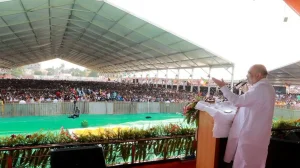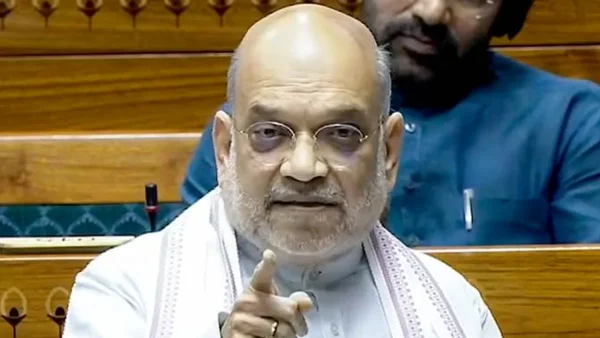
When Amit Shah, the Home Minister, said March 31, 2026 as the date to end Left Wing Extremism, it seemed like a big risk. But two years later, the area the Naxals control has become much smaller, their leadership has been largely eliminated, and only a few Maoist commanders are still hiding in small, separate forested areas.
The Two-Front Strategy That Squeezed the Insurgency
From 2014 onward, India dealt with the problem by putting pressure on the Naxals with security forces and improving things for people in the region. The CRPF (Central Reserve Police Force), state police, and special units went further into the Naxal’s areas of strength, and at the same time roads, electricity, schools, and phone service were expanded in the remote areas that had been cut off from government control for a long time.
Following a well-planned, eight-part strategy introduced in t 2017, the government worked to strengthen their own abilities, combine information from different intelligence sources, and build essential public services. The goal was to take away the Naxals’ safe places, cut off their supplies, and get the support of communities that the Naxals had been trying to get on their side for years.
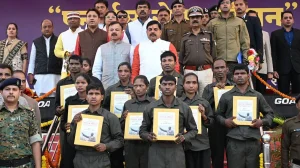
Amit Shah’s 2024 announcement of a final big push made this plan move even faster. Operations like Operation Kagar stepped up attacks on the Naxal’s camps, supply chains, and messengers. Security forces focused on capturing or killing leaders, leading to many Naxals giving themselves up or being arrested at all levels of the Maoist organization, from zones to smaller areas.
What the Numbers Say About the Decline
The government’s figures show that the CPI (Maoist) command structure is falling apart. Just in nighteen hundred and twenty-five, security forces killed 317 Naxals (including important leaders), arrested over 800, and got around 2,000 to surrender. Officials say the main leaders of the CPI (Maoist) have either been neutralized or have surrendered.
Between 2019 and 2026, the state arrested 7,409 people and had 5,880 people surrender who were connected to Left Wing Extremism. These aren’t just numbers; they show how the chain of command is breaking down, the Naxals are losing their safe places, and fewer people are joining in the main areas that once made up the “Red Corridor.”
A key moment was the capture of Basava Raju, a very important leader with a large reward for information leading to his arrest. Other top leaders who surrendered later said they had to give up because of the constant attacks and the shrinking number of places to hide. One experienced member of the Naxals admitted that they couldn’t continue fighting in the current situation and suggested they temporarily pull back.
By the beginning of 2025, the number of districts affected by Left Wing Extremism had gone from 18 to 11, and by December it was down to seven. The widespread area of Naxal activity had become a patchwork of small, separate areas with very little ability to work together or carry out large-scale attacks.
Security forces now focus on very small specific areas, rather than large regions. In Chhattisgarh, Bijapur and Kanker still have some Naxal activity in a few villages, where four area committees with around 15 active members are thought to be moving around. Jagdalpur and Kondagaon have been declared free of Naxals.
Dantewada, Sukma, and Narayanpur have seen the leaders of the Naxal movement in those areas removed, helped by the recent surrender of some important figures. Two members from Sukma are reportedly now operating across the border in Telangana, one of whom used to be a deputy commander with ties to a particularly cruel unit.
In Odisha, government information from March showed about 15 active CPI (Maoist) members across the state, with 8 or 9 hiding in the forests of Kandhamal, Kalahandi, and Rayagada. Some of them are hurt and haven’t surrendered, which suggests they have trouble moving around and a decreasing amount of support in these forested areas.
Jharkhand is still a top concern, particularly the Saranda forests in West Singhbhum, where about four units of the CRPF’s COBRA (Commando Battalion for Resolute Action) are on a special mission. The rough terrain and existing Naxal networks still provide cover, but continuing searches have found and destroyed their hiding places, messengers, and outposts.
Where the Remaining Commanders Are Hiding
Two top people who are still being looked for are Muppala Lakshman Rao (also known as Ganapathy) who is thought to be in Telangana and is being closely watched, and Mishir Besra (also known as Bhaskar), a member of the Politburo who is operating with a team of approximately 40. Security forces think these two might surrender, but in one case, they have also considered the possibility of fleeing to another country. By the end of winter in 2026, most estimates said there were about 220 Maoist militants with weapons throughout the country. This is a huge drop from the more than 2,000 there were in 2024. Because the number went down so much, instead of searching huge areas, the police have been focusing on finding and arresting each individual militant as the March 31st deadline got closer.
Will the March 31 Deadline Be Met?
In the week leading up to that deadline, there were large, coordinated police actions. Leaders of the Central Armed Police Forces said they planned to get rid of all the remaining militants by March 31st, and teams from the CRPF, BSF, and ITBP were actively searching Bastar, while more regular patrols were happening along the borders of Maharashtra, Telangana, and Odisha.
In Chhattisgarh, officials said the state is no longer a place where Naxalites (another name for Maoists) operate, and they say this is because of a two-year effort that seriously weakened the militants’ strength and broke up their ability to function. It will take time to make sure this is true and to stabilize the area, but the statement shows how much the security situation has changed since 2024.
The situation now isn’t a simple end to the fighting, but a change to holding territory and improving it. Police and other agencies are still tracking two leaders of the central committee, and about 130 to 150 militants who they want to capture or convince to give themselves up. If they can do this, the government can officially say the remaining districts are free of Naxalites.
Even with that done, a lot of work is still required. Keeping militants from coming back across the forested borders, improving security in villages and having good police work, and continuing to provide roads, phone service and government help will determine if this decrease in violence is permanent. Dates for completing things can motivate action, but government structures have to make sure the improvements stay in place.
Experts warn that even if the militants with weapons are gone, their ideas aren’t. The history of the movement shows that it can reappear in different ways, maybe less violent or more focused on politics, when the government doesn’t work well. Because of this, gaining the trust of people in the villages that have been affected is just as important as making the last arrests.
A continuing problem is the wide network of people who support the Maoists, often called rural party committees. They don’t have weapons, but they believe in the Maoist ideology and can organize protests over issues of land, mining, and rights. Thousands of people are in these groups, which makes policing and reaching out to people in areas that have just been opened up more difficult.
Officials are saying that building trust with the people needs to happen at the same rate as security is improved. In Bastar, the state government has made it a priority to build more schools, shops where people can get food at a set price, basic and community health clinics, and to make sure more people have a digital identity. The aim is to replace fear with reliable services and chances for economic advancement.
This approach also requires money for a long time and people in the area to be involved. Better roads have to get to markets, phone towers have to connect people to jobs and medical help through phones, and welfare programs need to get to people without being taken from by others. If these connections are strengthened, the appeal of secret organizations will lessen and fewer people will be recruited.
How the Maoist insurgency is breaking up is also important to pay attention to. CPI (Maoist) is still the biggest group, but around 15 or so smaller groups are still active. In the past, when the main group gives up, the smaller ones have temporarily become more powerful. Police work that is based on good information will be important to stop this from happening.
Recent events illustrate how quickly things are changing. After a leading militant was killed in Kanker, his wife apparently took over command of a small area for a short time, and then thought about surrendering. These kinds of small changes are happening in many states as the remaining militants try to figure out what to do while the police continue to put pressure on them.
The main thing to understand isn’t just about completely getting rid of the militants, but making sure they don’t come back. States need to have a system for sharing information between agencies, invest in watching the forests along the borders, and keep relationships with communities that can give early warnings. When people’s complaints are heard and dealt with, the insurgency loses its base of support.
Amit Shah's deadline has led to amazing improvements, changing areas that were once thought to be impossible to control into normal administrative areas. There are now specific answers to where the remaining leaders are hiding: in a few forests, small groups of villages, and as they move between safe places.
What Happens After the Guns Fall Silent
The more difficult question is how to prevent them from returning. If the government really focuses on justice, services, and jobs, and protects people who are vulnerable and the rule of law, then what happens after March 31st will be more than just meeting a deadline. It will be the end of the conflict.