The government will set up a cooperative life insurance company, Union Cooperation Minister Amit Shah announced on Monday, signalling a bold push to take cooperatives deeper into financial services. With 8.5 lakh cooperatives and more than 30 crore members, the move could reshape distribution and pricing dynamics in life insurance.
A push into insurance: why it matters
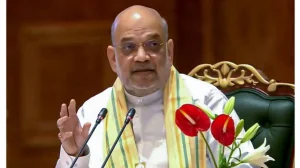
Shah framed the proposed insurer as a new pillar of the cooperative movement, expanding beyond its legacy in dairy, sugar and fertiliser. He said, We will be setting up a life insurance company in the cooperative sector. This will help in the growth of cooperatives in the insurance sector.
He referenced fertiliser cooperative IFFCO’s existing insurance presence through a joint venture with a Japanese partner as a proof point. A cooperative-led life insurer could harness local networks built on trust, especially in rural and semi-urban markets where conventional channels are costly.
What the rollout could change
The plan intersects with ongoing digital upgrades across the ecosystem. The transformation of 50,000 PACS into e-PACS is designed to modernise grassroots operations, which can later support customer onboarding, premium payments and servicing at the last mile.
Shah also highlighted Bharat Taxi’s performance and said it would be expanded into 500 cities in the next two years. Together, these efforts position cooperatives as service platforms, not just producers or aggregators.
Here are the most consequential announcements in brief:
– Cooperative life insurer to be launched
– 50,000 PACS shifting to e-PACS
– Bharat Taxi to 500 cities in two years
– Tribhuvan Sahkari University at Anand
– Major godown transfers, inaugurations and foundations
Digital, logistics and capacity moves
Shah inaugurated and laid foundations for multiple logistics assets aimed at food security and storage efficiency. The initiatives included the transfer of 135 godowns with a capacity of 75,000 tonnes, the inauguration of 85 godowns, and the laying of the foundation stone for 47 grain storage godowns.
Groundbreaking of Sahakar Van by Amul and NCCF, and tissue culture facilities of Bharatiya Beej Sahakari Samiti Ltd at Barabanki in Uttar Pradesh and Jalgaon in Maharashtra, were also conducted. A Memorandum of Understanding between BBSSL and ICAR was signed to strengthen seed systems.
The ministry also released model bye-laws for dairy cooperative societies and a book documenting five years of cooperative reforms. Shah said a central database of cooperatives had been created, which, in his view, will support scale, transparency and professionalism.
Governance and federal stance
Addressing federal concerns, Shah said even Congress-ruled states had not complained in the last five years about central interference. The Union Ministry is not for interfering in the state’s subject. It is for policy making, he stated, underscoring a cooperative-first policy approach.
Political perspectives surfaced at the event. Union Minister Rajiv Ranjan Singh alleged that previous Congress administrations weakened the cooperative ecosystem, while he credited the NDA with strengthening it. Rajasthan Chief Minister Bhajan Lal Sharma also criticised past management of cooperatives.
Talent and long-term vision
To address capacity gaps, the government is establishing Tribhuvan Sahkari University at Anand in Gujarat. Shah positioned the university as a solution to human resource constraints across cooperatives, aligning training with modern governance and market needs.
He argued that cooperatives have expanded into many sectors and can support Viksit Bharat by 2047. The proposed life insurer fits that timeline by embedding financial services into community institutions that already handle procurement, storage and logistics.
The immediate takeaway is strategic: a cooperative insurer adds a new competitive archetype to the life insurance market. If executed well, it can leverage digital PACS, storage networks and service platforms to reach customers others struggle to serve. All eyes now turn to how this promise is operationalised.