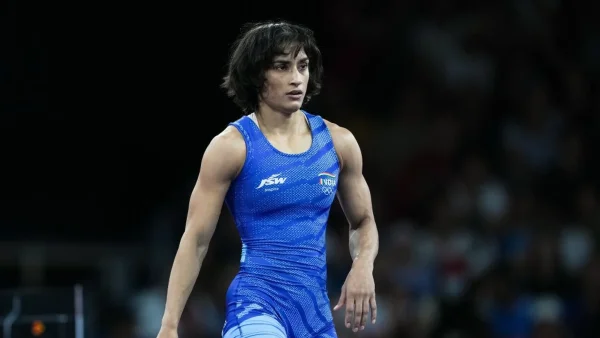
Delhi High Court has put the Wrestling Federation of India on a two-week clock to decide a show-cause notice issued to Vinesh Phogat over alleged indiscipline and anti-doping rule breaches. The move keeps her case active and time-bound, while separating it from a broader challenge to the federation’s selection policy.
Court’s directive and timeline
Justice Swarana Kanta Sharma disposed of Phogat’s petition with a clear instruction: decide the show-cause notice dated 9 May within two weeks and inform both the wrestler and the court. The directive closes the immediate case but ensures a swift resolution on the notice itself.
Counsel for the federation told the court that Phogat’s grievance about participation in the Asian Games selection trials no longer survived. The court also recorded the federation’s assurance that Phogat would be granted a personal hearing before any decision is taken.
What triggered the notice
According to the federation, the original notice issued on 9 May declared Phogat ineligible for domestic competitions until 26 June 2026. The WFI cited a mandatory six-month notification period for athletes returning from retirement under anti-doping protocols.
Phogat was earlier allowed to compete in the Asian Games trials pursuant to judicial directions, the court noted. Her legal team added during the hearing that she has since received a separate show-cause notice over her conduct at those trials.
The wider policy dispute
Beyond the notice, Phogat had challenged the federation’s selection framework and circular that restricted eligibility for Asian Games trials to medallists from specified tournaments. She argued the ‘qualification window’ substantially overlapped with her maternity leave and postpartum recovery.
Her petition described the policy as a ‘closed and inflexible gatekeeping mechanism’ that was arbitrary and discriminatory. The court clarified that any challenge to selection policies must come through a fresh writ petition. As the judge put it: ‘This can be disposed of, and then you can file a fresh writ petition.’
What to watch next
In the next two weeks, three developments will signal the direction of this dispute:
– WFI’s final decision on the 9 May notice
– Confirmation of Phogat’s personal hearing date
– A possible fresh petition on selection policy
Why the order matters
The court’s approach separates immediate disciplinary questions from the long-running debate on selection rules. It ensures Phogat receives a hearing and a timely decision, without pre-empting a larger policy review that could affect other athletes.
The federation’s position on anti-doping return protocols and the application of a six-month notification period will be closely read. The outcome could shape how sporting bodies handle retirements, comebacks, and eligibility windows in future trials.
Inside the courtroom exchanges
The federation argued that Phogat’s main grievance over Asian Games trials was infructuous since she was permitted to participate following earlier judicial directions. On that basis, the court closed the current proceedings while preserving the pathway for a policy-focused challenge.
Phogat’s senior counsel maintained that the case flagged ‘larger issues’ with the selection regime. The court agreed those issues deserve separate adjudication, and directed that they be brought through a new filing rather than litigated within the show-cause matter.
The road ahead
The immediate decision now rests with the WFI, which must conclude its process on the 9 May notice within the court-mandated two-week period. The promised personal hearing will be central to that outcome and to procedural fairness.
Parallelly, a fresh petition could test the legality and fairness of selection rules that limit trial participation to medallists within a specific window. Any such filing would likely revisit how sporting policies account for pregnancy and postpartum recovery, issues highlighted by Phogat.