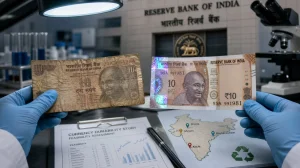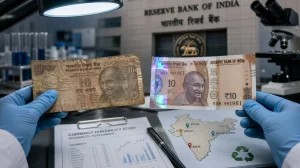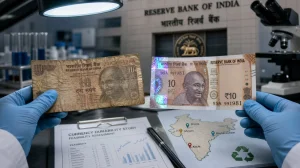
India is preparing to test a very different kind of rupee.
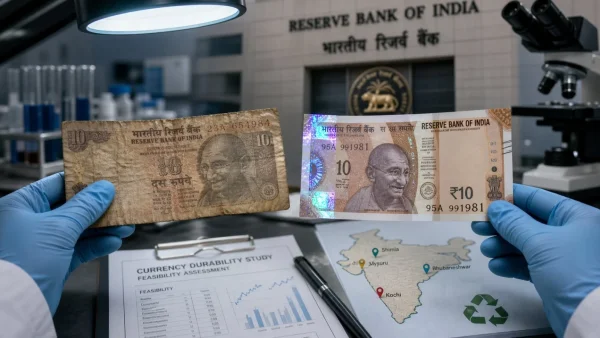
The Union government has approved the Reserve Bank of India’s proposal to conduct field trials of one billion ₹10 polymer notes and one billion ₹20 polymer notes—a combined 2 billion notes worth ₹3,000 crore in face value.
The move has immediately triggered two separate conversations.
One is about the future of Indian currency:
Will plastic notes last longer, reduce replacement costs and improve security?
The other is political:
Who will supply the polymer material—and which Indian corporate groups could benefit?
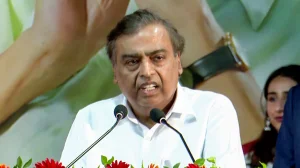
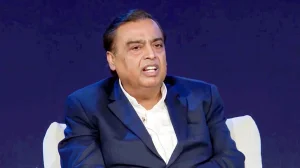
That second question has led to claims that Mukesh Ambani’s Reliance Industries could be the biggest indirect beneficiary.
But there is an important fact-check before that claim is repeated as fact:
There is currently no verified evidence that Reliance Industries has won the polymer-substrate contract. In fact, the procurement process is still at an early stage, and RBI’s currency-printing subsidiary has invited suppliers to participate.
So the real story is more interesting than a simple “Ambani gets the contract” headline.
What Exactly Has the Government Approved?
The proposal originated with the RBI, following a recommendation of its Central Board.
The government has approved field trials involving:
1 billion ₹10 polymer notes
1 billion ₹20 polymer notes
2 billion notes in total
₹3,000 crore total face value
Regular issuance would only be considered after the field trials are successfully completed.
And there’s another crucial clarification:
Paper currency is not being abolished. The government has explicitly said polymer notes are proposed to circulate alongside paper-based banknotes, and there is currently no proposal to replace paper currency entirely with polymer.
So no, your existing ₹10 and ₹20 notes aren’t suddenly becoming museum pieces.
Why Polymer Notes?
The main argument is durability.
₹10 and ₹20 notes circulate extremely frequently. They are folded, squeezed into wallets, passed through thousands of hands and occasionally subjected to the legendary Indian test known as:
“Washed inside the pocket.”
Polymer notes are designed to withstand moisture, dirt and physical wear better than conventional banknotes.
International experience suggests they can have substantially longer lifespans than paper notes.
That could potentially mean:
fewer replacements → fewer notes printed → lower long-term currency-management costs.
The RBI’s move also comes after years of discussion about polymer currency in India.
This Isn’t Actually a Modi-Era Idea
Here’s a fascinating piece of history.
India experimented with the idea more than a decade ago.
In 2012–13, the government had already decided to introduce one billion ₹10 polymer notes on a field-trial basis in five cities—Kochi, Mysore, Jaipur, Bhubaneswar and Shimla.
That experiment did not lead to a nationwide rollout.
The current proposal is therefore better understood as a revival and redesign of an old policy idea, rather than a completely new invention.
Technology, currency requirements and manufacturing capabilities have evolved since the earlier attempt.
So Where Does Mukesh Ambani Come Into This?
This is where headlines can get ahead of facts.
The polymer substrate required for banknotes is a specialised material.
RBI’s wholly owned currency-printing subsidiary, Bharatiya Reserve Bank Note Mudran Private Limited (BRBNMPL), has initiated procurement-related steps for polymer substrate.
Reports say the RBI subsidiary issued a global Expression of Interest seeking manufacturers capable of supplying security-grade polymer substrate sheets.
That means there will potentially be a large industrial supply chain behind polymer currency.
And because Reliance is a major Indian player in petrochemicals and polymers, observers have naturally begun asking whether one of its businesses could benefit indirectly from increased demand for specialised polymer materials.
But:
Potential beneficiary ≠ awarded contract. There is currently no verified evidence in the sources reviewed that Reliance Industries has secured the polymer-banknote supply contract.
Therefore, presenting “Ambani will benefit” as an established fact would be premature.
But the Corporate-Angle Question Is Still Legitimate
Even without a confirmed Reliance contract, the question is worth asking.
Whenever the government creates a major new procurement market involving a specialised industrial material, citizens have a right to know:
Who can bid?
What are the eligibility requirements?
How many companies qualify?
Will domestic manufacturers receive preference?
What safeguards prevent favouritism?
Will the tender be completely transparent?
These are reasonable questions regardless of whether the eventual supplier is Reliance, another Indian company or an international manufacturer.
What Is Actually Being Procured?
The RBI’s procurement process is not simply asking someone to supply ordinary plastic sheets.
The requirement involves security-grade polymer substrate capable of incorporating specialised security features.
Reports on the RBI’s procurement exercise describe requirements involving features such as transparent windows and other embedded security elements.
This is important because banknote polymer is not the same thing as ordinary commercial plastic.
Producing a material that can survive millions of transactions while carrying sophisticated anti-counterfeiting features is a highly specialised manufacturing challenge.
Could Polymer Notes Actually Save Money?
Potentially—but the answer will depend on the economics of the entire lifecycle.
A polymer note may cost more to manufacture initially.
But if it lasts substantially longer, the RBI could save money through:
fewer replacements,
lower printing frequency,
reduced transportation,
reduced destruction of worn notes,
longer circulation life.
The field trial is therefore crucial.
The government needs to compare:
Cost per polymer note × lifespan
against
Cost per paper note × lifespan.
The cheapest note to print isn’t necessarily the cheapest note to maintain.
But There Are Environmental Questions Too
“Plastic” immediately raises another issue:
What happens to old polymer notes?
Polymer notes are more durable, which can reduce the frequency of replacement.
But they are still a plastic-based material and therefore raise questions about end-of-life recycling and disposal.
Interestingly, when India considered polymer notes in 2012, an assessment commissioned by the RBI from The Energy and Resources Institute (TERI) concluded that polymer notes could be more environmentally friendly than paper currency in terms of their overall environmental impact.
That doesn’t mean polymer currency is automatically environmentally superior under every circumstance.
The current trial should therefore measure the full lifecycle, including production, transportation, circulation and disposal.
Will This Hurt UPI?
Probably not in the way some headlines suggest.
The government has explicitly said that polymer notes will coexist with paper currency and that digital payments and banknotes are complementary payment tools.
India can simultaneously have:
UPI payments
and
₹10 polymer notes.
A chaiwala accepting UPI doesn’t suddenly mean the person buying a ₹10 biscuit cannot use cash.
The question is not “cash or digital?”
It is increasingly:
Which payment method is convenient for which transaction?
The ₹3,000-Crore Figure Needs Context
Another potentially misleading headline is:
“₹3,000 crore polymer currency project.”
The ₹3,000 crore figure represents the face value of the 2 billion trial notes.
It is not the amount the government will necessarily spend manufacturing them.
That’s a very important distinction.
A ₹20 note represents ₹20 of currency value.
It does not cost ₹20 to manufacture.
So:
₹3,000 crore face value ≠ ₹3,000 crore procurement expenditure. The actual cost of the trial will depend on procurement and manufacturing contracts.
And Here Comes the Sarcasm
India:
“UPI has made cashless payments possible.”
RBI:
“Excellent. Now let’s make cash more durable.”
₹10 note:
“So I survived inflation, demonetisation-era rumours, washing machines and 47 pockets—and now you’re making me waterproof?”
At least the ₹10 note may finally get one upgrade that every Indian can understand:
“Bhai, ab baarish se mat darna.”
What Could Go Wrong?
A serious pilot should test more than whether the notes look attractive.
Authorities should examine:
ATM compatibility Can existing machines recognise and dispense them reliably?
Counting-machine compatibility Will banks need expensive equipment upgrades?
Public acceptance
Do people find polymer notes easy to handle?
Durability
Do they actually last longer under Indian conditions?
Security
Are counterfeiters genuinely deterred?
Recyclability
Can withdrawn notes be responsibly processed?
Cost
Is the lifecycle cost lower than paper currency?
Accessibility
Are the notes easy to distinguish for people with visual impairments?
These are the questions that will determine whether polymer currency is a genuine upgrade or simply an expensive experiment.
The Biggest Question Isn’t “Is It Plastic?”
It is:
“Is It Better Value for the Public?” If polymer notes last longer, reduce replacement costs, improve security and survive India’s climate better, the experiment could make considerable economic sense.
If they are substantially more expensive without delivering meaningful additional benefits, policymakers should reconsider wider adoption.
And if a particular private company eventually wins the supply contract, the public should be able to see why it won.
Not because the company is Reliance.
Not because it isn’t Reliance.
But because public procurement should survive scrutiny regardless of the winner.
Final Take
India’s move toward polymer ₹10 and ₹20 notes is real, but it is still a field trial, not a nationwide conversion to plastic currency.
The Centre has approved one billion notes of each denomination, while paper notes will continue to circulate.
The technology is also not entirely new to India—the country experimented with polymer ₹10 notes more than a decade ago.
As for the Mukesh Ambani/Reliance angle, it should currently be treated as a potential-industry-beneficiary question, not an established fact. The procurement process is still developing, and no verified source reviewed here establishes that Reliance has won the contract.
That distinction matters.
The polymer-note experiment deserves scrutiny—but the scrutiny should follow the money, the tender and the evidence, not the headline. Because if India is going to put its money on plastic, citizens should at least be able to see who is supplying the plastic—and why.