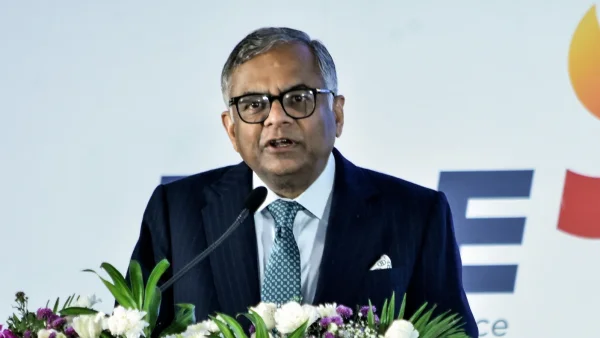
A major leadership transition is taking shape at one of India’s most influential business groups.
N. Chandrasekaran, chairman of Tata Sons, has decided not to seek reappointment when his current term ends in February 2027. He will continue in the role until then, meaning this is not an immediate exit from the Tata Group.
The announcement has triggered questions across corporate India—not just about Chandrasekaran’s legacy, but about who will lead the Tata Group next and what this means for the unusual relationship between Tata Sons and Tata Trusts.
First, Let’s Clear Up the “Resignation” Headline
The phrase “Chandrasekaran has resigned” can be misleading if interpreted as an immediate departure.
He has submitted his resignation/notified the group that he will not seek another term, but he is expected to remain chairman until his current tenure expires in February 2027.
So, for now:
No immediate vacancy.
No overnight change of chairman.
But a major succession process has begun.
And that distinction matters.
Who Is N. Chandrasekaran?
Chandrasekaran’s Tata journey began in 1987, when he joined Tata Consultancy Services.
He rose through the ranks of TCS and became its CEO in 2009.
In 2017, he moved from running the technology giant to becoming chairman of Tata Sons, the holding company at the heart of the Tata Group.
His appointment was historic: Chandrasekaran became the first non-Parsi chairman of Tata Sons. He is also not a member of the Tata family.
From an IT executive’s chair to the top of a sprawling conglomerate involved in automobiles, steel, aviation, technology, retail, power and consumer businesses—it was quite a leap.
Why Is He Leaving? The Tata Trusts Question
This is where the story becomes much more complicated.
Tata Sons is controlled by Tata Trusts, which collectively own around 66% of Tata Sons.
Reports say tensions developed between Chandrasekaran and Tata Trusts over several important issues, including:
the potential listing of Tata Sons;losses at Air India;the exit of a minority shareholder;board representation and governance questions; andChandrasekaran’s reappointment.Reuters reported that Chandrasekaran cited lack of unanimous board support for his reappointment. Six months had reportedly passed since a February board meeting without the matter being resolved.
That makes the resignation far more significant than a routine retirement.
The Air India Problem
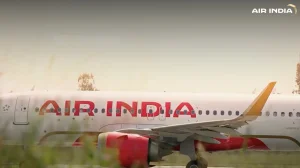
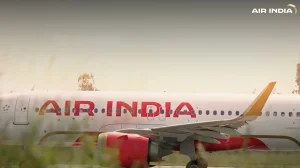
One of the biggest challenges facing the Tata Group is Air India.
The Tata Group took control of Air India in 2022, turning around an airline that had accumulated enormous losses and operational challenges.
The airline has required substantial investment and restructuring.
Reuters reports that disagreements over Air India’s losses were among the issues contributing to tensions around the Tata leadership.
The question now is:
Will the next Tata Sons chairman continue Chandrasekaran’s strategy—or change course? That could have implications for one of India’s most ambitious corporate turnarounds.
Tata Sons’ Potential Listing: Another Flashpoint
The potential listing of Tata Sons has also been a major governance issue.
The RBI has previously required Tata Sons to comply with regulations applicable to its category as an upper-layer non-banking financial company, including a listing framework.
But listing Tata Sons is not a simple decision.
It could fundamentally change the relationship between:
Tata Sons → Tata Trusts → publicly listed Tata companies → minority shareholders.
Reuters reported that Tata Trusts opposed the potential listing, while the issue became one of the areas of disagreement surrounding Chandrasekaran’s tenure.
The Market Reacted Immediately
Investors did not exactly respond with a polite corporate handshake.
Following the announcement, several Tata Group stocks declined.
TCS fell about 3.9%, while Tata Motors Passenger Vehicles, Tata Steel and Titan also declined during the session.
The reaction shows that investors aren’t necessarily worried that Tata Group businesses will suddenly collapse.
Rather, markets dislike uncertainty.
And succession at the holding company of one of India’s largest conglomerates is about as significant as corporate uncertainty gets.
Chandrasekaran’s Legacy: Success Story or Mixed Report Card?
There are two sides to his tenure.
The Success
Chandrasekaran oversaw a period in which Tata companies expanded across several strategic sectors.
The group strengthened its presence in:
aviation;electronics manufacturing;semiconductors;digital businesses;electric vehicles;infrastructure;consumer businesses.Reuters notes that Chandrasekaran also helped deleverage and restructure major businesses such as Tata Steel and Tata Motors.
The Challenges
But the group has also faced significant difficulties.
Air India continues to require major investment.
TCS has faced slower growth and technology-sector pressures.
Jaguar Land Rover has experienced difficult market conditions, while a cyberattack disrupted its operations.
So Chandrasekaran’s record is neither simply “everything was brilliant” nor “everything failed.”
It is considerably more complicated.
And Now Comes the Succession Battle
This may be the most important chapter.
Who replaces Chandrasekaran?
Tata Trusts has already moved toward creating a selection process. On August 13, 2026, the Sir Dorabji Tata Trust trustees passed a resolution to establish a selection committee to recommend the next Tata Sons chairman.
The next chairman will inherit an extraordinarily complex portfolio.
They will have to deal with:
Air India.
TCS.
Tata Motors.
JLR.
Electronics and semiconductors.
Tata Digital.
Tata Steel.
Investor expectations.
Tata Trusts.
And the group’s succession politics.
That’s not exactly a quiet retirement assignment.
The Cyrus Mistry Shadow
There is another reason this transition is attracting attention.
Tata’s leadership history includes the dramatic 2016 removal of Cyrus Mistry, who had succeeded Ratan Tata as chairman of Tata Sons.
That episode exposed deep disagreements over governance and the relationship between Tata Sons and Tata Trusts.
Chandrasekaran was eventually brought in as Mistry’s successor.
Now, almost a decade later, the group is again facing a leadership transition amid disagreements involving Tata Trusts.
That makes succession planning particularly important.
The Sarcasm Writes Itself
Corporate India:
“We need long-term stability.”
Tata Sons:
“Absolutely.”
Investors:
“Who’s the next chairman?”
Tata Trusts:
“We’re forming a committee.”
Markets:
“Okay, we’ll panic for a little while.”
The Tata Group has survived bigger storms.
But markets have never been famous for their patience.
What Happens Between Now and February 2027?
Chandrasekaran remains in office until the end of his current term.
That gives the Tata Group several months to manage the transition.
The immediate priorities will likely include:
1. Finding a successor
The selection process will be closely watched.
2. Maintaining business continuity
Major projects cannot simply pause because the chairman is changing.
3. Resolving governance disagreements
The relationship between Tata Sons and Tata Trusts will be particularly important.
4. Reassuring investors
Markets will want clarity about the group’s strategic direction.
5. Managing Air India’s turnaround
The airline remains one of the group’s most visible and challenging bets.
What Does This Mean for Ordinary Indians?
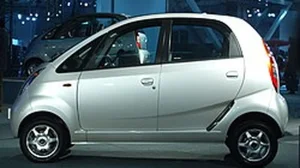
For most people, the chairman’s departure will not immediately change their Tata car, TCS job, Air India flight or Tata Salt packet.
But the Tata Group is so deeply embedded in India’s economy that leadership decisions at Tata Sons have consequences far beyond the boardroom.
The group has businesses spanning technology, automobiles, aviation, steel, consumer products, retail, energy, electronics and financial services.
So this isn’t merely a corporate personnel story.
It is a story about the future direction of one of India’s most important business institutions.
The Bigger Question: Who Will Be the Next Tata Chairman?
That is now the headline behind the headline.
Chandrasekaran’s exit does not mean the Tata Group is collapsing.
Nor does it automatically mean that Tata Trusts and Tata Sons are headed for another 2016-style crisis.
But it does mean that Tata’s unique ownership and governance structure is once again under the spotlight.
The next chairman will need more than business expertise.
They will need the ability to navigate:
shareholders, trusts, regulators, employees, investors and competing strategic interests.
That’s a very different job from simply running a company.
Bottom Line
N. Chandrasekaran's decision marks the end of an important chapter—but not the immediate end of his tenure.
He will remain chairman of Tata Sons until February 2027, while the search for his successor gets underway.
His nine-year tenure leaves behind major achievements, ambitious investments and some unresolved challenges.
Now the Tata Group faces its biggest question: Who can take the wheel of the Tata empire—and keep the trust, the businesses and the boardroom moving in the same direction?