A pizza may arrive in a bright box, carry a familiar logo and come from a globally recognised chain. But behind the branding, the most important question remains brutally simple:
What is happening inside the kitchen?
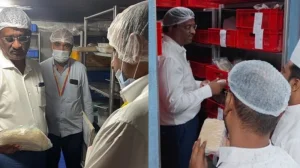
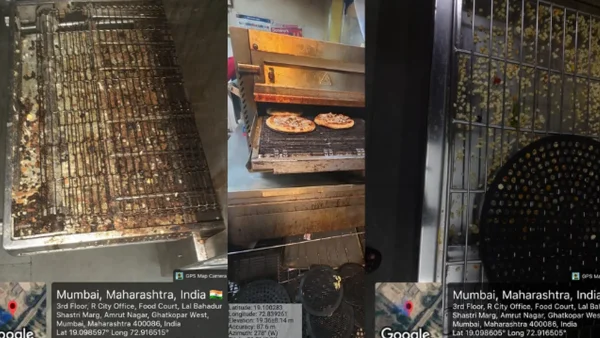
Four Domino’s Pizza outlets operated by Jubilant FoodWorks Ltd. have reportedly faced licence-suspension action by the Maharashtra Food & Drug Administration (FDA) following inspections that identified multiple food-safety and hygiene deficiencies.
The affected outlets are reported to be in Vile Parle West, Borivali West, R-City Mall in Ghatkopar, Mumbai, and Malakapour in Karad, Satara.
The reported findings include inadequate sanitation, pest-control shortcomings, improper food storage and temperature monitoring, inadequate separation of raw and ready-to-eat food, and incomplete food-safety documentation.
These are not merely cosmetic housekeeping issues. They go directly to the systems designed to prevent food contamination.
What Did the Inspections Reportedly Find?
According to the information provided about the FDA action, inspectors identified several categories of non-compliance:
Inadequate hygiene and sanitation
Pest-control deficiencies
Improper food storage
Inadequate temperature monitoring
Insufficient segregation of raw and ready-to-eat food
Incomplete food-safety records
Each issue matters.
Raw ingredients and ready-to-eat foods, for example, need appropriate separation to reduce the possibility of cross-contamination. Temperature control is similarly important for foods that can become unsafe when stored under unsuitable conditions.
And pest control?
Well, a pizza should come with toppings—not unexpected wildlife.
This Is Bigger Than Four Pizza Outlets
The controversy is not simply about Domino’s.
It raises a broader question about food safety in India’s organised food-service industry.
Large restaurant chains often benefit from strong branding and consumer trust. Customers may assume that a familiar multinational or national chain automatically means rigorous hygiene.
But a brand cannot physically inspect every kitchen every minute.
That is where internal food-safety systems and government regulation become critical.
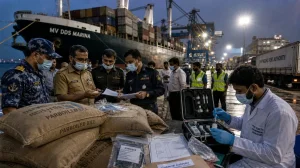
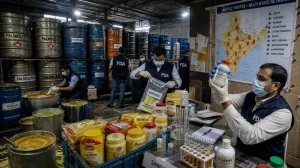
Maharashtra FDA describes itself as the state’s food-safety regulator and says its responsibilities include inspections, licensing, surveillance, testing and enforcement against unsafe or substandard food businesses. (Food and Drug Administration)
What Does Licence Suspension Actually Mean?
It is important not to misunderstand the regulatory action.
A licence suspension following an inspection is not the same thing as a criminal conviction or proof that every product sold by the outlets was unsafe.
It means the regulator identified compliance concerns serious enough to trigger regulatory action.
The Maharashtra FDA’s own description of its enforcement framework says designated officers can issue or cancel food-business licences and can investigate complaints and contraventions. (Food and Drug Administration)
The affected business can therefore be expected to address deficiencies and comply with the applicable requirements before normal operations are permitted under the relevant regulatory process.
The Pest-Control Finding Deserves Particular Attention
One of the reported deficiencies concerns pest control.
That should concern consumers because restaurants deal with food preparation and storage.
Pests can potentially contaminate food, surfaces, equipment and storage areas.
The irony is almost impossible to ignore:
You ordered a pizza. The regulator apparently found that the kitchen needed its own pest-control strategy.
Of course, a pest-control deficiency does not automatically establish that a customer consumed contaminated food. That requires evidence.
But it does demonstrate why routine inspection matters.
Temperature Monitoring Isn’t Just Paperwork
Another reported deficiency concerns food storage and temperature monitoring.
This is particularly important because food safety isn’t determined solely by whether ingredients look fresh.
Certain foods can become unsafe when held at inappropriate temperatures for extended periods.
That is why food businesses need procedures for:
receiving ingredients;
storing food;
monitoring temperatures;
handling prepared food;
preventing cross-contamination;
maintaining cleaning schedules; and
documenting safety checks.
Records matter because they allow managers and regulators to establish whether these procedures were actually followed.
The Raw-vs-Ready-to-Eat Problem
The reported lack of adequate segregation between raw and ready-to-eat foods is another significant concern.
Imagine raw ingredients coming into contact with food that is already prepared for consumption.
That is precisely the kind of situation food-safety systems are designed to prevent.
A professional kitchen therefore needs clear separation, proper storage arrangements, appropriate utensils and disciplined food-handling practices.
“Cooked” doesn’t automatically mean “safe.” Safe handling before and after cooking matters too.
What About Jubilant FoodWorks?
The outlets are operated by Jubilant FoodWorks Ltd., which operates the Domino’s Pizza business in India.
The regulatory action should therefore be viewed at the outlet level unless authorities establish a broader systemic failure.
Four outlets facing action does not automatically mean every Domino’s outlet in India has the same problems.
That distinction is important.
At the same time, a major chain has a responsibility to ensure that its franchise or company-operated locations consistently meet the standards associated with its brand.
Consumers reasonably expect a well-known food chain to have robust internal audits and compliance systems.
The Questions Domino’s and the Regulator Should Answer
The controversy raises several legitimate questions:
How long had these deficiencies existed?
Were they recent problems or recurring failures?
Were internal inspections conducted?
If so, what did those inspections find?
How frequently are these outlets audited?
Were previous warnings issued?
What corrective measures have been ordered?
Will the outlets undergo follow-up inspections?
Were food samples collected and tested?
This last question is particularly important.
A hygiene violation and laboratory-confirmed food contamination are not the same thing. The public should not confuse the two.
The Consumer’s Side of the Story
For customers, the episode is a reminder that food safety cannot be judged by branding alone.
A restaurant can have:
beautiful interiors + expensive branding + sophisticated delivery app
and still have a problem behind the kitchen door.
Consumers should therefore pay attention to food-safety ratings, hygiene conditions and regulatory notices where available.
Maharashtra FDA also highlights FSSAI’s Hygiene Rating programme, under which eligible food establishments can receive ratings based on food-safety and hygiene compliance. (Food and Drug Administration)
And Here’s the Sarcasm
The marketing department:
“Our pizza is irresistible.”
The regulator:
“Your hygiene system needs work.”
Customer:
“Can I get extra cheese?”
FDA:
“First, let’s talk about extra cleanliness.”
Because apparently the only thing that should be crawling around a restaurant kitchen is the delivery app’s order tracker.
But Let’s Not Jump to Conclusions
There is an important line between reporting a regulatory action and declaring a company guilty of poisoning customers.
The reported inspections establish that regulators found food-safety and hygiene deficiencies at the identified outlets.
They do not, by themselves, prove that every customer became ill or that every pizza served by the chain was unsafe.
Any allegation of actual food contamination should be supported by laboratory evidence and other relevant records.
That distinction protects both public health and fair journalism.
What Should Happen Next?
The ideal outcome isn’t simply punishment.
It is correction.
The outlets should:
Address every deficiency identified by inspectors.
Strengthen pest-control procedures.
Improve food-storage and temperature monitoring.
Ensure proper separation of raw and ready-to-eat ingredients.
Maintain complete food-safety records.
Conduct independent internal hygiene audits.
Undergo regulatory follow-up inspections.
Communicate corrective action transparently where appropriate.
And regulators should continue inspections across large chains and independent restaurants alike.
Food safety should not depend on how famous the logo above the kitchen happens to be.
The Bigger Lesson: A Brand Is Not a Food-Safety Certificate
The Domino’s episode is a reminder that consumer trust must be earned every day.
A famous name cannot substitute for clean kitchens.
A sophisticated ordering app cannot substitute for temperature monitoring.
And a colourful pizza box certainly cannot substitute for food-safety compliance.
The Maharashtra FDA’s stated mission is to protect consumers by enforcing food-safety laws and monitoring food businesses. (Food and Drug Administration)
So the real test now is straightforward:
Will the affected outlets fix the problems—and will regulators verify that they have actually been fixed?
Because when someone spends money on dinner, they should have to worry about whether they like the pizza, not whether the kitchen followed basic food-safety rules.